
BBG Conversion Programme Helps Online Taxi Drivers Reduce Operational Costs
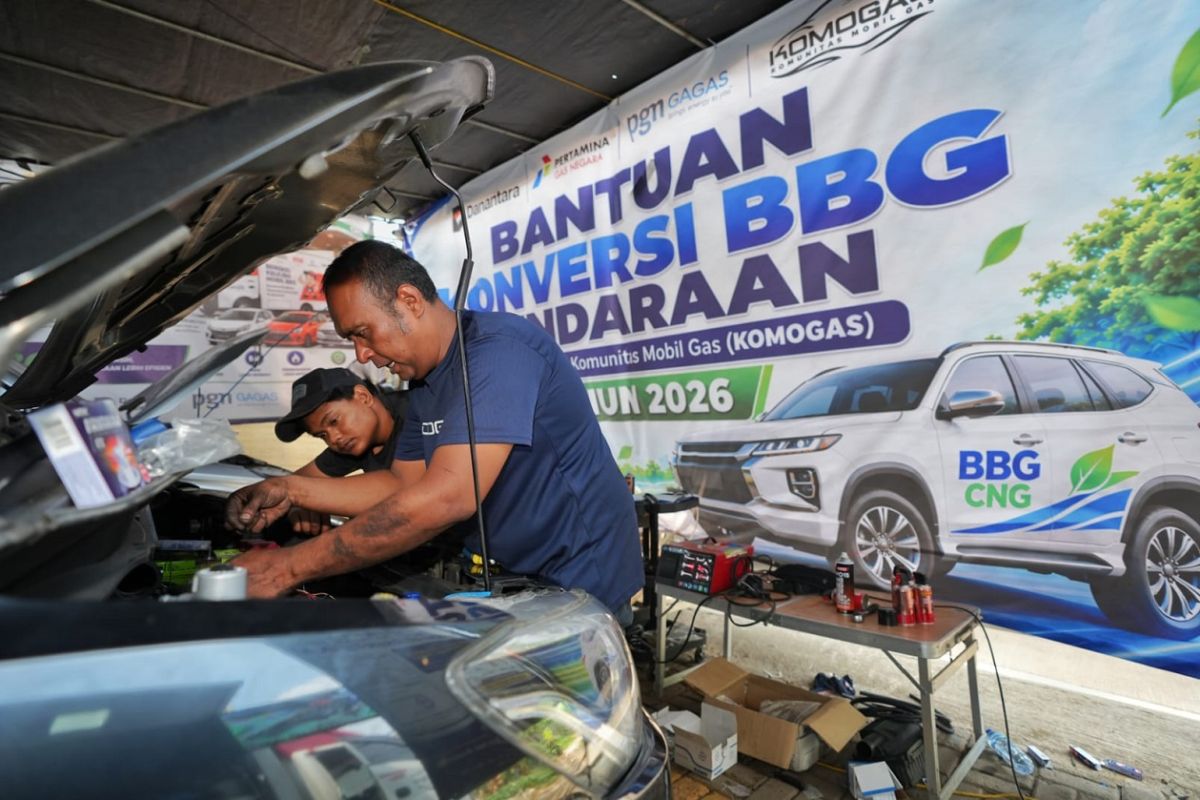
Jakarta (ANTARA) - PT Perusahaan Gas Negara Tbk (PGN) has stated that the 2026 Vehicle BBG Conversion Assistance Programme provides benefits for online taxi drivers in the form of a reduction in operational costs by up to 55 per cent.
PGN Corporate Secretary, Fajriyah Usman, stated that through this programme, the company is providing an opportunity for online taxi drivers to convert their vehicles from conventional fuel to gas (BBG) through the free installation of BBG kits.
“This initiative is expected to serve as a more efficient energy alternative while simultaneously helping drivers reduce vehicle operational costs,” she said in a statement in Jakarta on Saturday.
During the period of August – September 2026, a target of 75 vehicles is set to participate in the 2026 Vehicle BBG Conversion Assistance Programme.
Assuming the 75 recipient vehicles consume an average of 8 litres of petrol equivalent (LSP) of BBG per day each month, Fajriyah continued, the total utilisation of BBG is estimated to reach approximately 15,000 LSP per month or 180,000 LSP per year.
With the price of non-subsidised BBG at Rp4,500 per litre, this fuel requirement would cost approximately Rp810 million per year.
Meanwhile, if the same volume of usage were to use subsidised fuel at an assumed price of Rp10,000 per litre, fuel costs could reach approximately Rp1.8 billion per year.
“Thus, the use of BBG has the potential to generate fuel cost savings of at least around Rp990 million per year for the 75 beneficiaries in total,” she said.
In addition to providing economic benefits, she noted that the use of BBG is also a more environmentally friendly energy choice, in line with PGN’s support for Indonesia’s target to achieve Net Zero Emissions by 2060.
With equivalent energy usage, she added, BBG produces approximately 19 per cent lower carbon dioxide (CO2) emissions compared to subsidised petrol.
Based on the projected BBG usage of up to approximately 180,000 LSP per year by the 75 beneficiaries, this conversion programme is estimated to be able to reduce carbon emissions by up to about 73 tons of CO2 eq per year.
“Therefore, the transition from petroleum-based fuel to BBG not only helps drivers reduce operational costs but also serves as a concrete step in supporting the use of cleaner and more environmentally friendly energy,” she said.
FajriYAH hopes that the programme can provide real benefits to recipients while encouraging wider utilisation of BBG.
The person in charge of Field Administration for the Gas Car Community (Komogas), Riko, appreciated PGN’s support, which is considered to provide significant benefits to online taxi drivers with high vehicle usage and fuel consumption intensity.
“This free BBG kit conversion assistance is very meaningful for online drivers. The cost of installing a converter independently is quite high, so this programme opens the opportunity to switch to using BBG more easily,” he said.
According to him, the most felt benefit of the conversion is fuel cost efficiency; besides the more competitive price, BBG produces cleaner combustion, which is expected to support engine performance and maintenance in the long term.