
Baznas: Zakat is an Engine for the Redistribution of Knowledge and Welfare
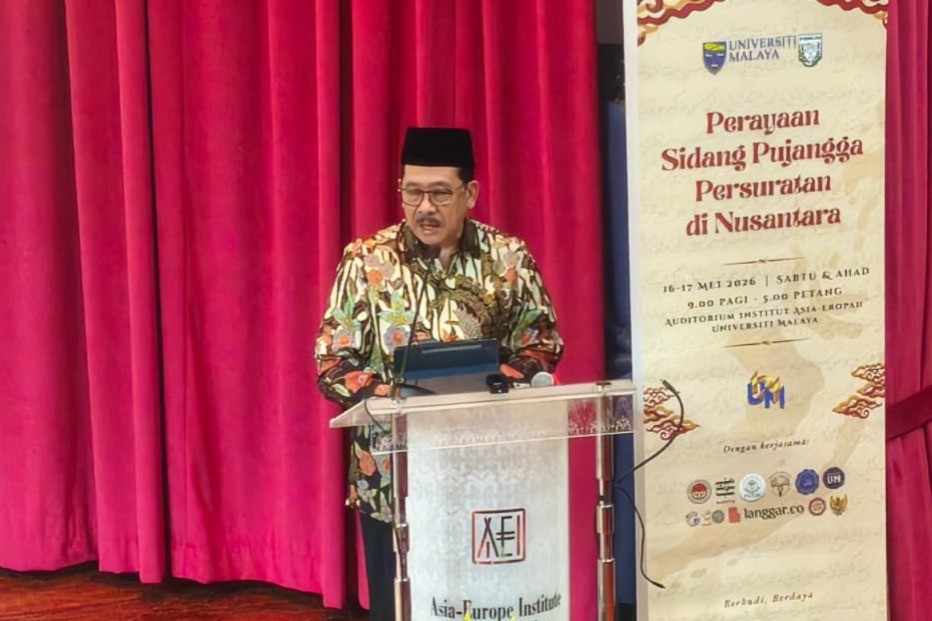
The National Zakat Agency (Baznas) assesses that zakat functions not only as a religious instrument but also plays a strategic role in building the tradition of science and literature in the Nusantara archipelago. This was stated by the Vice Chairman of Baznas RI, Zainut Tauhid Sa’adi, while attending the Celebration of the Session of Nusantara Literary Poets at Universiti Malaya on Saturday.
“Zakat is an instrument of civilisation. In Islamic history, from the era of Caliph Umar bin Abdul Aziz to the era of Nusantara scholars, zakat is not merely a fiscal ritual, but an engine for the redistribution of knowledge and welfare,” said Zainut.
According to Zainut, community funding through zakat, infaq, and waqf has long served as a vital foundation for the emergence of madrasas, pesantren (Islamic boarding schools), study circles, and significant literary works within the Malay-Nusantara region. He cited several prominent figures, including Hamzah Fansuri, Nuruddin al-Raniri, Abdur Ra’uf al-Fansuri, Sunan Bonang, Hamka, and Syed Muhammad Naquib al-Attas, as part of the intellectual heritage that flourished within a strong Islamic financial ecosystem.
“The existence of community funds through zakat, infaq, and waqf has proven to be a primary pillar supporting the growth of literacy and the development of literature in Nusantara to this day,” he said.
Zainut emphasised that the literary forum is not merely an academic activity but part of an effort to maintain the continuity of the Islamic scientific tradition in the Nusantara region. He noted that the current generation has a responsibility to ensure that the intellectual legacy of past scholars and poets remains alive amidst modern developments.
“It is not just an academic celebration. It is a collective pledge that we, the current generation, will not allow the scientific traditions of the scholars and poets of Nusantara to be swallowed by time,” he concluded.