
Baznas-supported farmers in Lampung achieve success, able to pay agricultural zakat
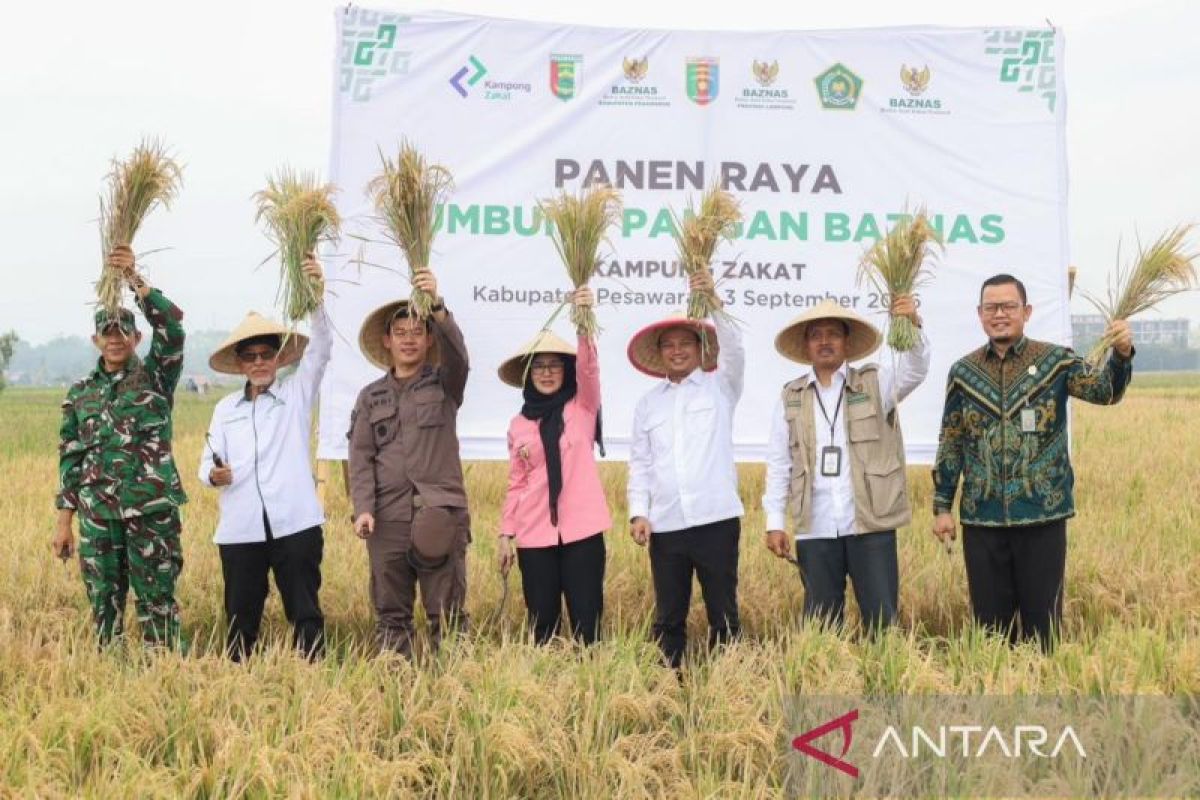
The group of farmers supported by the National Zakat Agency (Baznas) RI in Kutoarjo Village, Gedong Tatahendak District, Pesawaran Regency, Lampung, has achieved success, reaching a grand harvest and becoming capable of paying agricultural zakat independently.
The Head of Distribution and Utilisation at Baznas RI, Idy Muzayyad, stated that the farmers, who have been mentored through the Baznas Food Barn Programme running since 2025, have successfully optimised the management of agricultural land in the area.
“Zakat takes two forms: consumptive zakat, which is used directly for consumption, and productive zakat. The food barn programme, which is undergoing a grand harvest today, is a form of productive zakat that can distribute welfare more evenly among its recipients,” Idy said in a statement in Jakarta on Friday.
In addition to producing a grand harvest, Idy noted that the success of this empowerment programme is also evident in the awareness of the mentored farmers to fulfil agricultural zakat, with a total value reaching IDR 12.2 million.
This step is considered vital because organised and consolidated zakat management is deemed far more effective in providing a real impact on the welfare of the wider community.
“Distributing zakat without going through Baznas or official zakat institutions is inappropriate, as the potential of zakat cannot be consolidated and collaborated to create a significant impact,” Idy added.
Meanwhile, the Regent of Pesawaran, Nanda Indira, expressed high appreciation for the success of the Baznas Food Barn Programme, which is seen as providing a tangible impact on community welfare and regional food security.
“Zakat is no longer merely consumptive aid, but has transformed into capital for economic independence, particularly within the context of the agricultural sector,” said Nanda Indira.
The first absolute requirement is reaching the minimum harvest threshold, or nisab, which is equivalent to five wasq or approximately 653 kilograms of paddy (equivalent to 520 kilograms of rice). If the farmers’ harvest falls below this volume, they are exempt from the obligation of zakat and are only encouraged to give voluntary alms (sedekah sunah). Furthermore, unlike other forms of wealth zakat (mal), agricultural zakat must be paid directly every time the harvest season arrives without having to wait for a full year of ownership (haul).
The percentage of zakat to be paid is also very fair, as it takes into account the farmers’ operational costs, particularly regarding irrigation systems. Farmers are required to pay 10 per cent zakat if their farmland is naturally irrigated by rainfall or river flows, but the rate is reduced to only 5 per cent if the irrigation requires additional costs or specialised labour, such as renting water pumps.
Source: jawawa.id (https://jawawa.id/newsitem/baznas-supported-farmers-in-lampung-achieve-success-able-to-pay-agricultural-zakat-1788512643)
Originally published by Antara (Indonesian) (https://www.antaranews.com/berita/5725873/petani-binaan-baznas-di-lampung-sukses-hingga-mampu-bayar-zakat-tani), translated from Indonesian