
Baznas Pushes for Zakat to Become Direct Tax Credit
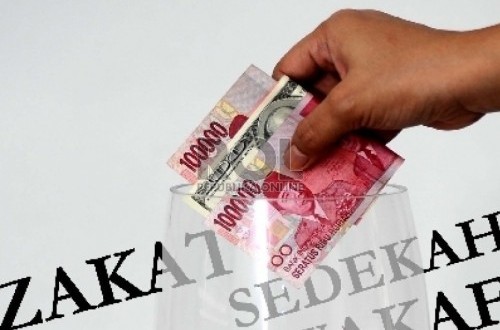
The National Alms Agency (Baznas) is continuing to push for zakat paid through official institutions to become a direct tax credit or tax rebate. This policy is considered to have the potential to increase public participation in paying zakat through formal bodies while simultaneously strengthening state revenue.
The proposal was conveyed during a Philanthropy Journalism Focus Group Discussion themed ‘Full Tax Credit: Opportunities and Challenges’, organised in collaboration with the Halaqah Tadarus Al-Qur’an Foundation, Baznas, House Commission VIII, and LazisMu.
Baznas executive Rizaludin Kurniawan stated that the aspiration comes from many muzaki, both individuals and business entities. Currently, zakat paid through Baznas or official amil zakat institutions only functions as a deduction from taxable income, not a reduction of the tax payable. ‘So far, zakat paid is only a tax deduction, it only reduces taxable income, and that is considered quite small for zakat payers, whose numbers are now increasing at Baznas and amil zakat institutions,’ Rizaludin said at the PP Muhammadiyah Building, Jakarta, on Saturday.
According to Rizaludin, Baznas has conducted studies and found that this scheme is not new. Several countries have implemented it, both Muslim-majority and non-Muslim nations. He cited Malaysia, Saudi Arabia, Sudan, Pakistan, and Bangladesh as having provided zakat incentives in the form of direct tax reductions. Even countries like the United Kingdom, Spain, and South Korea provide similar treatment for public philanthropic funds. ‘So why doesn’t Indonesia also try to accommodate this and make comparisons on how philanthropic funds, both Islamic and general, disbursed by its citizens can directly reduce taxes?’ he asked.
Rizaludin believes that implementing a tax credit will increase public compliance in paying zakat through official institutions. He noted that the national zakat collection potential remains very large. Out of approximately 180 million Muslims who pay zakat, infak, sedekah, and wakaf, only around 20 million people are recorded as channelling it through Baznas or formal amil zakat institutions. According to Rizaludin, the majority of the public actually already pay zakat, infak, and sedekah, but they distribute it directly rather than through official bodies. ‘But if going through a formal institution provides a direct tax incentive, then we believe many zakat payers will switch to formal institutions that manage zakat, infak, and sedekah funds, as has been the practice in other countries,’ he explained.
Therefore, Baznas will continue to urge the government, particularly the Ministry of Finance and President Prabowo Subianto, to review tax regulations so that zakat can obtain the status of a direct tax reducer. ‘So we will continue to strive for this, asking the Ministry of Finance and the President to review the tax laws and regulations to accommodate zakat as a direct tax reduction, tax rebate, or tax credit,’ he said. ‘God willing, tax revenue will increase and zakat will also increase, and this has been proven in several countries that have practised it.’
Meanwhile, Deputy Chairman of House Commission VIII, Singgih Januratmoko, welcomed the discussion on integrating zakat into the national taxation system. According to him, Indonesia has enormous zakat potential given that approximately 85 per cent of the more than 280 million population are Muslim. He stated that zakat is not only a religious obligation but also an instrument of wealth redistribution capable of reducing social inequality, strengthening solidarity, and empowering the community. ‘Zakat is an instrument of wealth redistribution. Those who are able can channel their zakat to people in need, thereby improving welfare,’ he said.
Singgih explained that current Indonesian regulations already accommodate zakat as a deduction from taxable income. However, the idea of making zakat a tax credit is worth discussing because it has the potential to increase public enthusiasm for paying zakat while strengthening the national sharia economic ecosystem. Nevertheless, he cautioned that implementing such a policy requires a comprehensive study from the aspects of regulation, fiscal impact, administrative systems, and governance. According to him, integrating zakat and taxation requires harmonisation of various regulations to avoid legal uncertainty. The government must also calculate the impact on state revenue if the tax credit scheme is widely applied.