
Baznas Provides Free Healthcare Services to People with Disabilities in West Java
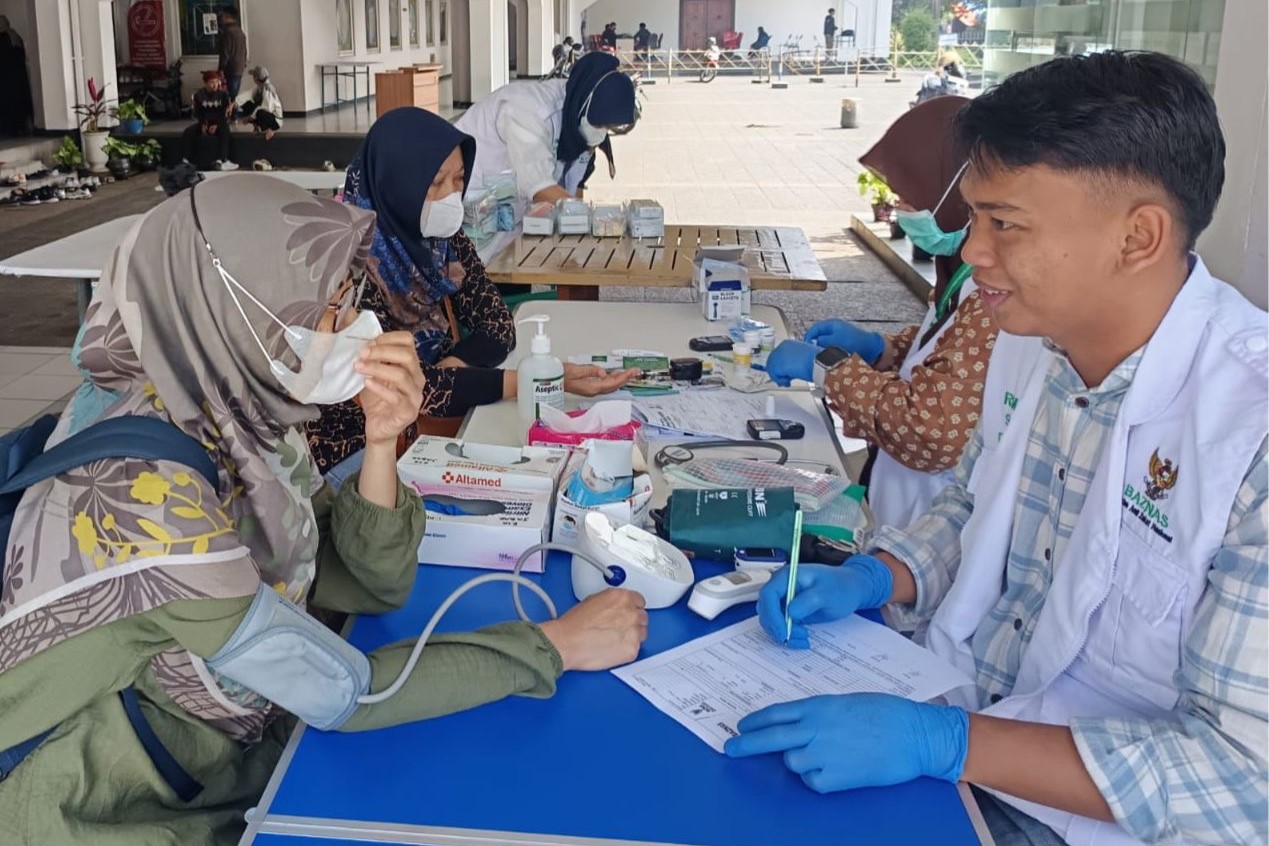
The National Amil Zakat Agency (Baznas), through Rumah Sehat Baznas (RSB) West Java, provided free healthcare services to participants in the Short-Term Islamic Boarding School (Sanlat) for People with Disabilities held at the Central Library for Islamic Da’wah (PUSDAI) in West Java. The healthcare services took place over two days, benefiting 65 individuals, comprising children with disabilities who were Sanlat participants, their companions, and local residents. The services offered included health examinations, medical consultations, and treatments. Additionally, the community received medicines according to the diagnosis results.
Deputy II of Baznas RI for Distribution and Utilisation, M. Imdadun Rahmat, stated that the healthcare services during the Sanlat for People with Disabilities represent Baznas’s efforts to improve the welfare of mustahik in the health sector, particularly during the month of Ramadan.
“This also serves as our commitment to the vulnerable groups, such as people with disabilities. The zakat, infaq, and alms (ZIS) collected from muzaki are safeguarded as a trust to be distributed to the eight eligible asnaf, including people with disabilities,” Imdadun said in a written statement on Wednesday (18/3).
Imdadun assessed that vulnerable groups like people with disabilities require greater attention to ensure equal access to healthcare services.
“We want these people with disabilities to have the same rights as other community members, namely access to decent and easily reachable healthcare services. This free healthcare service comes from community funds and must return for the community’s benefit,” he said.
During the event, the RSB West Java team also recorded several common health complaints among the beneficiaries, including hypertension, hyperglycaemia, myalgia, hyperuricaemia, and acute respiratory tract infections (ISPA).
According to Imdadun, these conditions demonstrate the importance of accessible healthcare services for the community, especially for vulnerable groups who often face limitations in obtaining medical services.
Imdadun stated that improving public health is one of the key indicators in enhancing social welfare. “The indicator of improved welfare is improved public health. Therefore, we continue to strive to provide health programmes, including those that reach vulnerable groups,” he said.
Imdadun emphasised that Baznas will continue to expand the benefits of Rumah Sehat Baznas services in various regions across Indonesia so that more people can experience the benefits. “As long as the programme provides significant benefits to mustahik, Baznas is open to continuously expanding the reach of healthcare services through Rumah Sehat Baznas,” he said.
Through this free healthcare programme, Imdadun hopes that people with disabilities and the surrounding community can directly benefit from the collected zakat funds, while strengthening the role of zakat in improving the quality of life for mustahik.
To date, Baznas has 38 units of Rumah Sehat Baznas spread across various regions in Indonesia. Baznas also operates two mobile RSB healthcare services in the form of Sea Ambulances (ships), each operating in the Sangihe and Talaud island regions. The presence of these two mobile RSB units represents Baznas’s innovation in reaching communities in remote and coastal areas that are difficult to access by facilities.