
Baznas Opens Scholarships for 2,500 High-Achieving Underprivileged Students During NU Congress
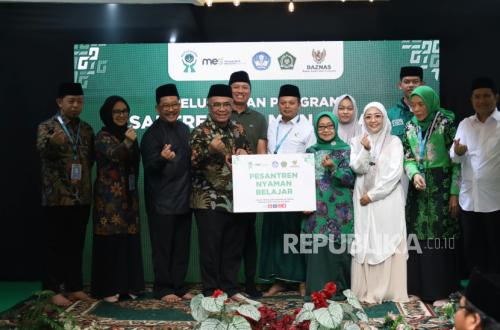
The National Board of Zakat (Baznas) RI has officially opened registration for the 2026 Student Scholarship for 2,500 high-achieving underprivileged students throughout Indonesia.
The programme is designed to assist 12th-grade students of Madrasah Aliyah (MA) or equivalent to prepare for university entrance examinations.
The inauguration of the 2026 Student Scholarship programme took place at the Al-Wahabiyah Islamic Boarding School in Jombang, East Java, on Saturday (29/08/2026), coinciding with the 35th Congress of Nahdlatul Ulama (NU).
This programme is one of Baznas’s priorities in expanding access to higher education for students from low-income families.
The Chairman of Baznas RI, Sodik Mudjahid, stated that the Student Scholarship programme has been operational since 2021. Up until 2025, the programme has facilitated 32,418 students from various regions in Indonesia to pursue higher education.
“To date, through this Baznas Student Scholarship programme, we have partnered with thousands of pesantren and embraced 32,418 students from various backgrounds across Indonesia to step into higher education,” said Sodik in his address.
He explained that in 2025, the programme achieved significant results by successfully placing more than 7,300 students into various state universities (PTN), state Islamic religious universities (PTKIN), leading private universities (PTS), and government-affiliated colleges.
Of the 10,000 beneficiaries in 2025, 4,779 students were the first generation in their families to have the opportunity to pursue a bachelor’s degree.
According to Sodik, Baznas aims to encourage the transformation of pesantren so that students have equal opportunities to master science and technology (IPTEK) without losing their character, identity, and Islamic values.
“From the pesantren, we hope to see the emergence of doctors, engineers, academics, professionals, entrepreneurs, bureaucrats, and leaders who provide a real contribution to the nation towards Indonesia Emas 2045,” he said.
Sodik also reminded students not only to deepen their religious knowledge but also to master science, technology, economics, and politics. According to him, these three fields are vital components in building the strength of the community and the nation.
“There may be those who specialise in religious studies (tafaqquh fiddin) up to the level of religious professors, but do not forget the verse from Surah Ar-Rahman: ‘You cannot proceed except with authority (sulthan).’ What authority? Political strength, economic strength, and technological strength—that is where the struggle of the students lies,” he concluded.