
Baznas Distributes Indonesian Qurbani Meat to 6,700 Palestinian Refugees
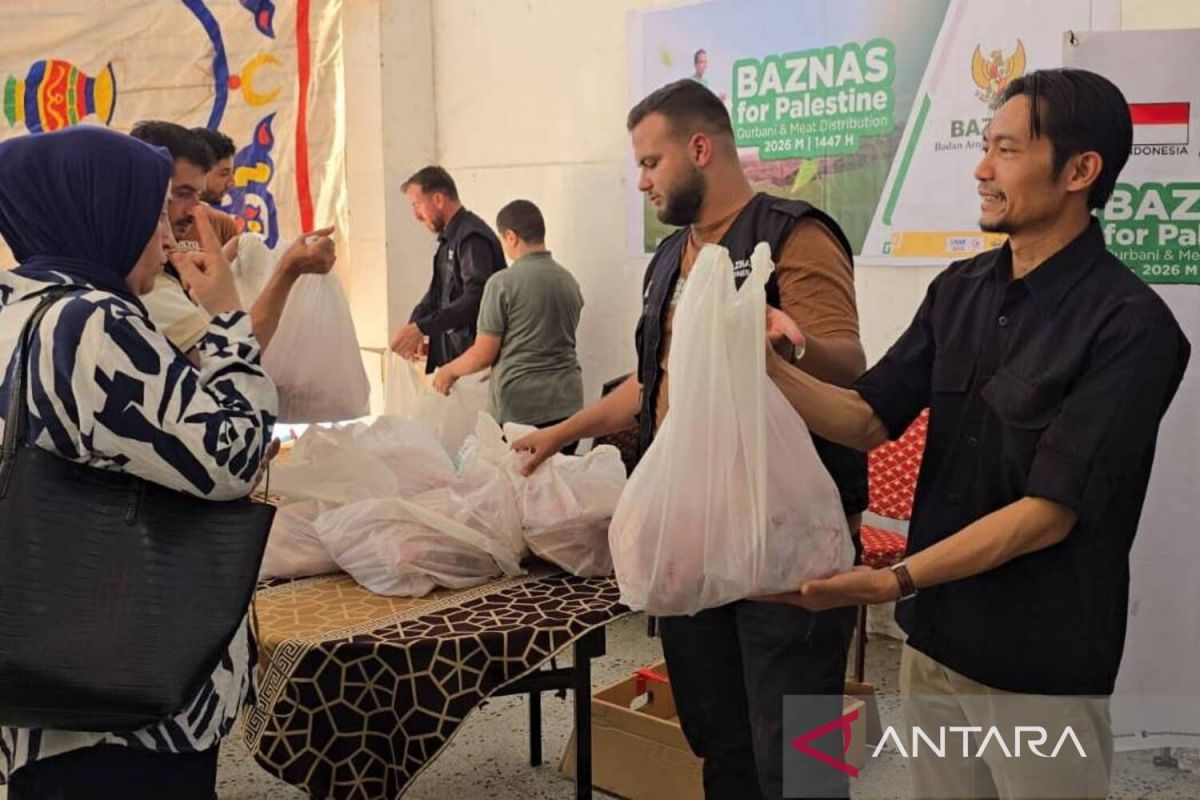
The National Alms Agency (Baznas) of the Republic of Indonesia, through its Blessed Qurbani for Palestine Programme, has distributed qurbani meat to around 6,700 Palestinian refugees residing in several camps in Idlib province, Syria. Baznas RI Chairman Sodik Mudjahid stated in Jakarta on Tuesday that the programme, initiated by Baznas, represents a form of solidarity and concern from the Indonesian people towards Palestinians who continue to face various difficulties due to prolonged conflict and humanitarian conditions. ‘We want to ensure that the trust placed by the Indonesian people reaches our brothers and sisters in need. This qurbani serves as a symbol of care, fraternity, and moral support for refugees living in deprivation,’ he said. Sodik explained that the distribution process of sacrificial meat from 200 sheep was carried out during the Eid al-Adha 1447 H/2026 M period in the Hazano and Sarmada areas, reaching thousands of Palestinian refugees residing in Syria. In Hazano, aid was distributed to Qusaniyah, Shariaa, and Qadisiyah camps, whilst in the Sarmada area, distribution took place in Sarmada Camp and Al-Omareen Camp. Sodik also expressed appreciation to the Indonesian Embassy (KBRI) in Damascus for providing assistance and support throughout the humanitarian aid distribution process. ‘We extend our thanks and appreciation to KBRI Damascus for accompanying and facilitating the smooth distribution of the Blessed Qurbani for Palestine Programme. This support is an important part of ensuring that aid from the Indonesian people can be properly channelled to the beneficiaries,’ said Sodik. He added that Baznas will continue to expand its international humanitarian aid reach through various targeted and sustainable programmes. ‘We also thank all Indonesian people who have entrusted their zakat, infaq, sadaqah, and qurbani through Baznas. This support enables humanitarian aid to reach Palestinian refugees who are in dire need of a helping hand,’ concluded Sodik Mudjahid.