
Baznas and Limar collaborate to provide lighting for underprivileged communities
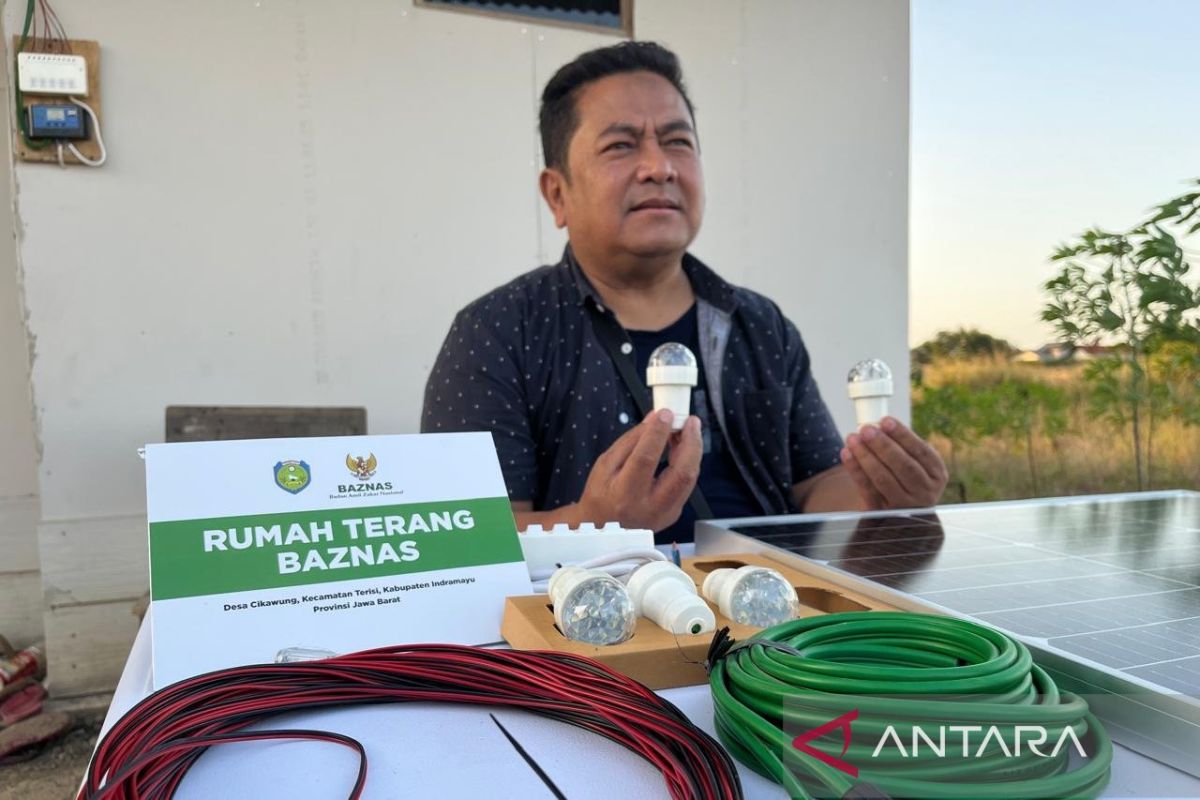
The Rumah Terang programme is one of Baznas’s flagship initiatives.
Jakarta (ANTARA) — Indonesia’s National Zakat Agency (Baznas) has partnered with Limar (Listrik Mandiri Rakyat, or People’s Independent Electricity) to provide lighting for underprivileged communities through the Baznas Rumah Terang programme.
The collaboration makes use of Limar’s innovation, initiated by Ujang Koswara, a native of Bandung, to deliver more adequate lighting access for communities still facing limited electricity facilities.
“One of Baznas’s flagship programmes is Rumah Terang. We are working with a son of the nation. We put it straight into practice, applying it directly in the Indramayu area,” said Baznas Chairman Sodik Mujahid in Indramayu on Friday.
The Baznas Rumah Terang programme is one of 13 priority programmes through which Baznas extends the benefits of zakat, infak and sedekah funds for the welfare of the poor.
“The hope is that communities will grow more knowledgeable, more diligent in their studies — particularly their children — and ever more spirited in their lives, in their worship and in their work, so that overall they become increasingly prosperous,” said Sodik.
Limar’s initiator, Ujang Koswara, welcomed the collaboration and expressed hope that the lighting innovation he developed could reach more underprivileged families in various regions.
According to Ujang, the Limar programme was developed to address the problem of “tuna cahaya” — light deprivation — a condition in which communities lack adequate lighting access because they are beyond the reach of the electricity grid, particularly in remote areas.
He explained that each household receives one lighting installation package comprising a solar panel, five lamps, a battery and wiring.
The lamps used in the programme require only 1 watt of power, yet produce a level of illumination claimed to be equivalent to a 10-watt lamp, with a service life of more than 10 years.
“If there are parties who wish to help the poor, I would like to perfect that by bringing light into their homes,” said Ujang.
He said the LED lamps have been under development since 2008 and have been utilised in various regions across Indonesia.
Beyond helping to provide lighting, lamp production also involves students at a number of Islamic boarding schools (pondok pesantren), young people, and former prisoners who have completed vocational training programmes.
“Since 2008, these lamps have been installed in 300,000 homes. We are here to strengthen the government’s programme of freeing communities from darkness,” said Ujang.