
Baznas and BP Taskin Forge Collaboration to Accelerate Poverty Alleviation
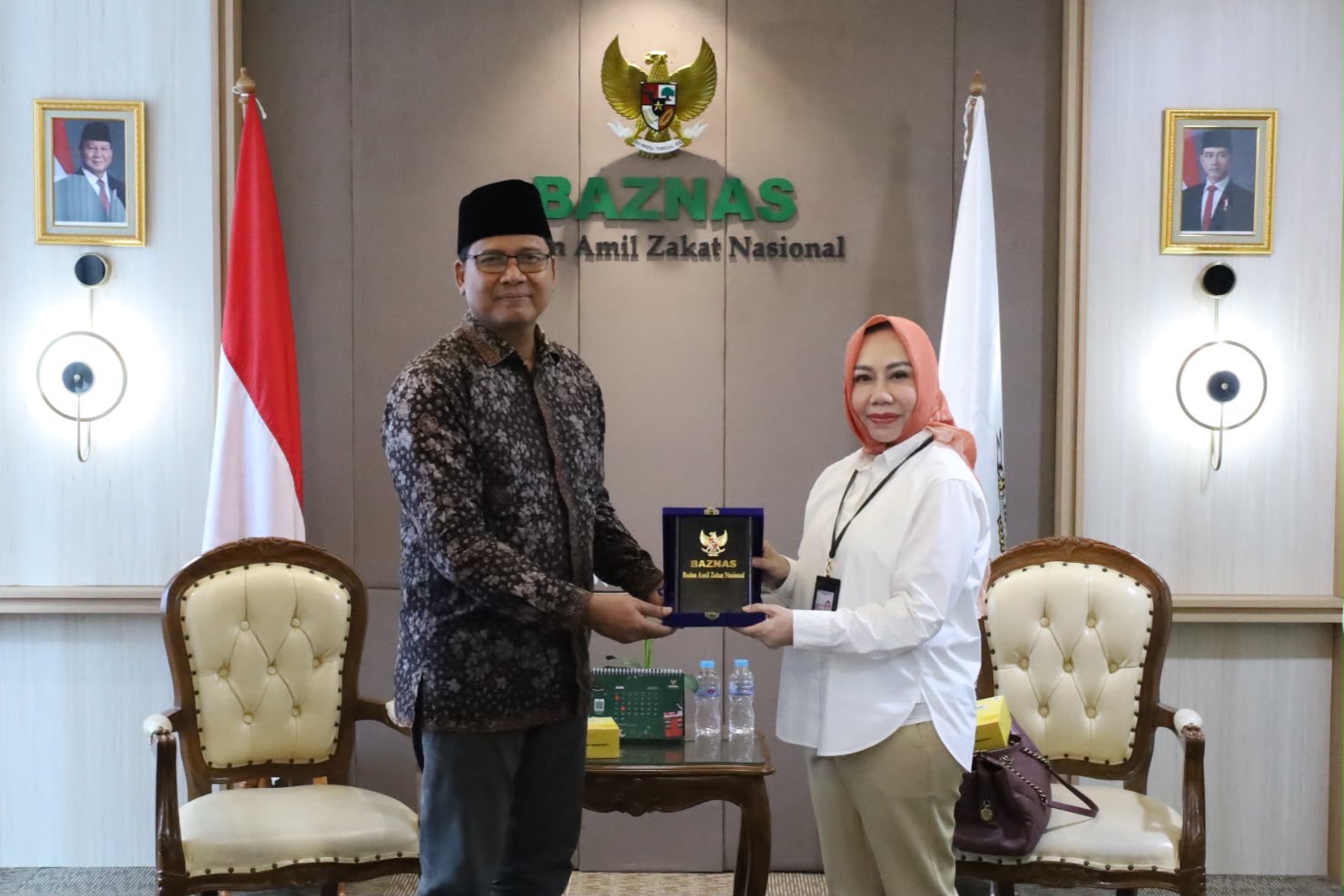
The National Board of Zakat (Baznas) RI and the Poverty Alleviation Acceleration Agency (BP Taskin) are continuing to strengthen their collaboration to alleviate poverty in Indonesia through various strategic programmes, particularly in the field of economic empowerment for mustahik (zakat recipients).
This was highlighted during an audience between Baznas RI and BP Taskin held at the Baznas RI Building in Jakarta. M. Imdadun Rahmat, Deputy II of Baznas RI for Distribution and Utilisation, stated that Baznas and BP Taskin share highly strategic overlapping programmes that can be collaborated to accelerate poverty alleviation.
He noted that Baznas’s primary focus on targeting the destitute and poor aligns with the priority targets set by BP Taskin. “The main focus that directly intersects with BP Taskin’s priority targets is the group of the destitute and the poor, as these two groups occupy the first and second positions in our distribution priorities,” he said.
Imdadun explained that Baznas currently manages 43 distribution programmes covering various sectors, including humanitarian aid, disaster relief, health, religious outreach, economy, and education. He expressed hope that these programmes could be integrated with BP Taskin to broaden the benefits to the community and create a significant impact on poverty alleviation efforts.
Meanwhile, Zaidirina, Deputy for Acceleration, Facilitation, and Welfare Protection at BP Taskin, appreciated Baznas’s support for various BP Taskin programmes, particularly through the Si-Taskin Programme (Poverty Alleviation Acceleration Synergy). “We highly appreciate Baznas for supporting the Si-Taskin Programme since its inception. This programme has been implemented in various regions, such as Pandeglang, Tangerang, Jember, Cilacap, Bogor, Aceh, and North Toraja. We hope this collaboration continues to be enhanced under the new Baznas leadership,” said Zaidirina.
She added that cross-institutional collaboration is vital given the ambitious poverty alleviation targets set by the government. Based on the National Long-Term Development Plan (RPJPN) and the National Medium-Term Development Plan (RPJMN), the government aims to reduce extreme poverty to 0 per cent by 2026, while reducing relative poverty to between 4.5 and 5 per cent by 2029.
To achieve these targets, Zaidirina believes many of Baznas’s flagship programmes can be synergised with BP Taskin, including SME development and community economic empowerment. She noted that poverty alleviation efforts should not rely solely on social assistance but must also be directed towards increasing the self-sufficiency of beneficiaries.
“Our main goal is to realise the independence of vulnerable groups, particularly those in deciles one to three. Social assistance and social protection are like lifebuoys. Once the community is given a lifebuoy, they must be helped to climb onto the ship (graduation), rather than being left to float in the sea forever,” she said.
Baznas remains committed to not only providing emergency logistical aid but also continuing programmes for the sustainable recovery of the education and infrastructure sectors. Furthermore, the agency continues to strengthen its commitment to assisting the Palestinian people through free healthcare programmes reaching thousands of residents in the Gaza Strip.