
Bayan Mulud Tradition ready to be held 26 August 2026
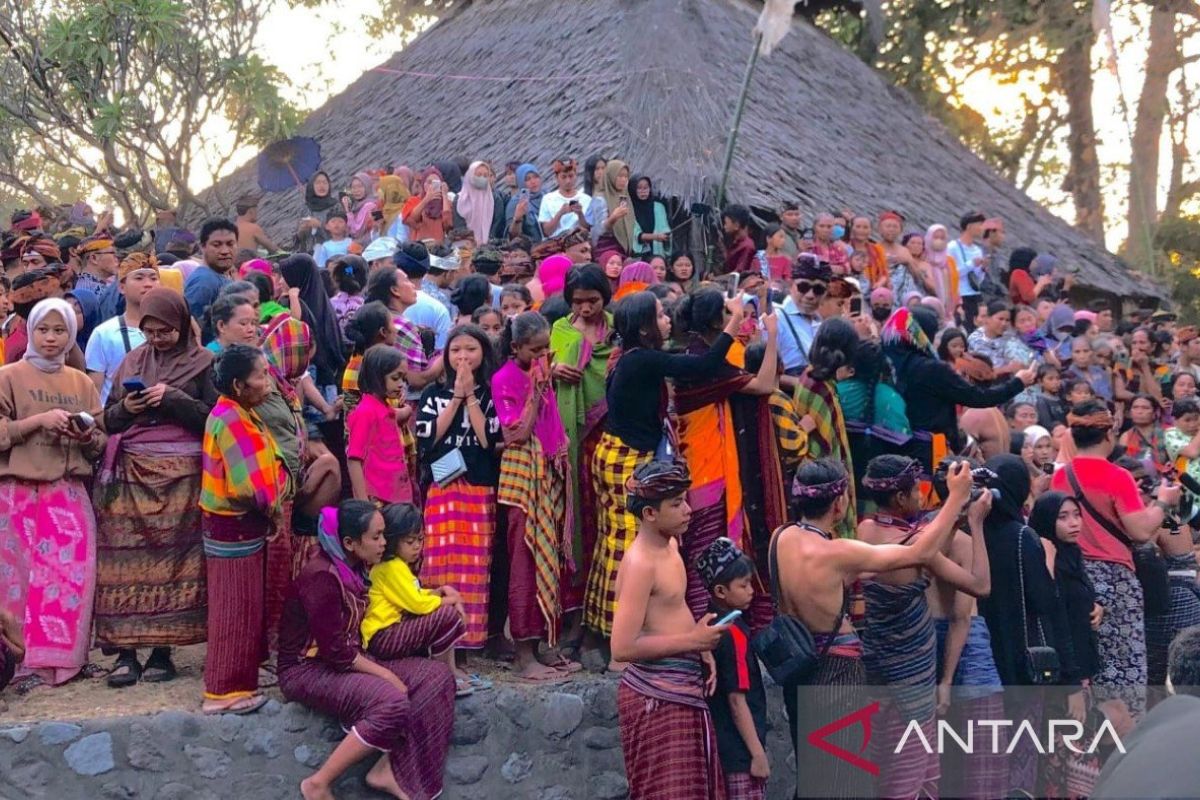
The annual Mulud Adat Bayan tradition is once again ready to be held at the Bayan Beleq Ancient Mosque area, Bayan District, North Lombok Regency, West Nusa Tenggara (NTB), on 26–29 August 2026.
Head of Marketing at the North Lombok Regency Tourism Office, Fadli, said the 2026 edition is special because for the first time the tradition has officially been included in the national tourism calendar, Karisma Event Nusantara (KEN) 2026.
“The inclusion of Mulud Adat Bayan in KEN 2026 is a source of pride as well as a challenge to preserve the value of a local tradition passed down from generation to generation,” he said in North Lombok on Thursday.
He said only four events in NTB have been included in the national tourism calendar or KEN 2026, two of which are in North Lombok, namely Mulud Adat Bayan and the Gili Festival.
“Our principle is to strengthen the position of this tradition as a living cultural heritage. Tourism must follow culture, not culture adjusting to the needs of tourists,” said Fadli.
Fadli said preparations are currently being maximised through collaboration between indigenous communities, village governments, the North Lombok Regency Government, and relevant agencies. In addition to technical readiness such as cleanliness and security, the main focus of preparations is on protecting the sacredness of the ritual procession.
“The customary series will maintain ancestral procedures without changing the stages of the tradition. The ritual procession includes menyilaq, menutu, bisoq meniq, decorating the Bayan Ancient Mosque, peresean, meriap, decorating the praja mulud, up to the peak of the mulud celebration,” he explained.
He added that his office is targeting around 2,000 visitors to attend and witness the series of activities over the four days of the event. Although open to tourists, the organisers apply strict rules that prioritise respect for local wisdom.
“Tourists are welcome to watch the procession in public spaces such as the main road or the courtyard of the ancient mosque. However, there are sacred areas and processions that are restricted. Visitors must dress modestly, are advised to wear traditional cloth, and are prohibited from taking photos or videos in restricted areas, touching customary objects, disturbing rituals, or using drones without permission,” said Fadli.
According to him, the 2026 edition is also optimising the role of Bayan’s younger generation. In addition to being directly involved in ritual preparations as a process of cultural regeneration, indigenous youth are empowered to use technology and social media to promote the tradition internationally while still adhering to customary boundaries.
“The success of Mulud Adat Bayan is not measured by how many tourists come, but by how this tradition remains alive, respected, and passed down in a noble manner,” he said.