
Bawean Tourism Development Agency Welcomes Archipelago Bill, Hopes for Improved Access to Bawean
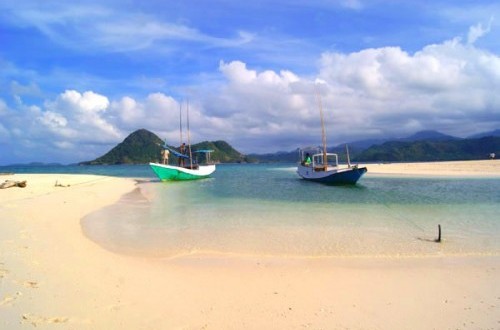
The Chairman of the Bawean Tourism Development Agency (BP2B), Ahsanul Haq, has welcomed the discussion of the Archipelago Region Bill, which is seen as a way to strengthen development and public services in island regions, including Bawean Island, East Java. The regulation is expected to align development and financing policies with the specific geographical conditions of archipelago areas.
Ahsanul Haq, commonly known as Anol, stated that development in island regions faces different challenges compared to mainland areas, ranging from fiscal limitations and transport access to higher construction costs.
“This is where the urgency of discussing the Archipelago Region Bill lies. The great hope is that this Bill can guarantee more specific budget certainty for islands, ensuring that development continues without being disrupted by central government budget policies,” Anund said in Jakarta on Tuesday (22/9/2026).
According to Anol, the need for specific regulation is increasingly important amidst policies of efficiency and the reduction of transfers to regional governments. Such conditions are believed to affect the fiscal capacity of local governments to fund development in island regions.
Data from the Ministry of Marine Affairs and Fisheries (KKP) shows that out of ,1,204 inhabited small islands calculated through the Small Island Development Index (IPPK), 41 islands or 3.14 per cent are classified as advanced. Meanwhile, 268 islands or 22.26 per cent are developing, 835 islands or 69.35 per cent are lagging, and 60 islands or 4.98 per cent are classified as highly disadvantaged.
Anol believes this situation demonstrates the need for a development approach that considers the characteristics of archipelago regions. He noted that these geographical differences impact the requirements for policy, financing, and public services.
“Indonesia is an archipelagic nation. Therefore, development must also consider archipelagic characteristics. We must ensure that development policies are not predominantly mainland-based, while people on the islands must face much higher costs and challenges,” he said.
One issue highlighted by Anol is maritime transport connectivity. For island communities, sea transport is the primary access to healthcare, education, economic activities, and the distribution of food and basic necessities.
“If there are high waves, ships to Bawean cannot depart, leaving the people of Bawean isolated,” he said.
He noted that the limited fleet and sea transport services can hinder community mobility and economic activity. Therefore, Anol hopes the Archipelago Region Bill can regulate minimum service standards for island transport, including funding support, reserve vessels, sustainable subsidies, and inter-port integration.
In addition to transport, island communities also face limited access to electricity, clean water, and energy supplies, which can be disrupted during bad weather.
“The goal of this Bill is to ensure that people on these islands can enjoy independence, and the presence of both the government and infrastructure. If the government is present, then infrastructure must also be present,” he added.
The discussion of the Archipelago Region Bill is currently ongoing in the Indonesian House of Representatives (DPR RI). The Chair of the Special Committee for the Archipelago Region Bill, Mercy Chriesty Barends, stated that the regulation is intended as a special legal framework, or lex specialis, to address development inequality in island regions.
The Bill is not intended to create special autonomy, but rather to introduce affirmative policies tailored to the characteristics of archipelago regions. One of the issues discussed is the need for a Special Archipelago Fund, as existing funding schemes are deemed insufficient to cover the costs of development in areas with vast maritime territories and numerous islands.
Anol hopes the discussion of the Bill will result in regulations that benefit the people of small islands. For Bawean, affirmative policies are expected to improve connectivity and basic services while opening opportunities for economic and tourism development.
“The hope is that the Archipelago Region Bill truly becomes an instrument of developmental justice. The state must be present even on the islands, including ensuring that the people of Bawean receive proper access to infrastructure and public services,” said Anol.
Source: jawawa.id (https://jawawa.id/newsitem/bawean-tourism-development-agency-welcomes-archipelago-bill-hopes-for-improved-access-to-bawean-1790294058)
Originally published by Republika (https://news.republika.co.id/berita/tlvilg416/bp2b-sambut-ruu-daerah-kepulauan-harapkan-akses-bawean-makin-terbuka), translated from Indonesian