
Bauxite Overtakes Nickel as Top Contributor to Downstream Investment
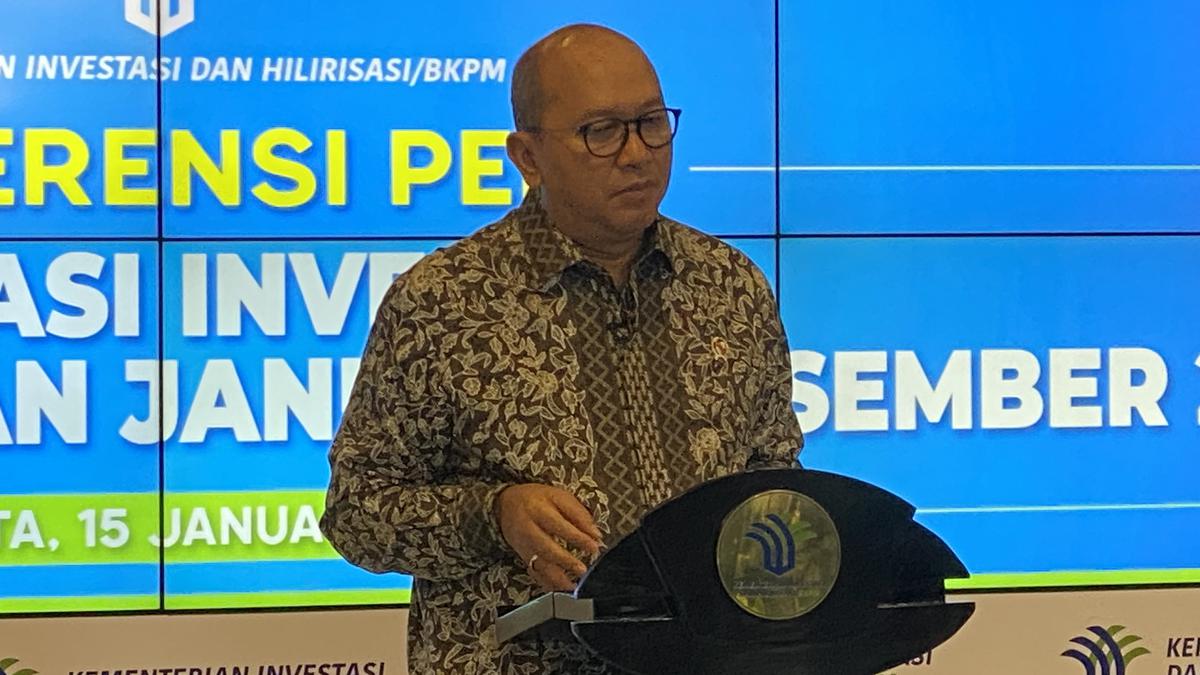
Jakarta – There has been an interesting shift in the map of Indonesia’s downstream investment in the second quarter of 2026. While nickel has long been the sector with the largest investment, that position has now been taken over by bauxite.
Minister of Investment and Downstream Industry/Head of the Investment Coordinating Board (BKPM) Rosan Roeslani said the shift came as the development of bauxite downstream projects increased, both by domestic and foreign investors.
“If we look at it, nickel is usually always number one. Now there is a shifting — bauxite is number one. Usually we know it’s always nickel, but now there is a shift towards bauxite,” said Rosan, quoted on Friday (17/7/2026).
According to him, the increase in investment in the bauxite sector has been driven by the development of a number of processing projects that are entering the realisation stage.
Nevertheless, Rosan stressed that the government still wants to expand downstream processing to various other commodities so that it does not depend solely on minerals.
Rosan said the government is now pushing the downstream processing of commodities such as palm oil, rubber, timber, silica sand and the fisheries sector.
According to him, Indonesia has succeeded in building a relatively complete nickel downstream ecosystem, from nickel ore to the production of electric vehicle batteries.
“We already have the whole ecosystem. That is also what we want to implement for bauxite, derivatives of palm oil and rubber, timber, silica sand and others,” said Rosan.
First-half 2026 investment reaches Rp 1,010.6 trillion
Previously, the Ministry of Investment and Downstream Industry/BKPM recorded that investment realisation throughout the first half of 2026 reached Rp 1,010.6 trillion. That figure is equivalent to 49.5% of this year’s national investment target of Rp 2,041.3 trillion.
“The overall total target for 2026 is Rp 2,041.3 trillion, and in the first semester, from January to June 2026, what investors have spent in Indonesia reached Rp 1,010.6 trillion, an increase of 7.2% year on year. And this is in line with our target, at 49.5% of the total one-year target,” said Minister of Investment and Downstream Industry Rosan Roeslani at a press conference at the Presidential Office on Thursday (16/7/2026).
He said the achievement was made amid global uncertainty caused by geopolitical and geo-economic challenges. Even so, investor interest in placing capital in Indonesia remained intact and in line with the target set by the government.
“Amid the world’s geopolitical and geo-economic challenges, I can say here that the commitment of investors to invest directly in Indonesia, or foreign direct investment, is still in line with the target set up by Bappenas for us for 2026,” he said.
On an annual basis, investment realisation in January–June 2026 grew 7.2% compared with the same period last year. Rosan is optimistic that the 2026 investment target can be achieved by maintaining the investment trend in the second half.
Employment absorption surges
Beyond recording growth in investment value, investment realisation in the first half of 2026 has also had an impact on job creation. Rosan said the incoming investment succeeded in absorbing 1,448,862 workers, an increase of around 15% compared with the same period the previous year.
“And most importantly, we can see here that employment absorption reached 1,448,862 people, or an increase of roughly 15% compared with last year,” he said.
In terms of investment sources, the contribution of foreign direct investment (PMA) and domestic direct investment (PMDN) was almost equal. PMDN reached Rp 502.9 trillion, or 49.8% of total investment, while PMA stood at Rp 507.6 trillion.