
Bauxite Investment in West Kalimantan Becomes Highest in Indonesia, Government Aims to Build Complete Ecosystem
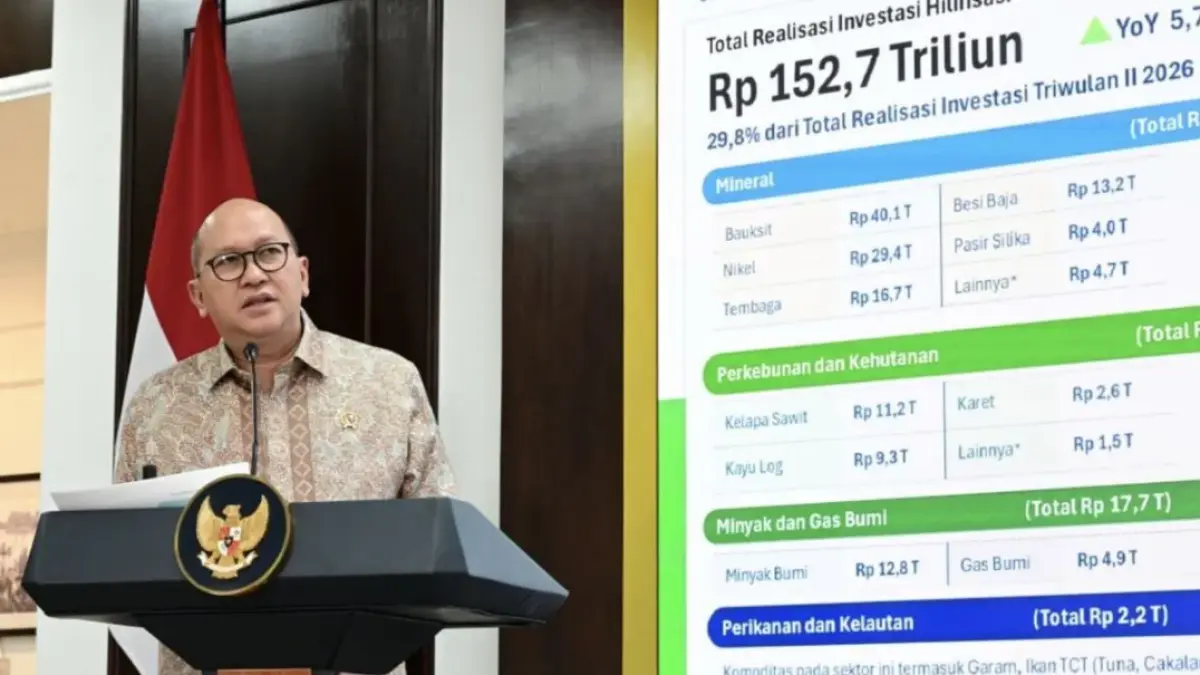
For the first time, investment in bauxite has overtaken nickel as the primary target for downstream processing projects in Indonesia. This shift presents a significant opportunity for West Kalimantan, the province with the largest bauxite reserves in the country, to strengthen its position as a national hub for the alumina and aluminium processing industry.
Minister of Investment and Downstreaming and Head of the Investment Coordinating Board, Rosan Perkasa Roeslani, stated that downstream investment in the second quarter of 2026 reached Rp152.7 trillion, accounting for approximately 29.8 per cent of the total national investment realisation of Rp511.8 trillion.
‘Bauxite is now number one, whereas usually we know it is nickel. There is a shift to bauxite because of several project developments being carried out by both domestic and foreign investors,’ Rosan said at the Presidential Palace complex in Jakarta on Thursday.
West Kalimantan stands to benefit greatly from this dominance. According to data from the Ministry of Energy and Mineral Resources, the province holds around 840 million tonnes of bauxite reserves, or 66.77 per cent of the national total, making it the largest reserve holder in Indonesia. This resource advantage is reinforced by the presence of alumina refining facilities, such as PT Borneo Alumina Indonesia in Mempawah and PT Well Harvest Winning Alumina Refinery in Ketapang, which serve as the foundation for the national aluminium industry. An additional smelter is also under construction in the Penebang Island Industrial Estate in North Kayong.
The surge in downstream investment is projected to have a multiplier effect beyond the mining sector. The development of processing industries is expected to stimulate growth in logistics, energy, ports, and construction, while creating new employment opportunities in West Kalimantan. Data from the West Kalimantan Plantation and Livestock Service indicates that the mining and mineral processing sector is a key driver of the regional economy, poised for continued growth alongside increasing downstream investment.
The government intends to use the success of nickel downstreaming as a model for other strategic commodities, including bauxite. Indonesia’s nickel downstream industry has evolved to produce a range of value-added products, from nickel matte and nickel sulphate to cathodes, anodes, battery cells, battery packs, and even battery recycling.
‘That is what we also want to implement for bauxite, as well as for derivatives of palm oil, rubber, wood, and silica sand,’ Rosan explained. He emphasised that the government will prioritise downstreaming for commodities that offer a competitive advantage based on the national downstreaming blueprint, with the sheer size of Indonesia’s natural resource reserves serving as the primary capital to attract investment and increase domestic value addition.