
Bauxite Downstream Investment Soars 193% to Rp40.1 Trillion in Q2 2026
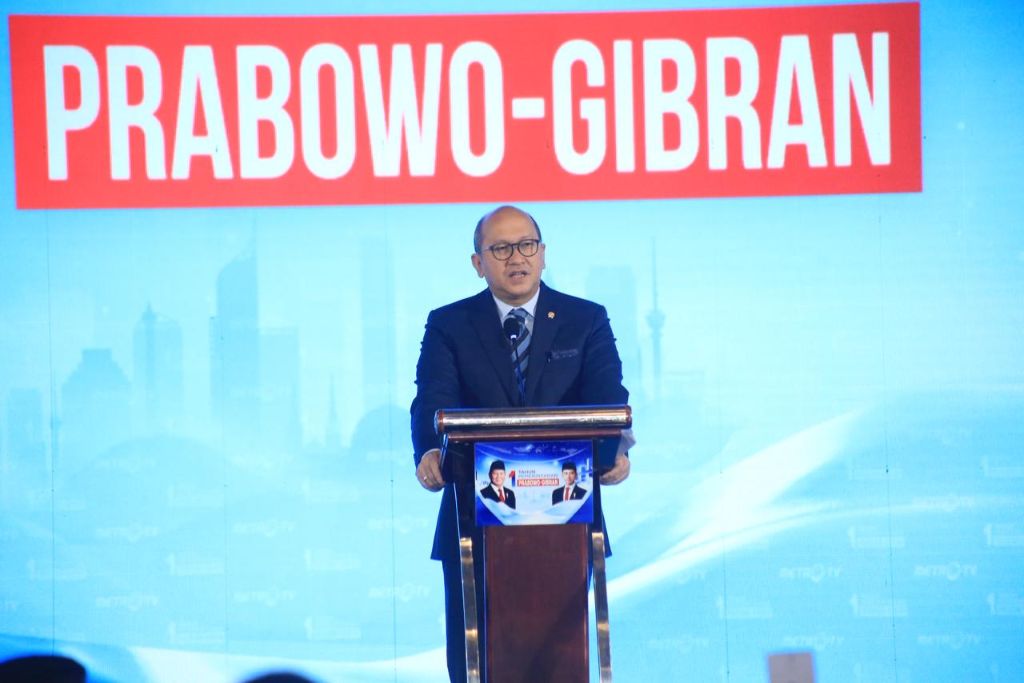
Minister of Investment and Downstream Industry and Head of the Investment Coordinating Board (BKPM) Rosan Roeslani said bauxite downstream investment realisation rose 193 per cent to Rp40.1 trillion in the second quarter of 2026, compared with Rp13.7 trillion in the previous quarter.
The figure made bauxite the commodity with the largest downstream investment realisation in Q2 2026, displacing nickel, which had long dominated investment in the mineral processing sector.
“If we look at it, nickel has always been number one. Now there has been a shift, with bauxite becoming number one, because several bauxite projects are being built by both domestic and foreign investors, so bauxite has taken the top spot for the first time after nickel,” Rosan said in an official statement received in Jakarta, quoting Antara, on Tuesday, 21 July 2026.
The figure exceeded downstream investment in nickel, which was recorded at Rp29.4 trillion, followed by copper at Rp16.7 trillion, iron and steel at Rp13.2 trillion, silica sand at Rp4 trillion, and other commodities such as tin, gold, silver, cobalt, manganese, coal, Buton asphalt and rare earth metals at Rp4.7 trillion.
Overall, downstream investment realisation in Q2 2026 reached Rp152.7 trillion, an increase of 5.7 per cent compared with the same period last year, contributing 29.8 per cent of total national investment realisation, which stood at Rp511.8 trillion.
Support from bauxite smelter construction
According to Rosan, the increase in investment was driven by the construction of a number of bauxite processing and refining facilities (smelters) by both domestic and foreign investors. He said the shift showed that national downstreaming was developing more evenly and was no longer dependent solely on the nickel industry.
He said the increase in downstream investment not only created industrial added value but also had an impact on job creation.
BKPM recorded that investment realisation during January–June 2026 absorbed 1,448,862 workers, an increase of around 15 per cent compared with the same period last year.
“In the second quarter alone, 742,263 jobs were absorbed, an increase of 5.1 per cent,” Rosan revealed.
One of the bauxite processing projects supporting national downstreaming is the Phase I Smelter Grade Alumina Refinery (SGAR) in Mempawah, West Kalimantan, developed by the MIND ID Group through PT Indonesia Asahan Aluminium (Inalum) together with PT Aneka Tambang Tbk (Antam).
The facility has a production capacity of one million tonnes of alumina per year and requires around 3.3 million tonnes of bauxite as raw material annually to strengthen the national aluminium industry supply chain.
Growth in mineral processing investment
Member of the House of Representatives Commission XII Eddy Soeparno welcomed the increase in bauxite downstream investment, which he said demonstrated the growing development of investment in mineral processing sectors beyond nickel.
“We welcome the achievement of investment in the bauxite downstream sector through the sharp increase in smelter investment. Looking at past developments, we have indeed been waiting for more investment in the bauxite smelter sector, as it has tended to lag behind investment in the nickel sector,” Eddy said.
He expressed hope that smelter construction would not stop at the initial processing stage but would continue through to the development of downstream industries so that Indonesia could gain greater added value.
“Therefore, we hope that investment in bauxite smelters will also be followed by the further development of downstream bauxite industries, so that the country can maximise the added value from downstream bauxite products,” he said.
Furthermore, Commission XII member Syarif Fasha also appreciated the increase in investment and expressed hope that the growth trend could be sustained so that it provides long-term benefits for the national economy.
“This achievement deserves appreciation. However, this trend must not be temporary; it must be consistent and, if possible, increased,” Syarif said.
He also noted that the success of downstreaming should benefit regions that produce natural resources through fair benefit-sharing.
“What the government needs to pay attention to is that we must protect resource-producing regions and their managers properly. For example, revenue-sharing funds for the regions should not be cut or continually borrowed against, and the regions’ rights should be granted in accordance with prevailing laws,” he said.
Source: jawawa.id (https://jawawa.id/newsitem/bauxite-downstream-investment-soars-193-to-rp40-1-trillion-in-q2-2026-1784692214)
Originally published by metrotvnews.com (https://www.metrotvnews.com/read/NxGCP7Dd-naik-193-investasi-hilirisasi-bauksit-rp40-1-triliun-di-kuartal-ii-2026), translated from Indonesian