
Batu City Government Revitalises Apple Orchards to Preserve Iconic Commodity
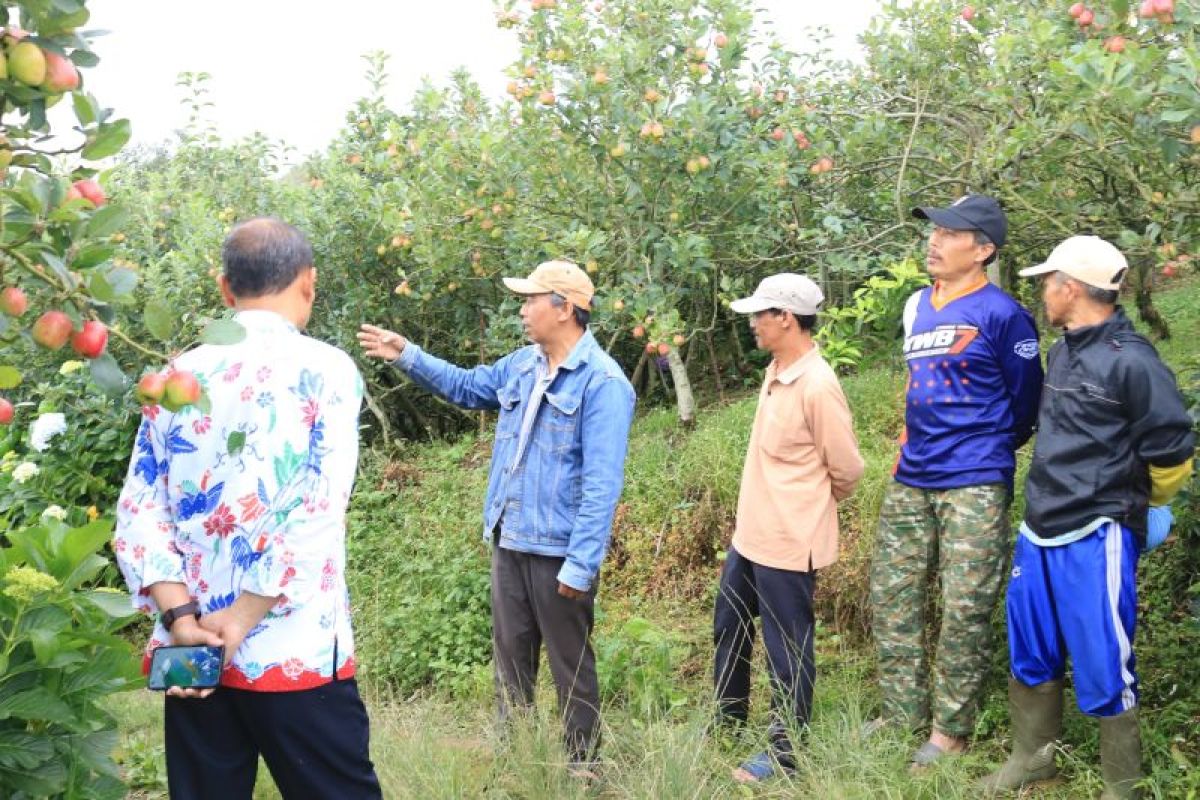
The revitalisation programme is being carried out in stages, with three hectares of apple plantation targeted in 2026.
Batu, East Java (ANTARA) — The Batu City Government in East Java is working to preserve apples as the region’s iconic commodity through the revitalisation of apple plantation land.
Head of the Batu City Agriculture and Food Security Service, Hendry Suseno, said in Batu on Wednesday that the revitalisation programme is being carried out in stages, with three hectares of apple plantation targeted in 2026.
“The revitalisation covers three hectares of land, adjusted to the available budget. The total area reaches 300 hectares, all located in Bumiaji District, and this is to preserve the apple as the icon of Batu City,” said Hendry.
The land revitalisation is focused on restoring soil fertility in apple plantations by providing plant growth promoting rhizobacteria (PGPR) fertiliser as well as nitrogen, phosphorus and potassium (NPK), following an earlier round of plant replacement or rejuvenation.
He said Bumiaji is indeed the last remaining apple-producing centre, so it must be protected to ensure production continues.
Based on gene expression testing by the National Research and Innovation Agency (BRIN) in Batu in 2023, he added, the best apple production indeed comes from Bumiaji District, particularly Tulungrejo Village, which sits at an altitude of 1,300 metres above sea level.
Farmgate apple prices currently stand at Rp12,000 per kilogram and can rise significantly at the market, reaching Rp30,000 per kilogram.
Annual production data from the local Agriculture and Food Security Service shows apple production in 2023 reached 218,621.79 quintals, equivalent to 21,862,179 kilograms, from a total of 573,595 productive plants, with a productivity rate of 38.11 kilograms per year.
In 2024, apple production fell to 140,285.41 quintals, or 14,028,541 kilograms, from a total of 371,622 productive plants, with productivity of 37.75 kilograms per year.
In 2025, production of the region’s iconic commodity declined further to 106,608.47 quintals, or 10,660,847 kilograms, from a total of 285,721 productive plants, with productivity of 37.31 kilograms per year.
Beyond land revitalisation, the relevant service is also working to deliver supporting facilities, such as composting houses, communal livestock pens, and education programmes to improve farmers’ capacity.
“Some are being assisted as seedling producers, and some farmers are making botanical pesticides, because 60 per cent of apple production costs go towards buying pesticides,” he said.
The Malang City Government hopes the series of measures taken can safeguard the sustainability of the apple plantation sector in Batu City.
Source: jawawa.id (https://jawawa.id/newsitem/batu-city-government-revitalises-apple-orchards-to-preserve-iconic-commodity-1784728659)
Originally published by Antara (Indonesian) (https://www.antaranews.com/berita/5661239/pemkot-batu-jaga-eksistensi-komoditasikonik-lewat-revitalisasi-lahan), translated from Indonesian