
Battery Saving Tips for Long-Distance Travel in Electric Vehicles
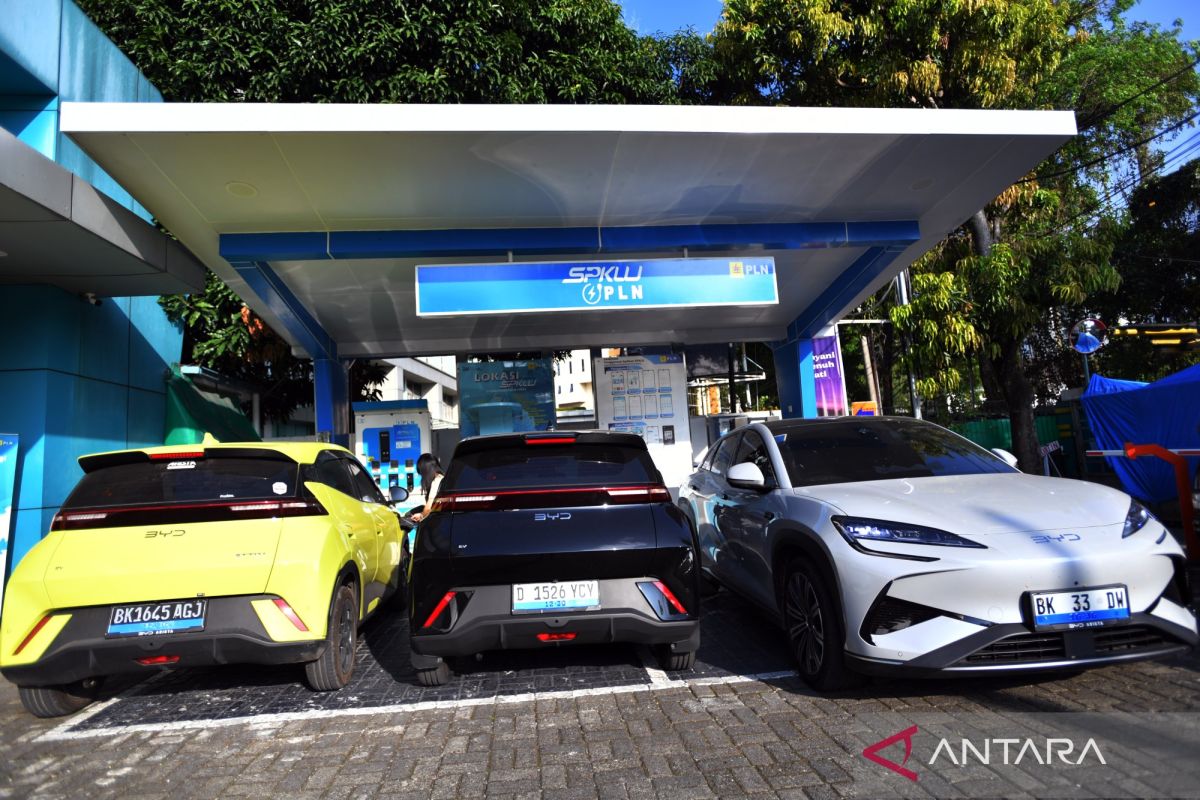
Jakarta — Long-distance travel using electric vehicles during the mudik season can be accomplished with greater energy efficiency if drivers are able to control several key factors that affect power consumption.
An automotive expert from Bandung Institute of Technology, Yannes Martinus Pasaribu, emphasises that the principle of energy efficiency in electric vehicles is fundamentally the same as in petrol-powered cars: reducing wasted energy from driving style, vehicle resistance, and additional load. Aggressive driving is identified as one of the primary causes of energy waste.
“Driving too fast, frequent sudden acceleration followed by hard braking, or being caught in unanticipated stop-and-go traffic will significantly increase energy consumption,” he stated when contacted from Jakarta on Friday.
In addition, tyre pressure should be checked before departure. Tyre pressure should be adjusted according to the manufacturer’s recommendation when the tyres are still cold.
To conserve battery power, Yannes recommends performing acceleration smoothly, maintaining stable speed, activating eco mode where available, and utilising regenerative braking by releasing the accelerator pedal earlier rather than performing sudden braking.
Battery preconditioning
Yannes further explains that efficiency is also significantly influenced by battery temperature management and charging planning. One recommended method is to perform preconditioning on the cabin and battery whilst the vehicle remains connected to the charger, so that the energy for cooling or heating the vehicle is drawn from the charger’s electricity rather than from the vehicle’s battery.
“Energy savings generally come from battery temperature management and charging planning, for example by performing cabin and battery preconditioning whilst the vehicle is still connected to the charger, so that the energy requirement for cooling or heating does not drain the battery once the journey begins.”
By warming or cooling the battery beforehand, preconditioning can reduce charging time, support long-term battery health, and represents one of the easiest ways to achieve maximum performance from an electric vehicle.
Route planning and driver fitness
“Route planning and charging point location through applications such as ABRP (A Better Route Planner) or PLN Mobile are also very helpful, allowing drivers to maintain a battery buffer of approximately 15–25 per cent without needing to rush to reach the next charger,” Yannes explained.
Beyond technical aspects, the driver’s physical condition is equally important. During long-distance mudik journeys, Yannes states that drivers should not force themselves to drive for more than approximately two hours without a break.
Taking brief rest periods to stretch muscles and restore focus is considered to make journeys safer whilst also helping to maintain vehicle energy efficiency.