
Battered and Bruised: The Fight Against the Online Gambling Industry
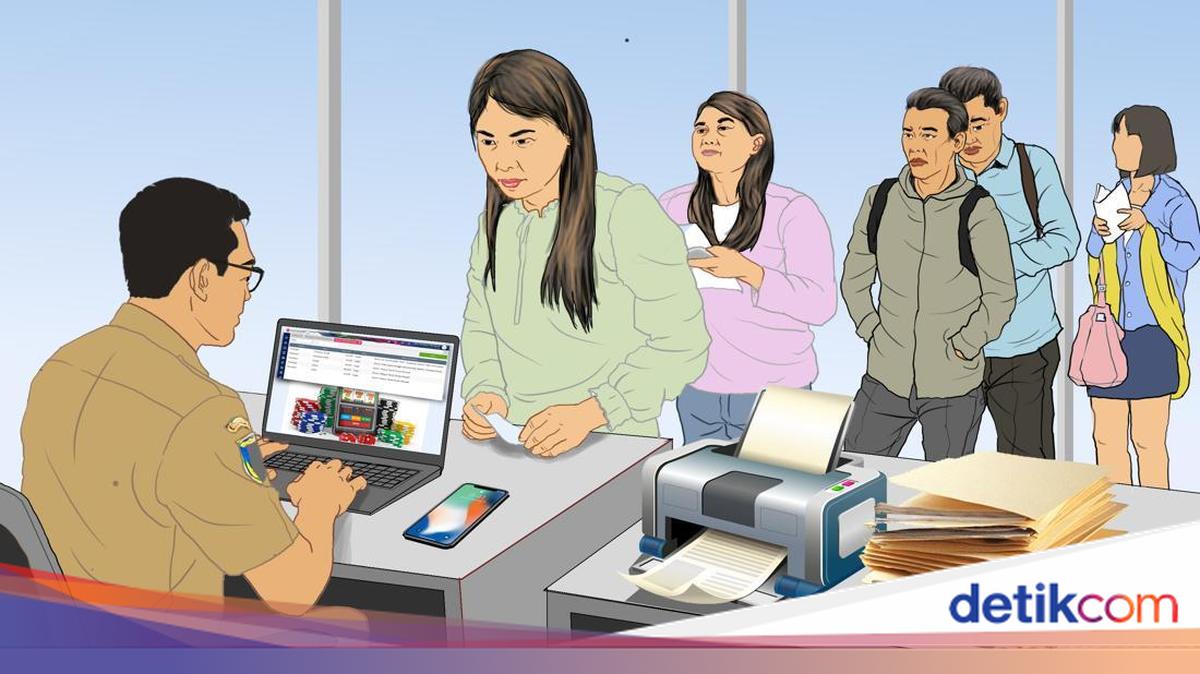
Online gambling has become a part of life for Farhan—not his real name—since his teenage years. Initially, he bet on football and played card games. Four years ago, even while working as a civil servant (ASN), he switched to online gambling because it was more accessible and he did not need to find opponents. The government’s blocking of websites proved ineffective, as new sites would immediately appear in search engine results. “Yes, it was as easy as that, you’d find them straight away,” he told detikX. The habit was driven by addiction. He only realised he was addicted at the end of 2024, when his debt had reached around Rp 150 million, all from online loans. “Actually, my financial habit was never to have debt and I never used paylater for other things. It was only because of this gambling. On average, the money came from online loans at that time,” he said. At that time, Farhan was still trying to hide his problem. To pay off the debt, he sought help from those closest to him. He told his parents he needed financial assistance for stock investments. Afterwards, he managed to stop playing for four months, but failed. “But it turns out stopping on your own is quite difficult when you’re in a condition of severe addiction,” he said. He cited two factors that made it difficult to break free from online gambling: extremely easy access and a lack of supervision from his immediate environment. The situation eventually worsened in 2025. His debt ballooned to around Rp 700 million. In the worst phase, Farhan admitted he could spend tens of millions of rupiah in a single night. As a civil servant in a ministry, the addiction began to affect his work. He was absent from the office several times because he had been gambling until the early hours. “Maybe there were four to five days a month when I didn’t go in,” he said. However, he claimed the impact was not yet visible in his performance, so his superiors were shocked when they learned of his actual condition. His office superior then gave him the opportunity to undergo treatment. Farhan eventually underwent outpatient and inpatient care at a regional hospital in Central Jakarta. For a month, he participated in cognitive behavioural therapy, took medication, and underwent transcranial magnetic stimulation (TMS). The experience made him view gambling addiction as an issue requiring serious treatment. He also believes family support is the most important factor in the recovery process. After leaving the hospital, his family imposed various restrictions, including banning the use of mobile banking, limiting phone access, and regulating device usage times. “Indeed, support from the immediate environment is the most important,” he stressed. The blocking of gambling sites has not been able to stop the practice among civil servants. The latest analysis by the Financial Transaction Reports and Analysis Centre (PPATK) shows the number of government employees indicated to be involved in online gambling has increased sharply over the past year. In 2025, PPATK identified 235,758 ASNs indicated to be involved in online gambling. This figure consisted of 70,912 civil servants, or about 30.1 percent, and 164,947 government employees with work agreements (PPPK), or 69.9 percent. In comparison, in 2024 the number of identified ASNs was 51,611 people. Of that number, 35,768 were civil servants and 15,843 were PPPK. Thus, the number of ASNs identified as being involved in online gambling increased by approximately 356.8 percent within a year. Ironically, amidst the high number of addicted civil servants, the government has been caught off guard. Websites belonging to hundreds of government agencies were found to have been used as Trojan horses for free online gambling promotions. According to data presented by the National Cyber and Crypto Agency (BSSN) during a hearing with Commission I of the House of Representatives on 22 January 2025, thousands of government domains had been infiltrated by gambling content. In 2024, 3,908 government domain URLs were found to be affected by the insertion of gambling content, spread across 678 government agencies. By the time of the hearing in 2025, 376 affected URLs had been detected across 78 government agencies. Furthermore, BSSN recorded several cases of defacement. Throughout 2024, 78 web defacement cases were found, 68 of which involved the insertion of hidden online gambling URLs. Digital forensic analysis of these web defacement incidents identified 31 specifically affected agencies, comprising 11 ministries/institutions, 4 provincial governments, and 16 city and regency governments. These infiltrations generally occurred through several stages of attack, from password guessing for initial access, inserting a backdoor, to injecting gambling scripts into the government website systems. The main vulnerabilities exploited by hackers included weaknesses in the Content Management System (CMS), SQL injection attacks, and vulnerabilities in file upload systems. OJK Chief Executive of Banking Supervision, Dian Ediana Rae, stated at the OJK Banking Forum on 14 July 2026 that online gambling practices remain a major challenge for the financial sector. Throughout 2025, suspicious transaction reports (LTKM) with indications of gambling-related predicate crimes from the banking sector increased by 260.03 percent. The contribution of gambling indications to total predicate crimes also rose sharply, from 18.37 percent in December 2024 to 48.83 percent in December 2025. This trend continued into early 2026. As of January 2026, indications of gambling-related predicate crimes still accounted for 35.28 percent of total suspicious transaction reports received. According to OJK, online gambling has now evolved into an organised economic crime that utilises various financial instruments, including holding accounts, electronic wallets, QRIS, and crypto assets to obscure the flow of funds. In its handling efforts, OJK noted that as of May 2026, there had been 2.8 million rejections of business relationship openings for prospective customers.