
Batik Training Opens Business Opportunities for People with Disabilities
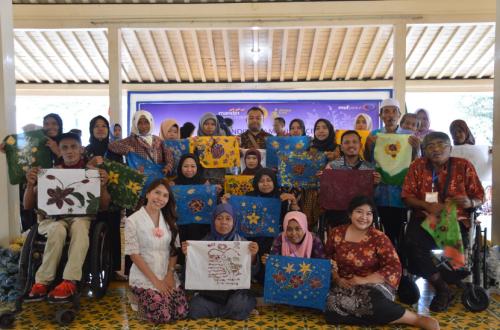
A total of 100 people with disabilities in the Special Region of Yogyakarta (DIY) have participated in a month-long batik training programme to develop skills and unlock business opportunities. The programme, supported by Mandiri Utama Finance (MUF) in collaboration with the Difabelzone Foundation, also provided batik equipment to the participants.
Participants were drawn from Bantul, Sleman, Kulon Progo, Gunungkidul, and Yogyakarta City. The training covered the development of batik skills, ranging from basic techniques to producing finished products with market value.
Elisabeth L. Sirait, Corporate Secretary & Legal Division Head of Mandiri Utama Finance, stated that the skills acquired by the participants are expected to be developed into productive activities.
“Through this programme, MUF aims to support people with disabilities in developing their batik skills and creativity, so they can produce works of economic value and open pathways towards independence,” Elisabeth said in a statement on Wednesday (23/09/2026).
Sulasno, Branch Manager of Mandiri Utama Finance Yogyakarta, added that the results of the training are expected to be developed into products and businesses.
“We hope that from this batik activity, proud works will emerge, possessing economic value, and capable of creating business opportunities and improving family economies,” said Sulasno.
The Vice Governor of DIY, KGPAA Paku Alam X, noted that batik skills can serve as a means to build independence while simultaneously preserving cultural values. He expressed hope for the emergence of a unique Yogyakarta disability batik identity with its own distinct character.
Head of the DIY Social Affairs Office, Suyarno, emphasised that the empowerment of people with disabilities must be accompanied by access and opportunities for sustainable creativity.
“Empowering people with disabilities is not only achieved through the provision of aid, but also by opening access and opportunities so that they can continue to create sustainably,” said Suyarno.
Participants in the programme represent various types of disabilities, including physical impairments, cerebral palsy, polio, hearing and speech impairments, intellectual disabilities, emotional disorders, low vision, and autism.
The training lasted for one month, and the participants’ works are planned to be exhibited on 3 December 2026, coinciding with the commemoration of International Day of Persons with Disabilities.