
Bategang: The Banjar Tradition of Welcoming Returning Hajj Pilgrims
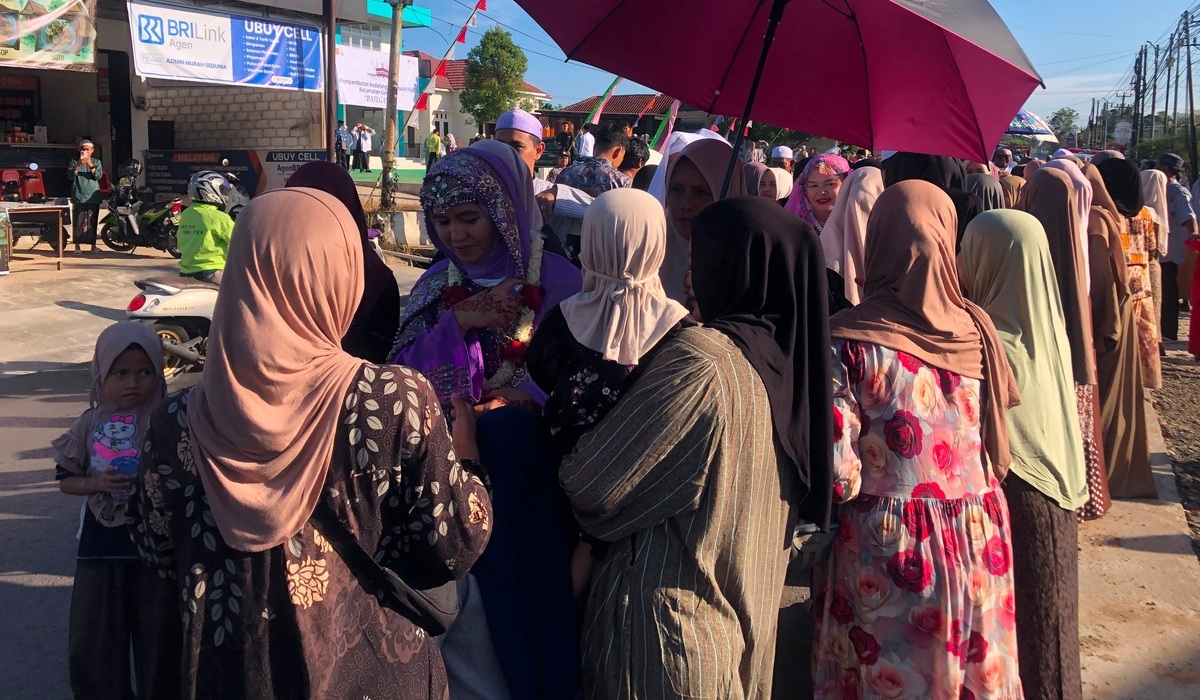
An atmosphere of joy mixed with emotion enveloped the arrival of Hajj pilgrims from Cempaka District, Banjarbaru City, South Kalimantan, that afternoon. Family members and the local community enthusiastically welcomed the return of residents to their hometown after more than a month of performing the Hajj pilgrimage in the Holy Land.
Chants of salawat accompanied by the beat of rebana music and sinoman hadrah dances added to the festive atmosphere. Female pilgrims appeared elegant, adorned in colourful fabrics, while male pilgrims dressed in distinctive Middle Eastern-style attire.
The pilgrims walked slowly past a line of sinoman hadrah dancers, entering a gate decorated with yellow coconut leaves leading to their homes. An emotional scene erupted as residents began to shake hands, embrace, and even kiss the pilgrims while asking for prayers so they might receive blessings and one day be able to depart for the Holy Land themselves.
This tradition of welcoming Hajj pilgrims is called Bategang. It is a distinctive tradition of the Banjar community for welcoming returning Hajj pilgrims. Similar traditions are also widely practised when sending off or dispatching Hajj pilgrims in several other areas of South Kalimantan.
The tradition is filled with processions, hadrah music performances, and the recitation of maulid verses to celebrate gratitude and strengthen social ties. Over the following days, the pilgrims will receive visits from guests, both family and neighbours, to socialise, share stories about their Hajj experiences, and of course, sample distinctive souvenirs from the Holy Land, especially Zamzam water.
“The meaning of the word Bategang itself is to shake hands and embrace,” explained Marhain Rahman, Expert Staff to the Mayor for Legal and Political Affairs, while attending the Bategang event in Cempaka Village. The Banjarbaru City Government itself expressed appreciation and committed to preserving the culture and traditions that live within the community.
After being welcomed with the Bategang tradition, the pilgrims generally visit the graves of their ancestors or parents. “The most important thing is that the pilgrims can become haji mabrur, become role models in society, and be able to maintain the conduct and behaviour of their Hajj in daily life,” said Marhain.
One of the newly arrived Hajj pilgrims, Haji Muhammad Leisi, expressed his emotion and happiness at being able to return to his homeland after about 40 days of worship in the Holy Land. “This Bategang tradition is certainly a cure for missing the family. It is extraordinary and deeply moving to be welcomed so festively by religious and community leaders,” he said, full of gratitude. He hopes that this long-standing tradition can continue to be preserved.