
Batang Gadis Cuisine Brings Tabagsel Flavours to Jakarta
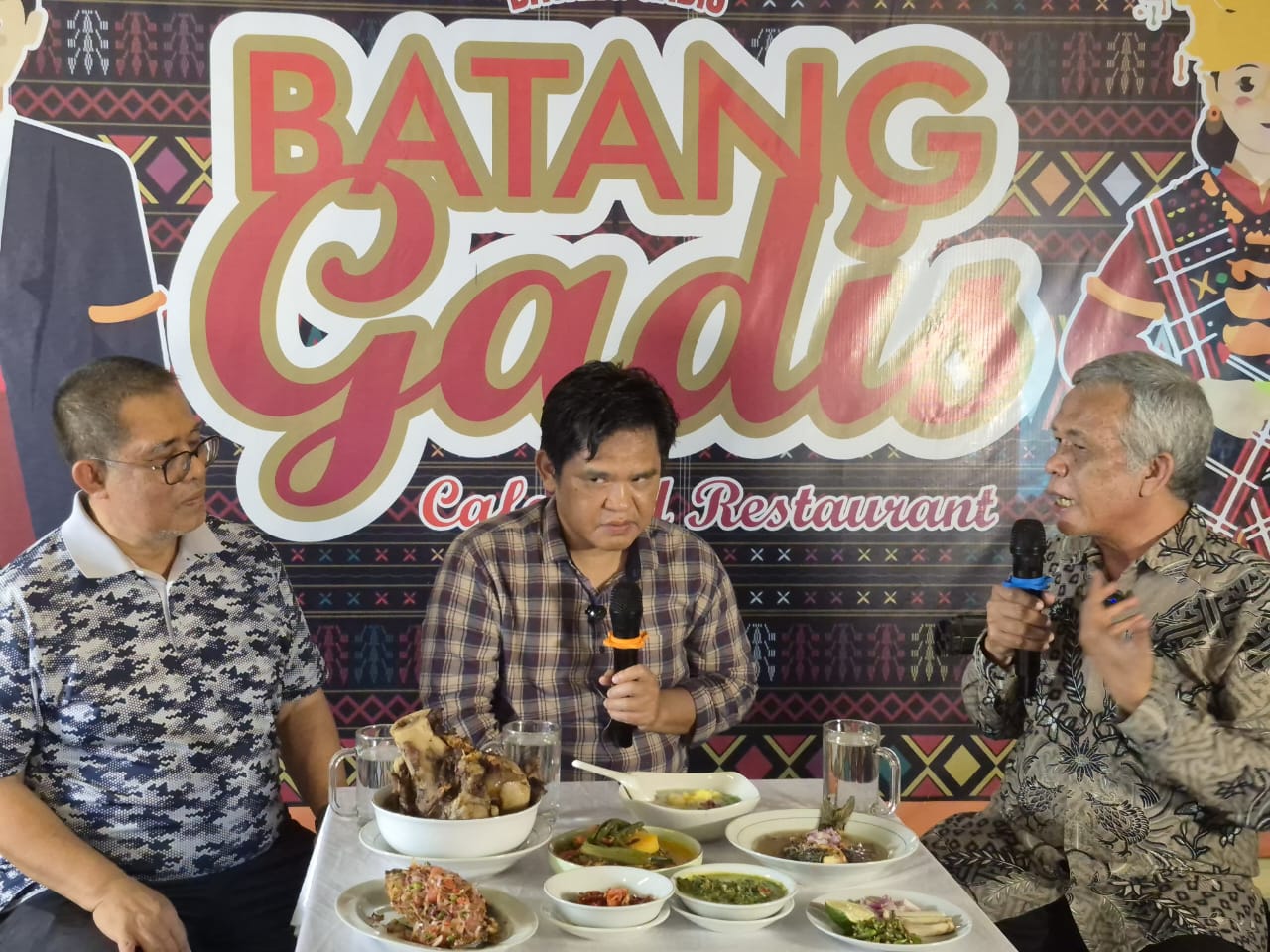
Traditional cuisine from Tapanuli Bagian Selatan (Tabagsel), North Sumatra, has arrived in Jakarta through Rumah Makan Batang Gadis in Cibubur, East Jakarta. The restaurant provides a space for people from Mandailing and Tabagsel living away from home to once again enjoy food closely tied to their hometown.
The culinary and cultural story of Batang Gadis was discussed in the programme ‘Bincang Tipis-Tipis’, hosted by Erman Tale Daulay, with the theme ‘From the Batang Gadis River Flowing to the Dining Table in the Capital’. The speakers were Muhammad Nuh Nasution, owner of Rumah Makan Batang Gadis, and Akhir Marua Harahap, a University of Indonesia lecturer and researcher of Tabagsel culture.
Muhammad Nuh said the choice of the name Batang Gadis was not merely business-related. The name was taken from a river that holds many memories for the Mandailing community. ‘Batang Gadis is full of memories,’ said Muhammad Nuh.
According to him, Batang Gadis was once a place where children gathered, fished, cast nets, swam, and served as a route to the rice fields. Those memories have now been brought to Jakarta through the restaurant’s name and menu. ‘Upon seeing the name Batang Gadis, one is reminded of Tabagsel, reminded of Mandailing,’ he said.
The restaurant serves a number of Tabagsel specialities, such as daun ubi tumbuk (pounded cassava leaves), grilled common carp, common carp curry, ikan sale (dried fish), holat, and sambal tuktuk. These dishes are offered to satisfy the longing of migrants for the food they have known since childhood. ‘The hope is, without lengthy explanation, upon seeing Batang Gadis one can already picture the hometown,’ he said.
Akhir Marua explained that Batang Gadis is not only important from an ecological perspective, but also plays a role in the social and economic development of the community. In the local language, ‘batang’ refers to a river. Similar terms are also used for Batang Angkola, Batang Toru, Batang Barumun, and Batang Pane.
According to him, the Batang Gadis river basin has long served as a route for the movement of people and goods. The river functioned as a link between upstream and coastal areas while also serving as a space for trade and the exchange of food and culture. ‘As a motorway, it means the busiest and fastest traffic passed through the river basin,’ explained Akhir Marua.
The community’s interaction with the environment then shaped Tabagsel’s culinary traditions. The fertility of the Batang Gadis basin area provides a variety of plants and food ingredients that are processed into dishes, including daun ubi tumbuk and holat.
‘From the local area of the river basin, the soil is fertile and the plants are diverse. From there our culinary heritage was formed up to the present day,’ he said.
Akhir Marua also highlighted the red fish that lives in the fast-flowing river. The fish is difficult to obtain, so in the past it held special value in the community’s culinary traditions. ‘It was food for the kings in ancient times,’ he said.
In addition to food ingredients, sambal tuktuk was cited as an example of the culinary creativity of the Tabagsel community. The sambal, made from chillies and salt, uses gadapang fish from the coastal area. The name tuktuk comes from the process of pounding the ingredients together.
According to Akhir Marua, the existence of sambal tuktuk demonstrates the relationship between inland and coastal communities through past trade networks.
‘In the old days, sambal tuktuk was a new product, the result of our people’s thinking. Because it was generally accepted and tasted good, it has remained sustainable until now,’ he explained.
In Jakarta, these traditional foods serve as a means of maintaining the cultural identity of the migrant community. Muhammad Nuh said customers come not only to enjoy the food, but also to seek the atmosphere of their hometown. ‘On average, our guests really enjoy it and say it tastes good and feels like being in the hometown,’ he said.
Rumah Makan Batang Gadis has become one of the spaces where Tabagsel cuisine can remain alive away from home. Through food, memories of the river, the environment, trade, and the life of the Mandailing community continue to be passed down from one generation to the next.
Source: jawawa.id (https://jawawa.id/newsitem/batang-gadis-cuisine-brings-tabagsel-flavours-to-jakarta-1787071856)
Originally published by Media Indonesia (https://mediaindonesia.com/nusantara/923315/kuliner-batang-gadis-hadirkan-rasa-tabagsel-di-jakarta), translated from Indonesian