
Batam ranks among top 10 ports with highest connectivity growth
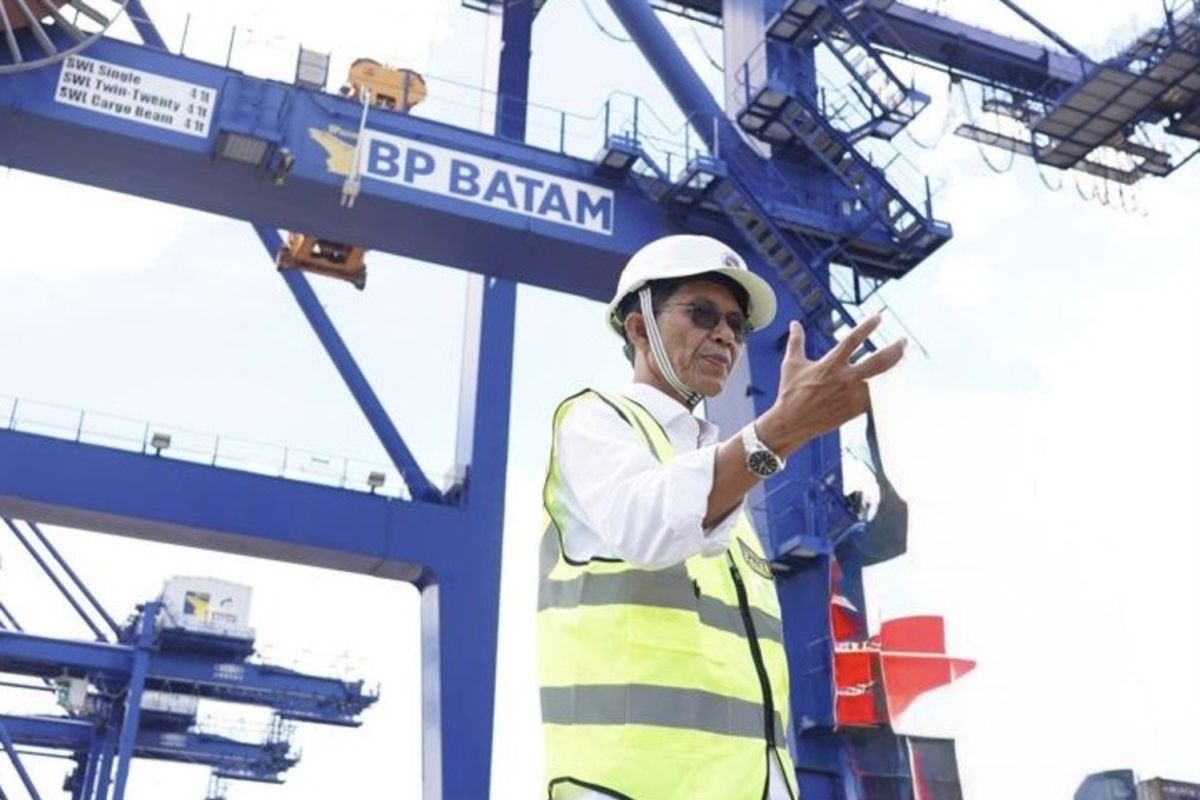
Batam Port in the Riau Islands (Kepri) has entered the top 10 ports with the highest growth in the Port Liner Shipping Connectivity Index (PLSCI) for the period from Q2 2016 to Q2 2026, according to UN Trade and Development (UNCTAD).
In this list, Batam ranks sixth among the ten ports with the highest connectivity growth, alongside other ports such as Malaga in Spain, Puerto Bolivar in Ecuador, and Chabahar in Iran.
The Head of the Batam Free Trade Zone Authority (BP Batam), Amsakar Achmad, explained that this achievement is inseparable from Batam’s geographical position, which is situated on a strategic international trade route.
“However, geographical advantage alone is not enough. We must ensure that ports and supporting infrastructure are developed to their maximum potential so that investment and industrial activities can grow and benefit the regional economy and the community,” Amsakar stated in an official statement received in Batam on Wednesday.
UNCTAD noted that the ports in this ranking have experienced strong connectivity growth over a decade, with growth rates ranging from approximately 274 per cent to 697 per cent, excluding the top three ports which recorded even higher growth.
This record serves as an illustration of the development of Batam’s connectivity within the global shipping network.
This growth in connectivity is also reflected in the increased activity at the Batu Ampar Container Terminal (TPK). Throughout January–May 2026, direct call services or international direct shipping at TPK Batu Ampar reached 106 ship visits, an increase of 212 per cent compared to the same period the previous year, which recorded 34 visits.
During the same period, the volume of containers through direct call services reached 58,237 TEUs, a 125 per cent increase compared to the 25,904 Twenty-foot Equivalent Units (TEUs) recorded from January–May 2025.
According to Amsakar, these developments demonstrate Batam’s strengthening access to international trade networks.
Batam’s connectivity strengthening is also occurring in the digital sector through the Nongsa-Changi Cable (NCC), which landed in Batam on 20 July 2026.
The undersea cable connects Nongsa Digital Park, Batam, with Changi, Singapore, via 24 pairs of optical fibres.
Its presence strengthens digital connectivity between Indonesia and Singapore while supporting the requirements for data centres, cloud computing, Artificial Intelligence (AI), and data centre interconnection.
Thus, Batam’s connectivity is expanding not only through maritime routes but also through digital networks that are increasingly essential for technology-based industries.
“We want Batam to become more connected. Not only physically through ports and trade routes, but also digitally. Both will be vital components in building an investment and industrial ecosystem that provides benefits to our economy,” said Amsakar.