
Batam Curly Red Chilli Prices Rose 15.3% in July, Now Beginning to Fall
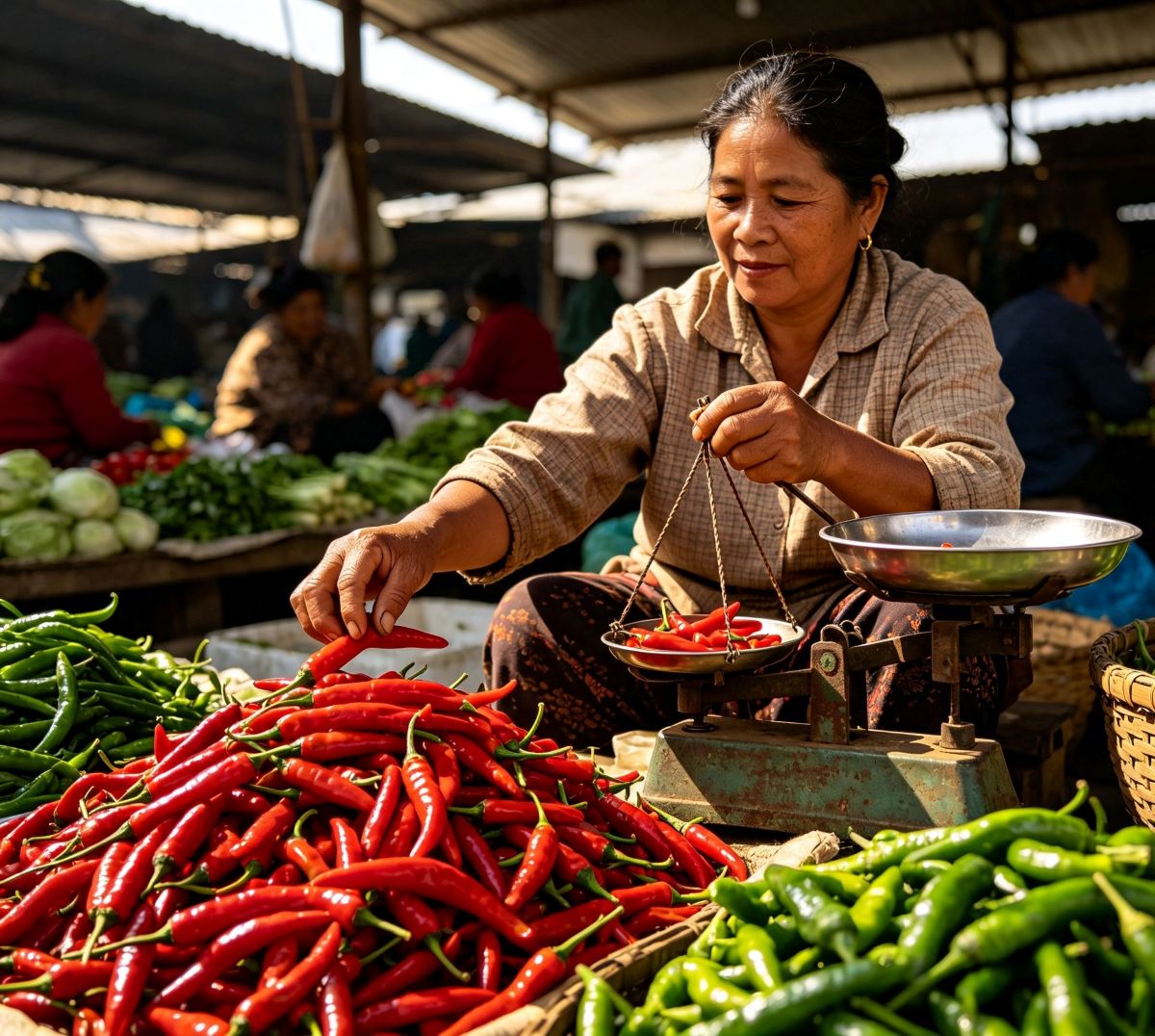
The price of curly red chillies in Batam recorded a significant spike in July 2026 before eventually declining again from early to mid-August. Staple food price data shows the price of curly red chillies rose by 15.3% over the course of one month, from around Rp43,650 per kilogram to a peak of Rp50,350 per kilogram at the end of July.
The increase was driven by limited supply entering Batam. As a city that does not produce chillies independently, Batam’s entire chilli requirement depends entirely on supply from outside the region. Distribution disruptions and reduced harvests in producing areas were the main causes of the reduced supply, which had a direct impact on price increases in Batam’s markets.
The price increase, which lasted around two to three weeks, led many buyers to postpone purchases while waiting for prices to return to normal, with some switching to dried chillies as a temporary substitute.
“The price from suppliers went up, so we had no choice but to follow. Many buyers said they would wait three to five days to see whether prices fall or not. Those who still buy often ask for dried chillies instead,” said Sarmin, 46, a trader at Pasar Tos 3000, Batam, on Thursday (20/8).
Meanwhile, buyers also admitted having to reorganise their daily spending.
“If it is still expensive, I might delay buying for more than a week. Dried chillies are now an option; although the taste is different, they last longer and the price is more stable,” said Riwanti, 32, a buyer.
However, entering early to mid-August 2026, the price of curly red chillies began to correct. As of 19 August 2026, prices in Batam’s modern markets were recorded to have fallen by between 4% and 12% compared with the previous month’s peak. The decline came as supply flows into the Batam area recovered.
The earlier increase in curly red chilli prices contributed 0.20% to Batam’s inflation rate, making it the largest contributor within the food group. Meanwhile, Batam’s annual inflation rate as of June 2026 was recorded at 4.75%.
Although prices briefly surged and put pressure on residents’ cost of living, the impact of the price increase on Batam’s economy as a whole was assessed as limited and temporary. This is because the main drivers of Batam’s economy are industry, trade, tourism and services — not the agricultural sector. Seasonal chilli price fluctuations, which are heavily influenced by supply, will not alter the city’s economic fundamentals going forward.
The regional government, together with the Regional Inflation Control Team (TPID), continues to work to maintain price stability and the smooth distribution of staple foods. Even so, the risk of price spikes remains if supply disruptions occur due to extreme weather or logistical constraints. Residents are urged to continue monitoring price developments in the market, while the authorities are committed to continuing to monitor supply flows to prevent excessive price increases.
Plh Head of the Batam Industry and Trade Office, Suhar, had not yet responded when contacted for confirmation, as his appointment was only to fill a vacancy following Gustian Riau’s resignation.
In Batam on Thursday (6/8), the price of red chillies was in the range of Rp68,000 to Rp69,000 per kilogram, while bird’s eye chillies were sold at around Rp60,000 to Rp61,000 per kilogram.
The highest increase occurred for curly red chillies, which were sold at around Rp50,350 per kilogram, an increase of around Rp6,700.
Batam’s annual inflation in June 2026 reached 4.75%. Increases in the prices of red chillies, chicken meat and rice were the main triggers burdening residents.
At the trader level, bird’s eye chillies were sold at varying prices, ranging from Rp70,000 to Rp90,000 per kilogram.
The price increase was triggered by several factors, including heavy rain in chilli production centres in Sumatra, dwindling supply, and high logistics costs to the Riau Islands.
The price of super red bird’s eye chillies is currently around Rp43,000 per kilogram, while number 2 quality is around Rp38,000 per kilogram.
Commodities on sale include red chillies at Rp35,000 per kilogram, local shallots at Rp22,000 per kilogram, imported shallots at Rp13,000 per kilogram, and garlic at Rp12,000 per half kilogram.
The current geopolitical and global economic conditions are triggering real pressures that directly affect the purchasing power of grassroots communities.
The price of slaughtered chicken has also fallen quite significantly, from around Rp29,000 per kilogram to Rp26,000 per kilogram.