
Basic Services in Sumatra Gradually Recover 11 Months After Disasters
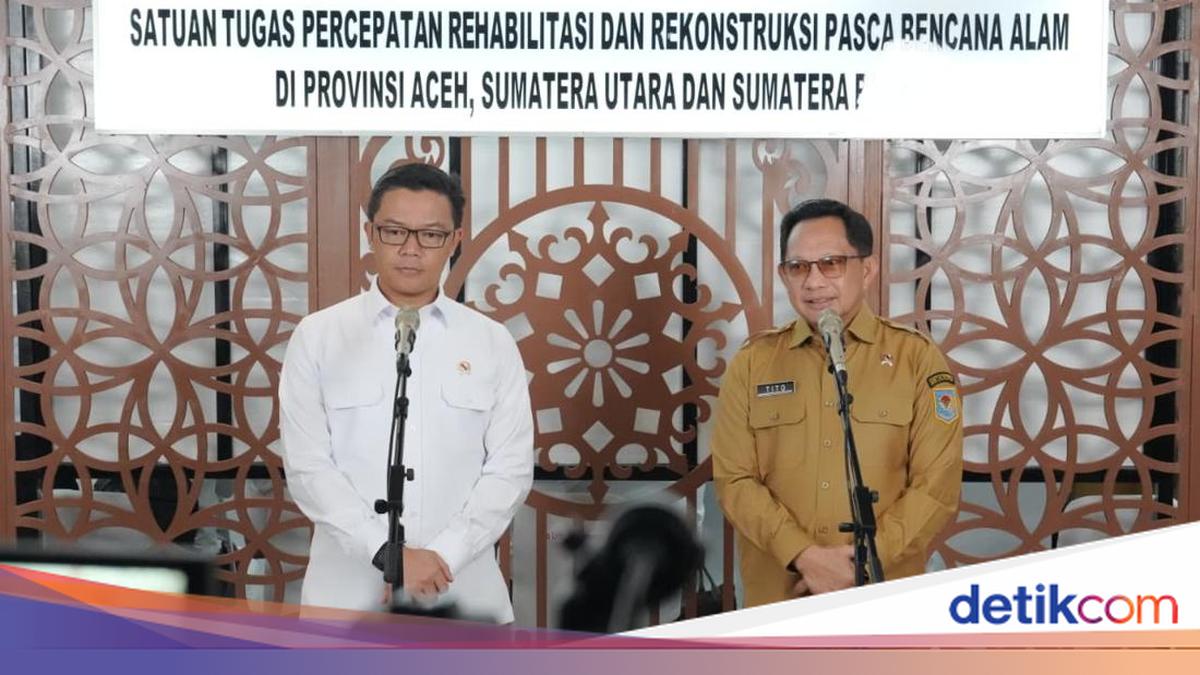
After 11 months of rehabilitation and reconstruction, recovery from disasters in Aceh, North Sumatra and West Sumatra continues to make progress. The government is now prioritising outstanding work, particularly the construction of permanent housing and public facilities, as well as stronger mitigation measures to improve public safety.
Sugiono, chair of the steering council of the Task Force for the Acceleration of Post-Disaster Rehabilitation and Reconstruction (Satgas PRR) in Sumatra, praised the efforts of central and regional governments, the Indonesian Military (TNI), the National Police (Polri), businesses and communities in restoring affected areas.
Sugiono said the government had prioritised regulations and budget support to address the impact of the disasters in the three provinces. Although it still faced budget constraints and various on-the-ground challenges, most recovery programmes were under way and benefiting the public.
“Rehabilitation and reconstruction have been under way for 11 months. I was also informed today, including by regional heads, that most of the government’s reconstruction and rehabilitation efforts in disaster-affected areas of Sumatra have been implemented and completed,” Sugiono said in a written statement on Monday (26 October 2026).
Sugiono made the remarks at the National Command Post of the Sumatra Post-Disaster PRR Task Force in Jakarta on Monday (26 October 2026).
In the health sector, almost all affected facilities have resumed operations. However, the completion of six auxiliary community health centres in North Sumatra remains a priority to ensure healthcare services can operate effectively in suitable buildings.
Teaching and learning have resumed, while the rehabilitation and construction of affected school buildings continues.
In residential areas, the government is also accelerating the provision of housing for affected residents so they can move into safe, permanent homes as soon as possible.
Sugiono said some projects still needed to be accelerated. However, he was confident that all rehabilitation and reconstruction programmes could proceed as planned through stronger coordination and joint efforts to resolve obstacles.
“In some places, we do need to accelerate the work, but I believe everything can be carried out well and in line with what we expect,” he said.
Alongside completing the physical recovery, the government is strengthening mitigation as an essential part of the process. Indonesia’s geographical conditions and climate change, which is affecting rainfall patterns, mean that disaster risks must be factored into development planning.
“Therefore, mitigation efforts must also be included in our planning, so that if a disaster occurs, we are better prepared and response and rehabilitation efforts can be carried out as quickly as possible,” he said.
Muhammad Tito Karnavian, head of the Sumatra Post-Disaster PRR Task Force, said one area requiring additional attention was speeding up work on affected rivers to guard against further flooding in Aceh, North Sumatra and West Sumatra.
“The main aim is to prepare for subsequent floods, particularly by speeding up the removal of sediment from affected rivers,” he said.