
Basic and Secondary Education Minister Addresses Proposal to End Automatic Grade Promotion by 2027
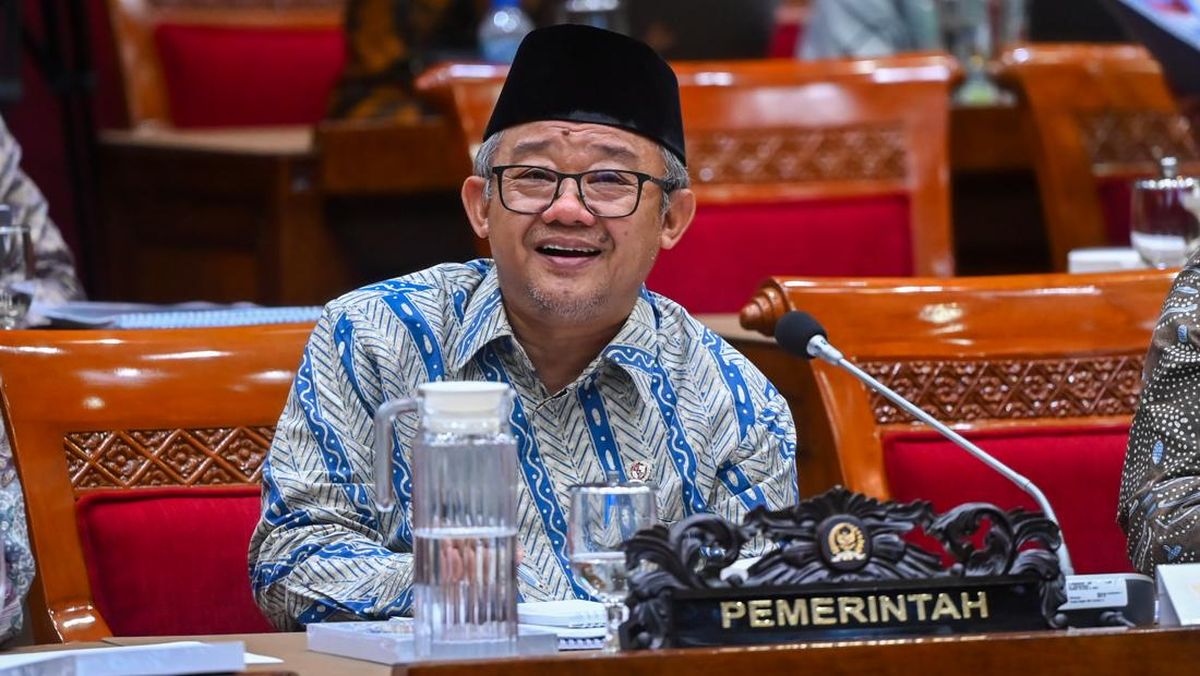
The Minister of Basic and Secondary Education, Abdul Mu’ti, has addressed the discourse regarding the proposal that students will no longer automatically advance to the next grade starting from the 2027 academic year.
This proposal emerged during the XII Indonesian Education Convention at Ganesha University of Education (Undiksha) on Friday (2/10). Mu’ti stated that such input is being taken seriously by the Ministry of Basic and Secondary Education. He noted that if the recommendation regarding the non-automatic promotion policy becomes part of the convention’s final results, his ministry is prepared to follow up.
“If this is approved and becomes part of the recommendations from this convention, we will certainly be ready to implement it,” Mu’ti said, as quoted from a written statement on Thursday (8/10).
Mu’ti mentioned that the policy could potentially be implemented from the 2027 academic year onwards. This means that not all students would automatically proceed to the next grade simply because they have completed one year of study.
According to Mu’ti, such a change is necessary to rebuild students’ commitment to learning. He highlighted a phenomenon he termed the ‘RMS formula’, which stands for ‘rajin malas sama saja’ (diligent or lazy, it’s all the same). He argued that this phenomenon is unhealthy if allowed to persist and become embedded in the educational culture.
“Because many students follow the RMS formula, where being diligent or lazy yields the same result,” he remarked.
Mu’ti believes that schools should provide space for students to realise that the learning process requires effort. He emphasised that students who are diligent, motivated, and capable of demonstrating competency development should receive appropriate appreciation. Conversely, students who have not met the required competencies should not be automatically deemed ready to proceed to the next level.
However, Mu’ti emphasised that the policy of not promoting students is not intended solely as a punishment. Rather, the policy is aimed at building character and a culture of learning.
Mu’ti stated that this discourse aligns with President Prabowo Subianto’s directive regarding the importance of building resilient human resources. Education, he continued, is not enough to merely produce children with academic abilities; it must also shape a generation with the fighting spirit and readiness to face competition.
Within this framework, Mu’ti argued that grade promotion should no longer be viewed merely as an administrative procedure. Promotion must become part of a mechanism to ensure that students truly possess the necessary foundation before moving to the next stage of learning.
Furthermore, Mu’ti assured that the government will not make any rushed decisions regarding this proposal. The Ministry of Basic and Secondary Education still requires academic studies and input from experts. This is essential to ensure that any implemented policy has a strong foundation and can address issues regarding the quality of education.
“If the recommendation comes from this meeting, I believe our steps to implement such a policy will be even more steadfast due to the support from experts,” he said.
In addition to the grade promotion policy, other inputs regarding educational policy, including issues regarding academic specialisations, were also mentioned in the recommendations. Mu’ti reaffirmed that the ministry is opening space for experts and educational stakeholders to provide input before any policy is decided and implemented.
“Because we certainly require academic studies and input from various parties,” Mu’ti concluded.