
Base Metals Investment Reaches Rp118.8 Trillion in Q3 2026
Indonesia’s investment realisation reached Rp528.7 trillion in the third quarter of 2026, growing 7.6 per cent year on year, with the base metals industry the largest subsector recipient of capital. Data from the Ministry of Investment and Downstreaming/BKPM, reported by CNBC Indonesia on 20 October 2026, showed the sector attracted Rp118.8 trillion, supported mainly by foreign investment.
Of total investment in Q3 2026, foreign direct investment (FDI) contributed Rp270.2 trillion, while domestic investment reached Rp258.5 trillion. The base metals, metal goods, and non-machinery and equipment industry absorbed 22.5 per cent of total realised investment, according to BKPM data cited by CNBC Indonesia.
Other services, including data centres, ranked second with investment of Rp81.8 trillion, or 15.5 per cent. Transport, warehousing and telecommunications followed with Rp51.7 trillion, or 9.8 per cent; mining recorded Rp38.7 trillion, or 7.3 per cent; and the food industry received Rp34.7 trillion, or 6.6 per cent.
The five largest subsectors differed when investment was divided by the origin of capital. For domestic investment, transport, warehousing and telecommunications ranked first at Rp43.3 trillion, or 16.8 per cent, according to BKPM data.
Other services ranked second for domestic investment at Rp37.6 trillion, or 14.6 per cent. Mining recorded Rp32.8 trillion, or 12.7 per cent, followed by housing, industrial estates and offices at Rp25.1 trillion, or 9.7 per cent, and the food industry at Rp22.4 trillion, or 8.7 per cent.
For FDI, the base metals, metal goods, and non-machinery and equipment industry dominated, attracting Rp111.6 trillion, equivalent to 41.3 per cent of all foreign investment in the quarter. Other services ranked second at Rp44.1 trillion, or 16.3 per cent.
The chemical and pharmaceutical industry received Rp17.4 trillion in FDI, or 6.4 per cent. The food industry recorded Rp12.3 trillion, or 4.5 per cent, while housing, industrial estates and offices attracted Rp9.5 trillion, or 3.5 per cent.
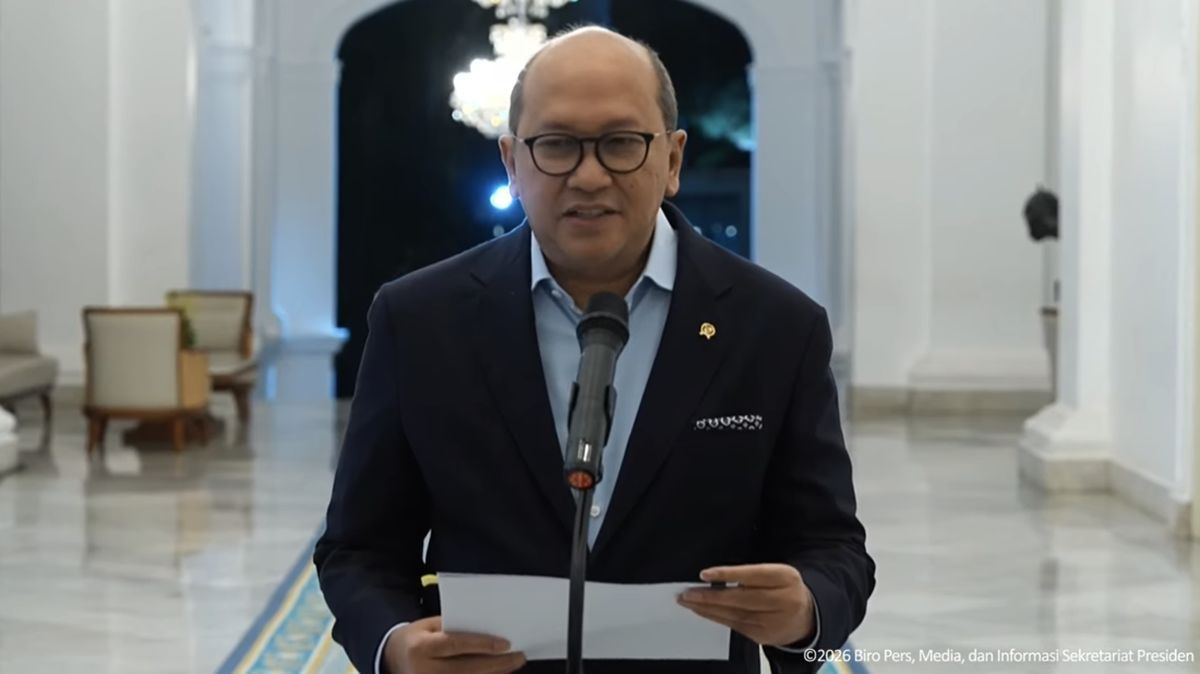
The substantial investment in base metals is in line with the government’s strategy to expand mineral downstreaming. At the Indonesia Sustainability Forum in Jakarta on 6 October 2026, Investment and Downstreaming Minister and BKPM head Rosan Roeslani said downstreaming accounted for around 30 per cent of Indonesia’s total investment, worth US$61 billion, an increase of 7.2 per cent.
Rosan explained that downstreaming policy is not solely focused on building processing facilities, but also on creating industrial chains connecting mining, processing, manufacturing, clean energy and technology. Indonesia’s reserves of nickel, bauxite, copper and other strategic minerals provide a foundation for developing higher-value industries.
At the forum, Rosan stressed the importance of developing industry domestically to strengthen the economic benefits derived from Indonesia’s mineral resources.
“We are home to some of the world’s most important reserves of nickel, bauxite, copper and other strategic critical minerals. Our goal is to build industries. That is why downstreaming remains a key pillar of our economic strategy,” said Rosan Roeslani, Minister of Investment and Downstreaming and head of BKPM.
One initiative to develop mineral value chains is being undertaken by MIND ID Group across nickel, bauxite, alumina, aluminium and copper. The strategy includes developing processed products and preparing a recycling industry to support a circular industrial ecosystem in Indonesia.
In the nickel sector, MIND ID Group, through Indonesia Battery Corporation (IBC), is involved in developing the electric-vehicle battery supply chain. The effort links national mineral resources with the battery and electric-vehicle industries.
Bauxite and aluminium industry development is aimed at building a production chain from bauxite to alumina and then aluminium for manufacturing needs. Copper processing, meanwhile, is intended to support demand from the electricity, electronics and manufacturing sectors.
Rosan also outlined the development of the electric-vehicle ecosystem as one of the key areas of downstreaming, including battery-cell production in Indonesia through partnerships among several companies.
“There are three prominent areas. First, electrification: from mining to battery cells to electric cars. Indonesia is now producing battery cells at two major plants, in partnership with Hyundai and also with CATL and our state-owned company IBC, which began operating in stages in August,” Rosan said.
Source: jawawa.id (https://jawawa.id/newsitem/base-metals-investment-reaches-rp118-8-trillion-in-q3-2026-1792534825)
Originally published by koridor.co.id (https://koridor.co.id/investasi-logam-dasar-kuartal-iii-2026), translated from Indonesian