
Barong Ket from Pejukutan, Nusa Penida, Captivates Audiences in Klungkung Square
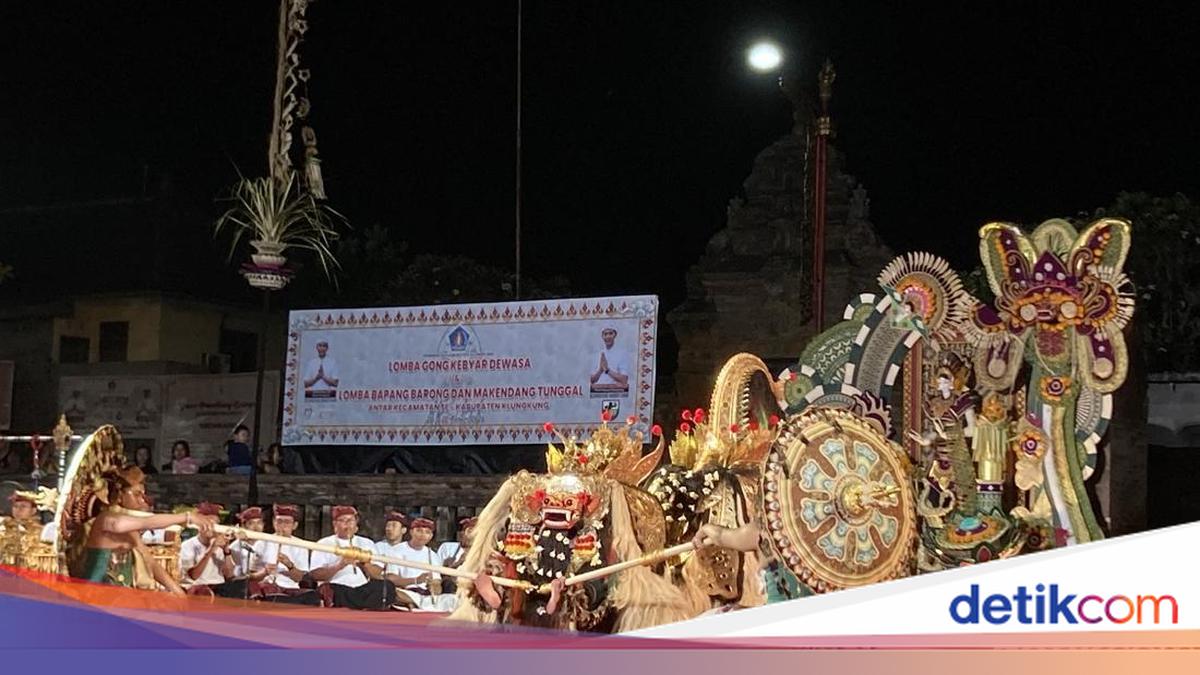
The sound of the keteg and kendang drums reverberated across the stage at the 2026 Arts and Culture Preservation Showcase (Aksiku), held at Ida Dewa Agung Jambe Square in Semarapura, Klungkung, on Thursday night (22 October 2026).
One of the performances that most captivated the audience was the opening appearance by Nusa Penida’s artist delegation in the Bapang Barong Ket competition.
Despite having to cross the sea from the neighbouring island, the young troupe performed with complete commitment. Their agile, forceful yet dignified movements (mateg) kept hundreds of spectators transfixed by the Barong Ket’s mesmerising display on stage.
The coordination between the barong dancer (juru bapang) and the kendang drummer (mekendang tunggal) was impressive. Every movement of the Barong Ket—from the swishing of its fur and the swinging of its head to the snapping of its jaws (agem and seledet)—matched the energetic drumbeats.
Wayan Raditya, 22, a Barong dance instructor in Nusa Penida, said the Barong Ket presented at the event was created by Banjar Pelilit in Pejukutan Village. The novice dancers, who had never performed as a barong before, spent one to two months preparing.
“For this competition, we prepared from the beginning of training for about one to two months,” Raditya told detikBali after the performance.
“I am quite satisfied with the dancers’ performance, especially given that they are still beginners and had to make the crossing beforehand,” he added.
Before the performance, a special ritual is required and is believed to help the show proceed. The ritual is also said to help the barong move on its own, assisting the dancers on stage.
“That is a belief we hold, so we have a ritual. We pray first,” Raditya explained.
Barong costs Rp70 million to Rp100 million
Behind the dancers’ skill is a valuable work of art: the barong is made entirely by hand.
“It costs between Rp70 million and Rp100 million. None of it is factory-made; everything is made by artisans by hand. We rent this Barong Ket, for around Rp2.5 million to Rp3 million per performance,” Aditya explained.
Aksiku is an initiative by the Klungkung Regency Culture Office to provide a platform for artistic expression and nurture a new generation of local performers. The dance parade and traditional arts competition involve artists representing Klungkung’s four subdistricts: Dawan, Banjarangkan, Klungkung and Nusa Penida.
Klungkung Regent I Made Satria praised the participation of young artists, particularly those from Nusa Penida, for their continued commitment to preserving Bali’s cultural heritage.
“Through this annual Aksiku event, we want to ensure that arts and culture remain alive and continue to develop. The presence of artists from Nusa Penida shows that the spirit of preserving the arts is not held back by the sea,” Satria said.
Ida Dewa Agung Jambe Square was even livelier because, alongside its major cultural performances, Aksiku 2026 also featured a local small and medium-sized enterprise (SME) exhibition and food stalls that drew crowds from the surrounding area.
The combination of sacred traditional art and the growth of the local creative economy brought Semarapura’s town centre to life that evening.
Source: jawawa.id (https://jawawa.id/newsitem/barong-ket-from-pejukutan-nusa-penida-captivates-audiences-in-klungkung-square-1792687883)
Originally published by detikBali (https://www.detik.com/bali/budaya/d-8719839/barong-ket-pejukutan-nusa-penida-curi-perhatian-di-alun-alun-klungkung), translated from Indonesian