
Bareskrim to Thoroughly Investigate Food Mafia Allegations Following Agriculture Minister’s Report
Jakarta (ANTARA) – The Criminal Investigation Agency (Bareskrim) of the Indonesian National Police will thoroughly investigate alleged violations in the food sector, following a report by Agriculture Minister Andi Amran Sulaiman to the National Police Chief, in order to protect the public from fraudulent practices.
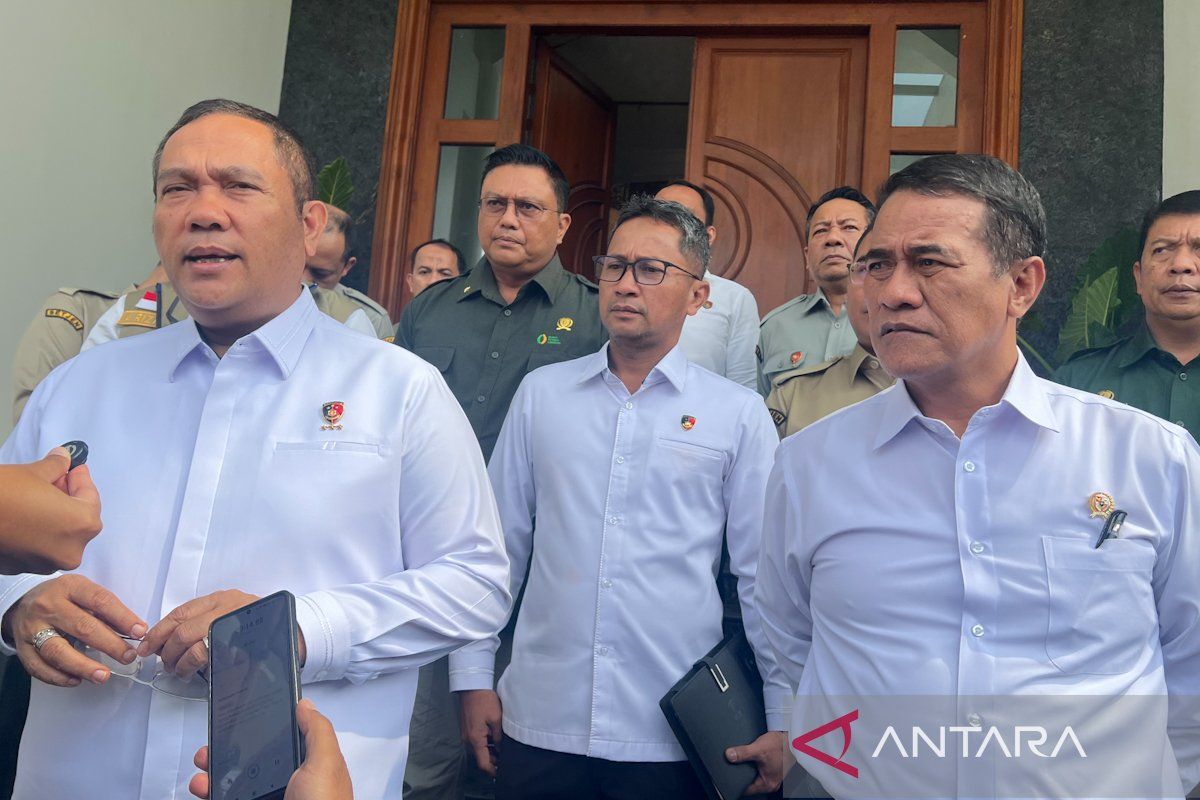
Bareskrim Chief Commissioner Asep Safrudin said his agency had received a letter from Agriculture Minister Andi Amran Sulaiman to the National Police Chief and had been given a direct explanation of several food-related issues requiring police follow-up.
“The letter has reached us, and the Minister has explained what the police are expected to do,” Asep told reporters after meeting the Minister in Jakarta on Monday.
He said investigations and law enforcement would be carried out against parties found to have broken the law, and that the public’s interests would be protected from fraud in food trading.
Asep said Bareskrim would follow up the report through the stages of law enforcement, from investigation through to legal proceedings against those found to have committed violations.
“Of course, we will immediately take action, starting with investigations and moving on to law enforcement,” he said.
One focus is alleged violations by importers. Asep said Bareskrim would check the progress of cases, including four police reports currently being processed, and trace companies or legal entities suspected of wrongdoing.
“There are four police reports being processed, and we will continue checking the companies or legal entities that have committed violations so that we can take the next steps,” he added.
Apart from importers, livestock feed is also among 11 priority issues for follow-up. Bareskrim will examine each alleged violation based on the facts and evidence before determining further legal action.
Asep stressed that enforcing the law in the food sector was part of the police’s responsibility to oversee strategic government programmes, particularly because the sector concerns the public’s basic needs.
“The police must genuinely ensure that all government programmes, including the President’s strategic programmes, are carried out, because these concern the livelihoods of many people,” he said.
The Agriculture Minister had earlier written to National Police Chief General Suyudi Ario Seto to request support for law enforcement over alleged food-mafia practices.
It was the second time the Minister had sent such a letter to the National Police Chief, having previously sought similar support from the former police chief.
The report covers several issues, including alleged violations in the chicken and egg trade, fraud involving fortified rice, and other cases already being handled by law enforcement agencies.
“We have written to the National Police Chief twice,” Amran said.
According to Amran, alleged manipulation of food trading must not be allowed to continue, as its impact is felt directly by farmers, producers and consumers.
Law enforcement is needed to ensure the distribution chain operates properly and to prevent practices that harm the public and disrupt government policy.
Amran said oversight and enforcement must cover a range of commodities, not just one sector. He said the National Police’s Food Task Force had named 102 suspects in enforcement actions between 2024 and 2026, and that the number could rise.
Previously, the National Police, the Attorney General’s Office and the Agriculture Ministry uncovered alleged rice adulteration involving 212 producers, with estimated losses to the public of Rp99 trillion.
In the cooking-oil case, Amran also said that 20 alleged offenders had been handed over to law enforcement authorities.
“Rice as well, cooking oil as well—we have to keep them under scrutiny,” he added.
Food-trading issues returned to the agenda at the Inflation Control Coordination Meeting at the Ministry of Home Affairs on 12 October 2026. Chicken, eggs and rice were among the commodities identified as requiring attention.
In an official statement on Thursday (15 October), the Minister highlighted a sharp gap in chicken prices: around Rp20,000–Rp21,000 per kilogram at farm level, compared with Rp45,000 per kilogram for consumers.
“The producers are complaining, and so are consumers. That means something is not healthy,” he said.
Bareskrim’s move to follow up the report is an important step towards uncovering alleged irregularities in food trading.
Firm and thorough handling is expected to provide legal certainty, protect farmers and consumers, and ensure that food trading does not become a space for fraudulent practices that harm the public interest, he added.
Source: jawawa.id (https://jawawa.id/newsitem/bareskrim-to-thoroughly-investigate-food-mafia-allegations-following-agriculture-ministers-report-1792425058)
Originally published by Antara (Indonesian) (https://www.antaranews.com/berita/5797677/bareskrim-mengusut-tuntas-mafia-pangan-tindaklanjuti-laporan-mentan), translated from Indonesian