
Barantin Strengthens Quarantine Laboratory Standards to Enhance Animal Disease Surveillance
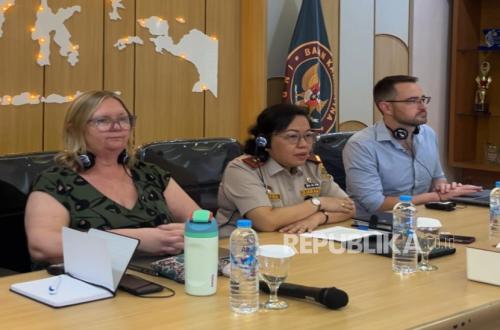
The Indonesian Quarantine Authority (Barantin) continues to strengthen the capacity of its quarantine laboratories to support a more reliable and internationally standardised animal disease surveillance system. This effort is being implemented through Laboratory Mapping Tool (LMT) training and a Proficiency Test (PT) Refresher held from 2-5 June 2026.
The activity, organised by Barantin’s Standard Testing Quarantine division, is the result of a partnership with the Australian Department of Agriculture, Fisheries and Forestry (DAFF) via the Australian Centre for Disease Preparedness (ACDP) Regional Emerging Disease Support (REDS) programme.
The Head of Barantin’s Standard Testing Quarantine, Risma J.P. Silitonga, stated that strengthening laboratory capacity is a vital step in ensuring that animal disease detection and surveillance systems operate effectively. According to her, the training aims to enhance laboratory personnel’s understanding of LMT implementation while strengthening their ability to conduct proficiency testing.
“LMT serves as an important instrument to evaluate laboratory capacity, identify strengths and areas for improvement, and support sustainable laboratory development planning,” Risma said in her statement.
The training featured Lee Trinidad, Project Manager of the REDS International Programme ACDP, and James Hollier, an ACDP Proficiency Testing expert. Both provided briefings to Standard Testing Quarantine Laboratory personnel regarding the concepts and implementation of LMT.
Through this instrument, laboratory capacity is comprehensively assessed, covering aspects such as infrastructure, organisation, laboratory security, equipment, management of materials and reagents, human resources, training, quality assurance, bio-risk management, waste management, and occupational health and safety (K3).
Risma explained that the assessment results will serve as the basis for formulating strategies to strengthen laboratory capacity and determining development priorities for the future.
In addition to the training, the ACDP team also conducted site visits and direct assessments of the Standard Testing Quarantine Laboratory facilities. The assessment utilised a semi-quantitative approach to identify areas requiring further reinforcement and improvement.
Risma expressed hope that this collaboration would strengthen the capacity of Indonesia’s quarantine laboratories in supporting an effective and trustworthy animal disease surveillance system. She added that the approaches and training results are expected to be applied in the future to fish quarantine, plant quarantine, as well as food and feed safety and quality laboratories.