
Barantin Strengthens Commodity Traffic Surveillance at Kepri Borders
Batam (ANTARA) - The Indonesian Quarantine Agency (Barantin) is strengthening oversight in border regions, particularly in the Riau Islands (Kepri), through seven strategic measures to prevent the smuggling of illegal commodities while reinforcing the national biosecurity system.
“The challenges of oversight in border areas are becoming increasingly complex in step with the high volume of cross-border commodity traffic. Strengthening supervision is a priority for the Indonesian Quarantine Agency through seven strategic measures,” said Barantin’s Secretary-General, Shahandra Hanitiyo, in an official statement received in Batam on Thursday.
The seven strategic measures are: expanding the reach of surveillance, strengthening human resources, modernising laboratories, improving operational facilities, developing integrated government installations, accelerating the digitalisation of oversight, and reinforcing integrated cross-agency operations.
“We are driving this strategy to ensure the protection of Indonesia’s biosecurity is increasingly optimal,” he said.
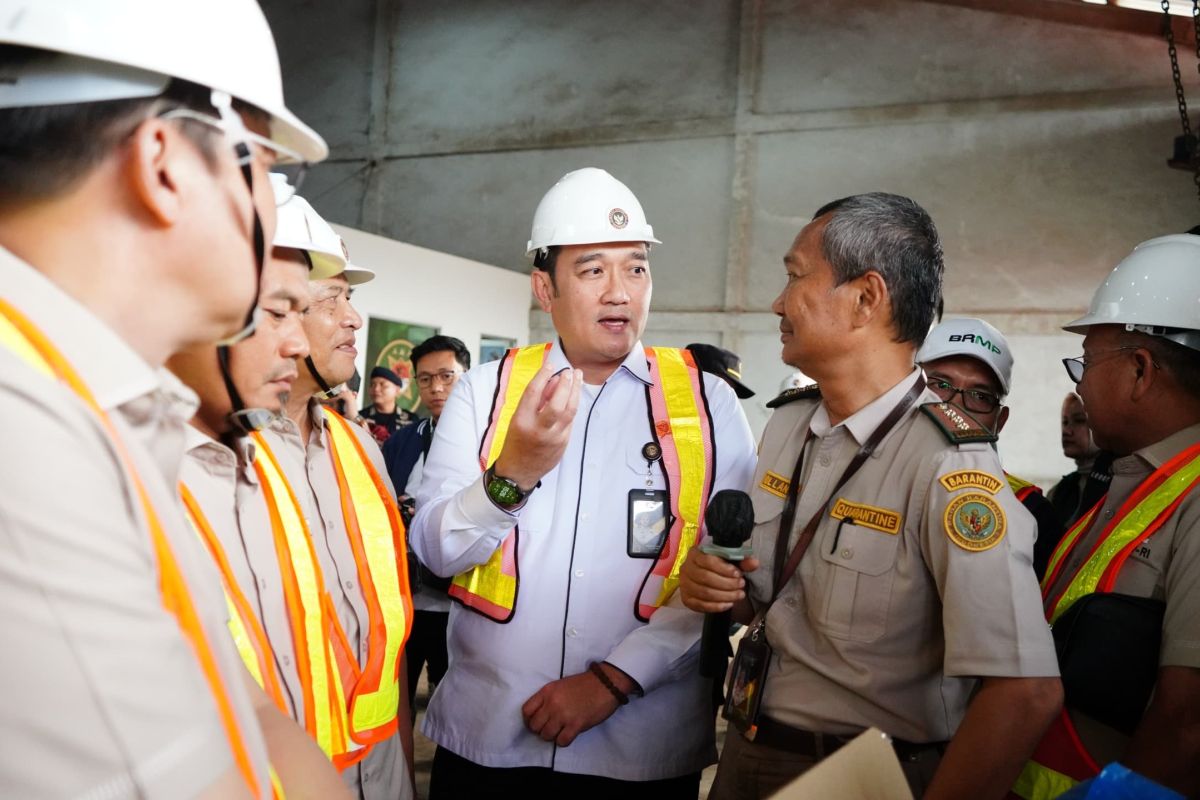
Shahandra conveyed this commitment while accompanying a recess working visit by Commission IV of the House of Representatives (DPR RI) to the Integrated Physical Service Post (TPFT) at Batu Ampar Port in Batam, Riau Islands.
He added that this strengthening effort is a key focus, given that border regions are the front line in preventing the entry and spread of pests, diseases, and invasive organisms that could threaten the agricultural, livestock, fisheries, and environmental sectors.
“This oversight is important because the Riau Islands is a strategic region bordering Singapore and Malaysia directly,” he said.
The region serves as a gateway for international trade while also facing a high risk of commodity smuggling, he added.
“Barantin is also strengthening human resource capacity through improved officer competence, modernising laboratories to speed up the identification of pests and diseases, and equipping operational facilities so that field supervision runs more effectively,” he said.
In addition, the digitalisation of services and surveillance continues to be developed so that inspection, certification, and the tracking of carrier media processes become faster, more transparent, and more accurate.
“These efforts are reinforced through the construction of integrated government installations, as well as joint operations with various ministries, agencies, and law enforcement authorities,” said Shahandra.
The Head of the Riau Islands Animal, Fish, and Plant Quarantine Centre (BKHIT Kepri), Hasim, said that oversight in an archipelagic region cannot be carried out by a single agency alone.
“Given the characteristics of the Riau Islands, which have many points of entry and exit, strengthening inter-agency synergy is key to narrowing the space for smugglers to operate,” said Hasim.
Throughout the first half of 2026, BKHIT Riau Islands carried out 18 refusal actions and 10 destruction actions against commodities that failed to meet quarantine requirements.
In addition, five quarantine criminal cases related to rice commodities have been resolved to the P-21 stage.
During the visit, the DPR RI Commission IV delegation, led by deputy team leader Alex Indra Lukman, directly inspected document examination, administrative verification, and the physical inspection of carrier media at the Batu Ampar Port TPFT.
Through these seven strengthened strategies, Barantin hopes that the surveillance system in border regions will become more effective in preventing the entry, exit, and spread of Quarantine Animal Pests and Diseases (HPHK), Quarantine Fish Pests and Diseases (HPIK), and Quarantine Plant Pest Organisms (OPTK).