
Barantin Reveals Indonesian Floriculture Exports Reach Rp3.51 Trillion
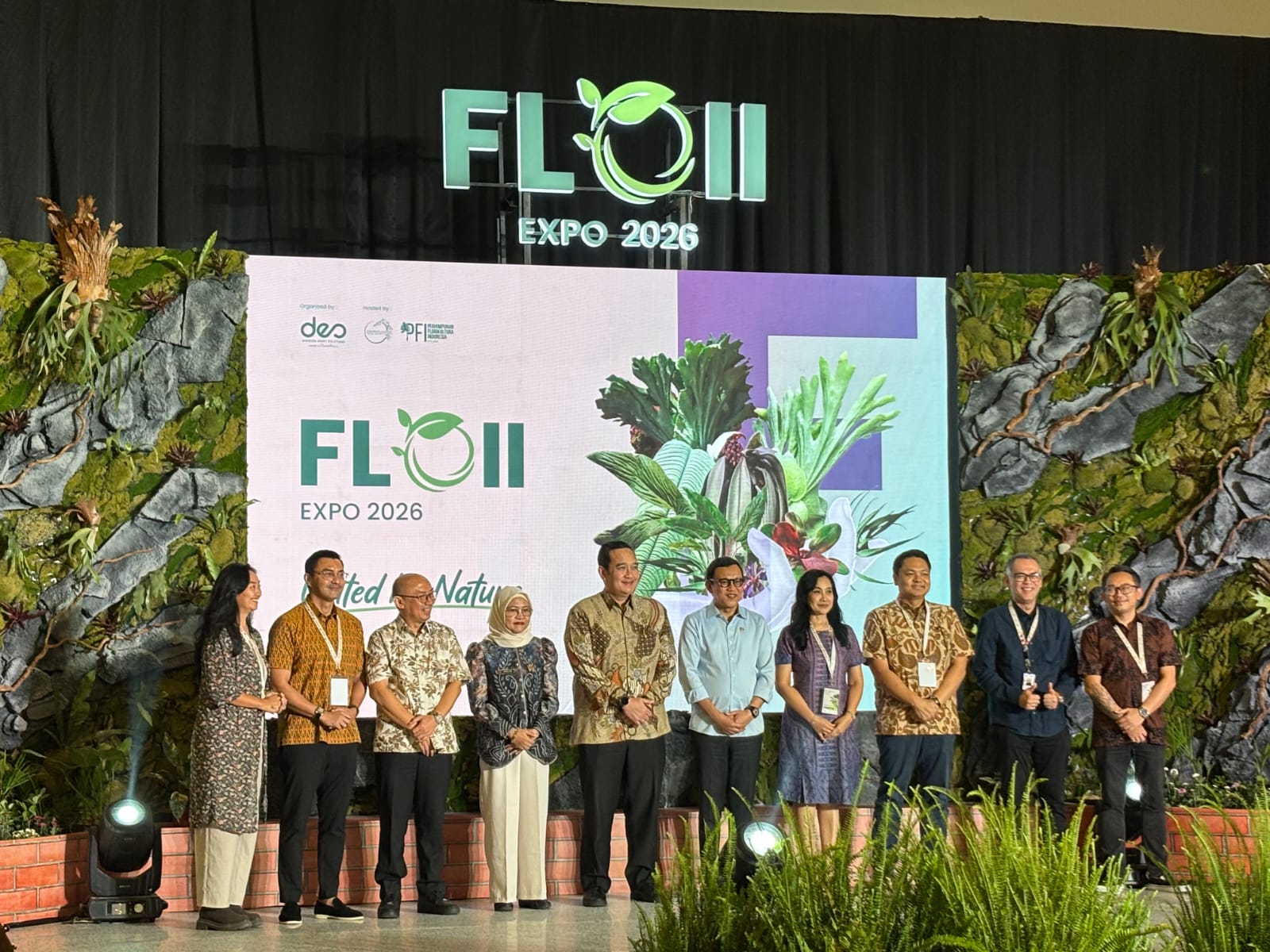
The export value of Indonesia’s floriculture commodities reached Rp3.51 trillion from 1 January to 14 September 2026, reaching 96 destination countries. The Head of the Indonesian Quarantine Agency (Barantin), Abdul Kadir Karding, stated that this potential demonstrates that ornamental plants and floriculture can no longer be viewed merely as a hobby.
“We must be able to transform the beauty of plants into added value and Indonesian competitiveness. Floriculture is not just a hobby, but an important part of the green economy, creative industry, innovation, job absorption, and national export opportunities,” said Karding while opening the Floriculture Indonesia International (FLOII) Expo 2026 in Tangerang on Thursday (17/9).
The international floriculture exhibition, themed “United by Nature”, brings together various industry elements, including farmers, breeders, nurseries, entrepreneurs, and the government. According to Karding, such collaboration is necessary so that Indonesia’s vast biodiversity and plant potential can be developed into value-added products that are competitive in the international market.
Based on data from the ‘Best Trust’ quarantine service system as of 14 September 2026, the export value of floriculture throughout 2025 was recorded at Rp4.42 trillion with a volume of 93.9 million commodities sent to 95 countries. Meanwhile, during the period of 1 January to 14 September 2026, the export value reached Rp3.51 trillion with a volume of 59.6 million commodities across 96 countries. Commodities included in these exports include chrysanthemums, chrysanthemum seedlings, lily seedlings, Saintpaulia seedlings, aquarium plants, and various other ornamental plant seedlings.
Barantin assesses that the development of the floriculture market must be accompanied by compliance with quarantine requirements and the regulations of destination countries. This is crucial because cross-border plant trade involves not only economic interests but also the risk of spreading plant pests and the need for biodiversity protection.
“When Indonesian plants fly abroad, we are not just bringing the commodity, but also the good name, reputation, and the world market’s trust in Indonesia,” said Karding.
According to Karding, the role of quarantine is no longer limited to monitoring commodity traffic. Barantin is also encouraging trade facilitation while maintaining biosecurity functions. This role is carried out through the strengthening of risk-based systems, service integration, and the utilisation of digital technology.
The FLOII Expo 2026 also serves as a momentum leading up to the 149th Anniversary of the Indonesian Quarantine Day and the 3rd Anniversary of Barantin on 18 October 2026. Barantin hopes that collaboration between the government, industry, academia, and the community in this exhibition can open wider market access for Indonesian floriculture products without neglecting biodiversity protection.