
Barantin Prepares Quarantine Service Integration to Cut Export Barriers
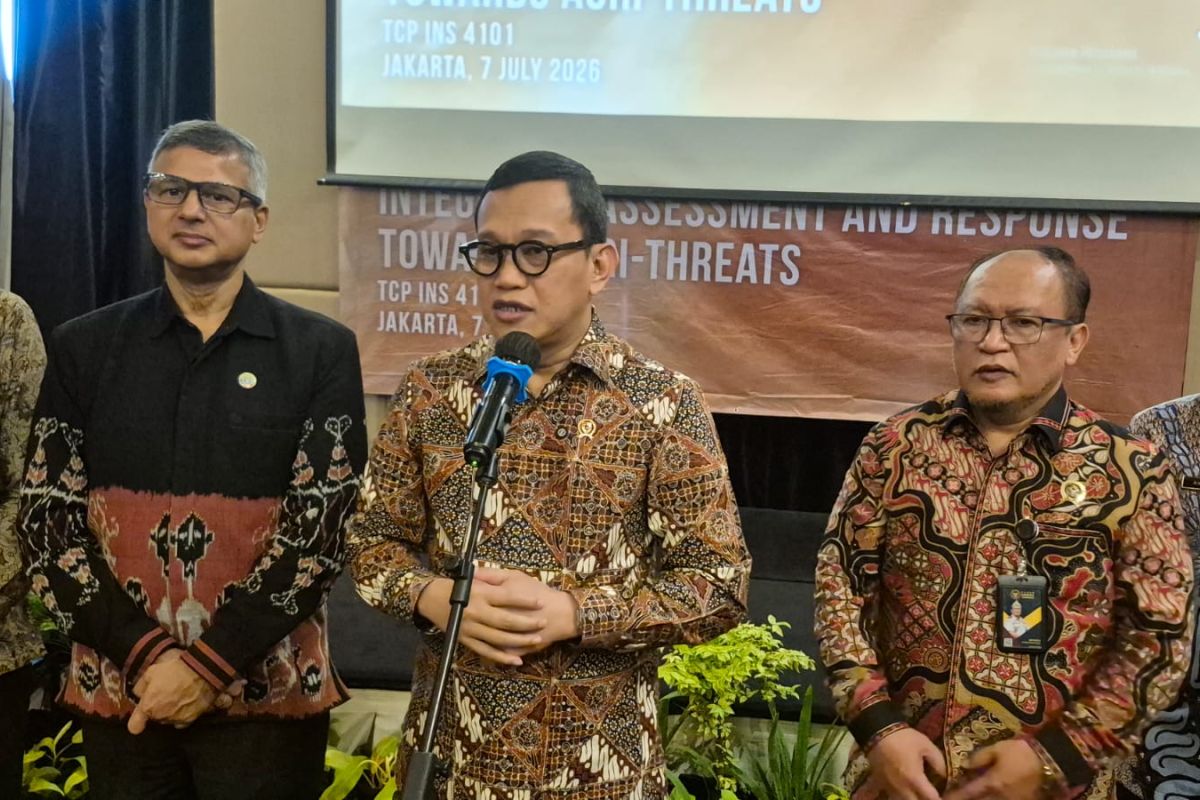
The Indonesian Quarantine Agency (Barantin) is preparing to integrate quarantine services with a number of ministries and agencies to cut export barriers and improve the efficiency of commodity flows. Barantin Head Abdul Kadir Karding stated that one of the main challenges currently faced is the lack of integration between quarantine services and other agencies involved in the movement of goods. “Right now, smuggling is the primary problem. Secondly, we must admit we are not yet integrated,” Karding said following the Inception Workshop for Barantin and FAO cooperation in Jakarta on Tuesday. According to him, the quarantine system needs to be more fully connected with the Directorate General of Customs and Excise, the Ministry of Transportation, PT Pelabuhan Indonesia (Pelindo), the Ministry of Trade, and other agencies involved in export-import services. Karding assessed that the lack of integration causes commodity inspections to be carried out by many agencies, potentially increasing the time and costs borne by business operators. “There should not be too many inspections. It will result in double charges. The items inspected are the same, but the charges are different. Firstly, it takes a long time, secondly it is expensive, and thirdly international trust will diminish,” he said. He stated that this condition needs to be rectified so that quarantine services do not become a barrier to trade flows, especially for commodities requiring rapid handling. Karding noted that Barantin has been coordinating with several ministries and agencies to build this integration so that quarantine services can be conducted through a more unified system. “That is why I have been visiting several agencies and ministries to ensure this integration,” he said. He mentioned that Barantin is preparing an integrated service system, or single submission, that can be used jointly by all relevant agencies in the process of goods movement. “We want a single system for all parties related to the movement of goods. Whether it is Quarantine, Customs, the Port, ASDP, or Trade, we want to make it one,” Karding revealed. Barantin is also deregulating 22 internal agency regulations deemed to hinder the export of fishery, plant, and animal commodities to build a better export and trade ecosystem. The importance of simplifying quarantine services is reflected in export activities facilitated by Barantin, including 10,362 fish from Natuna worth IDR 1.1 billion to Hong Kong and 2,935 kilograms of dried mangosteen leaves from Pangkalpinang worth approximately IDR 146 million to China. Furthermore, exports through quarantine services in 2025 were recorded as contributing 7.31 percent to the export component of Central Sulawesi’s gross regional domestic product, with durian exports contributing IDR 304.4 billion to the regional economy. Karding said system integration will also reduce repetitive inspections, making the service process simpler without reducing supervisory effectiveness. He added that the use of digital technology is part of strengthening these services, including through artificial intelligence (AI) and the Internet of Things (IoT) in the commodity inspection process. “With that technology and a simplified system, it does not mean we are cutting corners, but rather it is more efficient. It could be much faster,” he said. Karding further asserted that inter-agency service integration and technology utilisation are expected to accelerate the quarantine service process, improve logistics cost efficiency, and strengthen the trust of destination countries in Indonesian export commodities.