
Barantin: Innovation and biosecurity as pillars of resilient agriculture
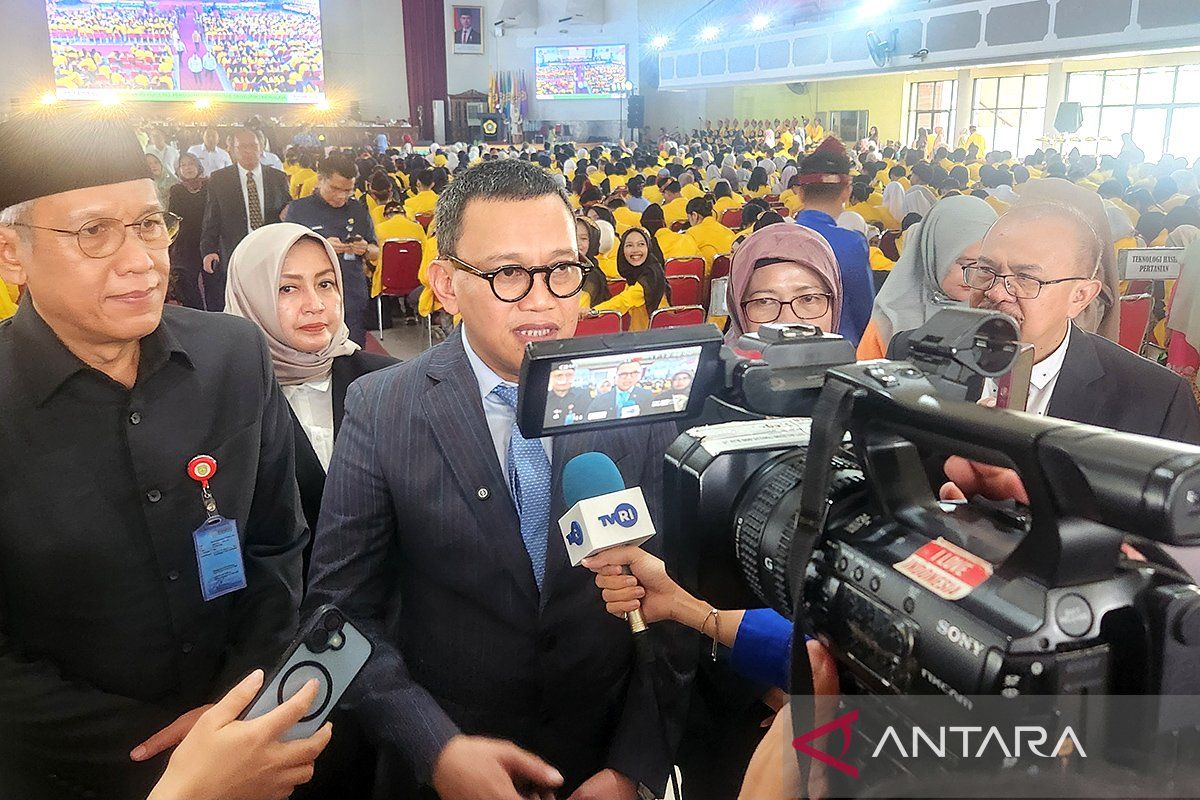
The Head of the Indonesian Quarantine Agency (Barantin), Abdul Kadir Karding, stated that innovation and biosecurity serve as the pillars of resilient agriculture for sustainable food security.
Abdul Kadir made these remarks during a scientific oration at the 63rd Anniversary of the Faculty of Agriculture, Sriwijaya University (Unsri) in Palembang, held at the Indralaya Campus Auditorium, Ogan Ilir Regency, on Thursday.
According to him, amidst global challenges, 40 per cent of the world’s crop production is lost annually due to plant pests and diseases, resulting in losses of approximately 220 billion US dollars. The rapid spread of these plant-disturbing organisms poses a significant challenge to students, lecturers, and those involved in the agricultural sector.
Consequently, he encouraged the students and lecturers of the Unsri Faculty of Agriculture, which has flourished over the past 63 years, to continue innovating by transforming knowledge into practical solutions to address these issues.
He noted that the agricultural sector is a priority agenda and a strategic programme of President Prabowo Subianto that must be successfully implemented together, as it can serve as a pillar for both the economy and national defence.
To this end, he also expects agricultural students and lecturers to contribute to strengthening the biosecurity measures implemented by Barantin and its provincial agencies to prevent the entry of foreign plant pests that could disrupt agriculture and devastate the national economy.
“If livestock, oil palm plantations, rubber, or maize—which are sources of community income—are attacked by diseases due to weak protection against the entry of foreign products, it could reduce productivity and destroy the national economy,” said the Head of Barantin.
Meanwhile, the Dean of the Faculty of Agriculture at Unsri, Akhmad Muslim, explained that in line with global issues related to economic health and geopolitics, optimal prevention efforts are required to stop the entry of pests that could destroy the nation’s agriculture.
The potential for plant pests to enter through foreign products is substantial; therefore, strong domestic biosecurity is necessary. “It is unimaginable if oil palm or other crops, which are key sources of community income, are hit by exotic diseases that could damage growth and productivity, potentially destroying the economy,” said the Dean.
Source: jawawa.id (https://jawawa.id/newsitem/barantin-innovation-and-biosecurity-as-pillars-of-resilient-agriculture-1790258574)
Originally published by Antara (Indonesian) (https://www.antaranews.com/berita/5757175/barantin-inovasi-dan-biosekuriti-sebagai-pilar-pertanian-tangguh), translated from Indonesian