
Barantin Identifies Four Obstacles Hindering Village Products from Reaching Export Markets
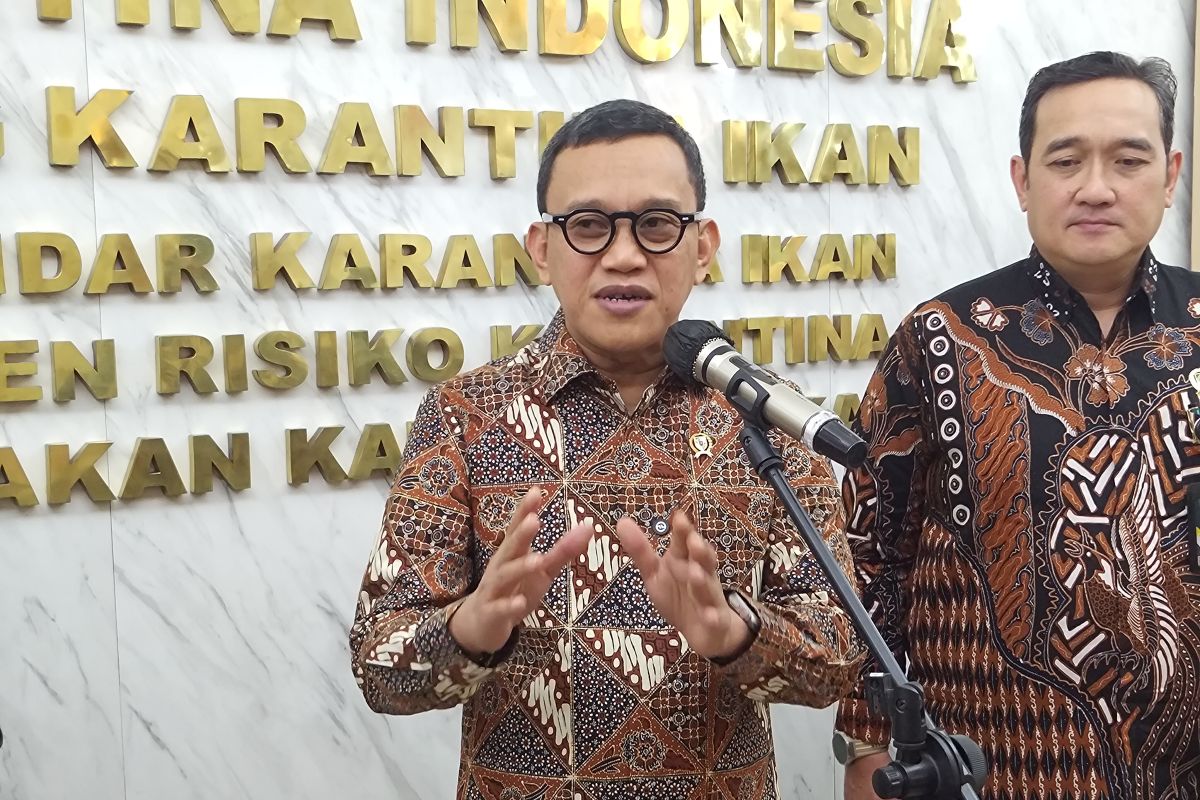
Jakarta (ANTARA) - Head of the Indonesian Quarantine Agency (Barantin) Abdul Kadir Karding has identified four main obstacles still faced by village products seeking to enter inter-island trade or export markets, namely quality standards, certification, product traceability, and commodity safety. “The current problem is that commodities to be exported, especially in our field—plants, fish, and animals and their derivatives—firstly, they lack quality and safety standards,” Karding said after the signing of a Memorandum of Understanding between Barantin and the Ministry of Villages and Development of Disadvantaged Regions (Kemendes PDT) in Jakarta on Thursday. According to him, many village products still do not meet the quality and safety standards required by the market, making it difficult to market these commodities to other regions or abroad. Additionally, village business operators still face obstacles in fulfilling the certifications required for inter-island trade and export. “Secondly, they are weak in terms of certification, certification for export or for inter-island trade,” he stated. Karding said the next barrier is the aspect of traceability, which has now become an important requirement in international trade. He noted that the global market is increasingly paying attention to the origin of products, from the cultivation process to the handling of commodities before marketing. “Nowadays, international trade pays great attention to what is called origin. The origin of cultivation methods, treatment methods, and so on is highly scrutinised,” he said. Besides traceability, commodity safety is also an important factor determining product acceptance in destination markets. Karding assessed that these various obstacles need to be overcome through mentoring and education for village business operators so that the target of developing Export Villages can be achieved. “If this is not accompanied by mentoring and education, then the ambition to form 5,000 export villages, I think, will be difficult,” he remarked. He said Indonesia has around 75,000 villages that hold significant economic potential and therefore need to be encouraged to become part of the drivers of national economic growth. As a follow-up to the cooperation with Kemendes PDT in supporting the programme to establish 5,000 Export Villages, Barantin will provide mentoring to villages with export potential. The mentoring is focused on improving understanding of quality standards, certification, product traceability, and commodity safety so that village products are better prepared to compete in both domestic and international markets. Karding said Barantin will facilitate and assist the certification process needed by village business operators. “Later, if we are involved, we can go there to pick up the certification,” he said. According to him, strengthening village capacity in meeting product quality and safety requirements will increase the chances of village commodities penetrating inter-island trade and export markets. Previously, Barantin encouraged regional superior commodities to gain accelerated market access by fulfilling the health, safety, and quality standards required by destination countries. One such effort was carried out by Barantin through export mentoring for durian in Parigi Moutong Regency, Central Sulawesi, in May 2026. In that programme, Barantin assisted durian farmers in obtaining Good Agricultural Practices (GAP) certification as one of the main requirements to penetrate export markets, particularly China. Additionally, Barantin also pushed for strengthening export governance through packing houses. At that time, only seven packing houses in Central Sulawesi had obtained permits to export durian to China out of a total of 42 existing packing houses. Throughout 2025, the value of export commodities receiving quarantine actions was recorded at approximately Rp393 trillion, with the issuance of more than 2.6 million quarantine certificates.