
Barantin Has 5,973 Staff Against a Need for 17,000; Karding Builds Sahabat Karantina Network Down to Village Level
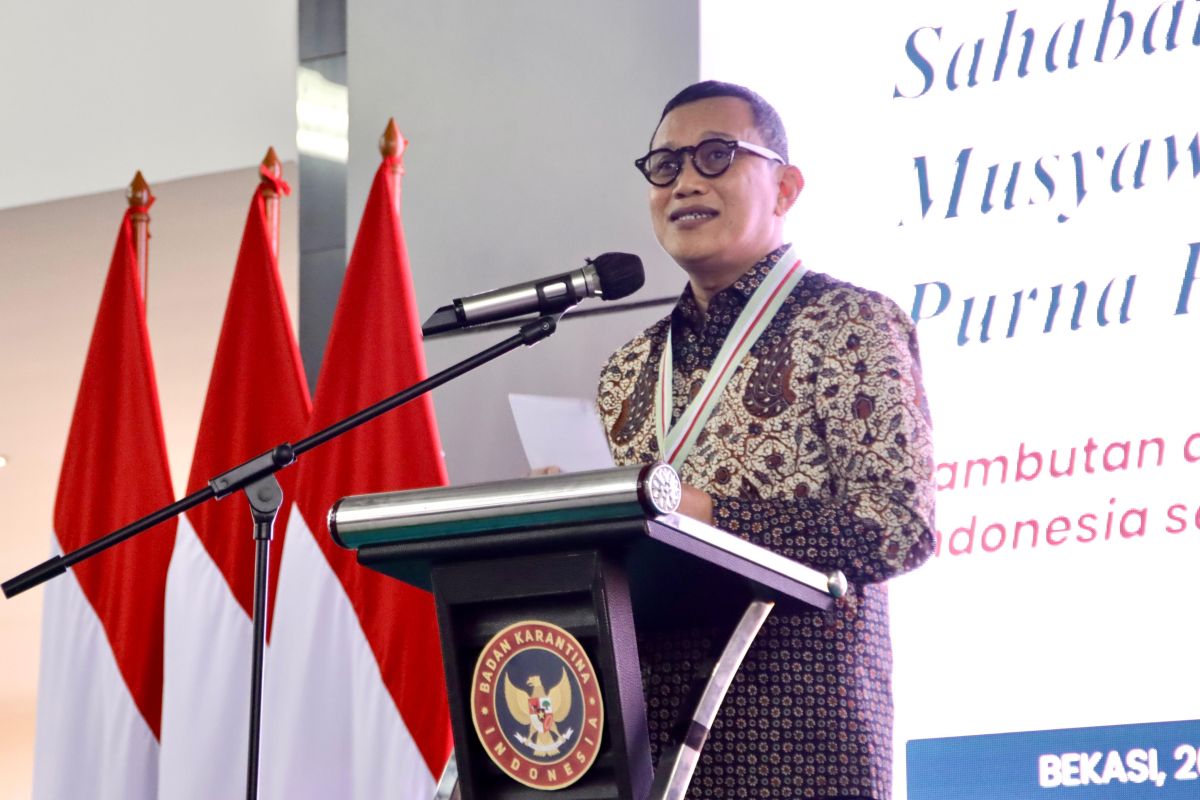
Jakarta (ANTARA) – The head of the Indonesian Quarantine Agency (Barantin), Abdul Kadir Karding, is expanding community networks through the Sahabat Karantina programme to village level and production centres, to strengthen the monitoring of the movement of animals, fish, plants and their derivative products.
The initiative comes amid a shortage of Barantin personnel. The agency currently has 5,973 employees, while an assessment found it needs around 17,000.
“We have a limited number of employees, 5,973. According to our assessment, we need 17,000,” Karding said in Bekasi on Thursday (26 November).
He explained that Barantin staff must oversee 151 entry and exit points, including ports, airports, border areas and post offices, to prevent pests and diseases from entering and spreading through the movement of commodities.
“We have to safeguard 151 ports, airports, border areas and post offices to ensure that all commodities passing through Indonesia or between islands are properly monitored and that there are no gaps or negligence,” Karding said.
Indonesia’s vast territory means that protecting its biological resources cannot rely solely on the available number of personnel, he said. Barantin is therefore involving the public in distributing information, providing education and supporting communities involved in quarantine-related activities.
One group being brought into the programme is the Indonesian Purna Paskibraka Association (PPI). The launch of Sahabat Karantina was held alongside the opening of the PPI’s ninth national congress at the quarantine agency’s human resources training centre in Bekasi.
Karding said PPI members were one potential recruitment pool because of their discipline, integrity, leadership and teamwork skills.
“They have discipline and integrity. They can work in teams and have leadership skills. So PPI is one source of recruitment, but not the only one,” he said.
Membership of Sahabat Karantina is also open to students, organisations, community groups and individuals who can disseminate information and are interested in social activities, he said.
“The main criteria are the ability to share information and provide training, and, secondly, passion. This is voluntary work,” he said.
The network will be developed across all provinces through a national secretariat and provincial and district-level committees. It is then expected to reach communities in villages and production centres.
“All provinces will be covered. There will be committees at provincial and district level. At national level, it will be called the National Secretariat, and the network may later be based in villages to support communities, production centres and the like,” Karding said.
He said public participation was important to strengthening national biosecurity, as diseases entering through the movement of commodities could cause economic losses far greater than the value of the commodities carrying them.
Karding cited Indonesia’s experience dealing with animal diseases, which required substantial recovery costs and had long-term effects on the livestock sector. For that reason, monitoring at the country’s entry and exit points must be accompanied by greater public awareness.
Alongside supporting biosecurity education, Sahabat Karantina is also intended to help the public, particularly young people, understand trade and export opportunities.
Karding said PPI members interested in entrepreneurship would receive training on commodity health requirements, food safety, destination-country standards and trade documentation.
“These Purna Paskibraka members will form the core team within Quarantine. We will also train them to become new entrepreneurs who can create jobs, become self-reliant, and work as businesspeople and traders,” he said.
A lack of information about trade and export procedures is one reason young people have been reluctant to start businesses, Karding said.
“Perhaps we are unwilling to try because we do not understand and have not received complete information. It is not actually difficult: the financing is already available; what is needed is confidence and knowledge of trade and exports,” he said.
Through the programme, Barantin hopes the community network will broaden education, support production communities and serve as an information link, without taking over the inspection and enforcement responsibilities of quarantine officers.
The initiative is intended to enable earlier prevention of quarantine risks while improving public understanding of trade and export opportunities.
Source: jawawa.id (https://jawawa.id/newsitem/barantin-has-5-973-staff-against-a-need-for-17-000-karding-builds-sahabat-karantina-network-down-to-village-1795755202)
Originally published by Antara (Indonesian) (https://www.antaranews.com/berita/5881967/pegawai-barantin-5973-kebutuhan-17-ribu-karding-bangun-jejaring-sahabat-karantina-hingga-desa), translated from Indonesian