
Barantin and KP2MI Prepare Export Support for Returning Migrant Workers
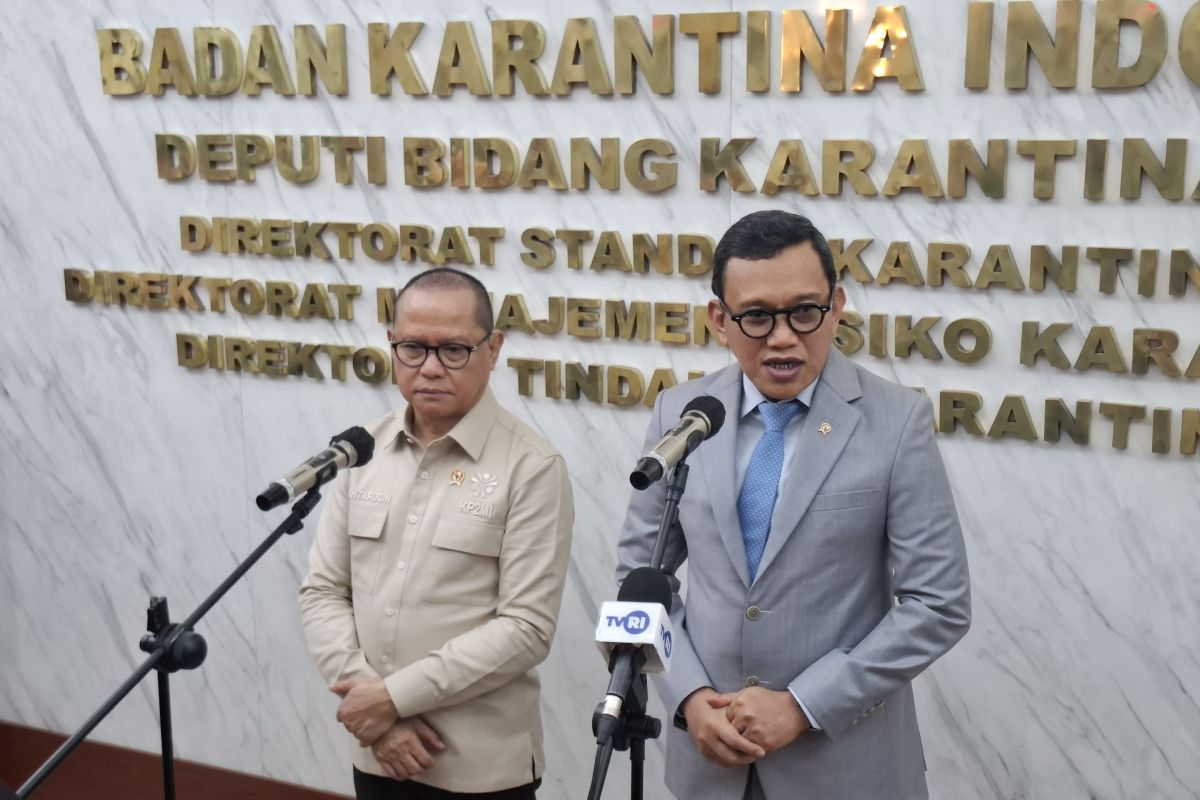
Jakarta (ANTARA) – The Indonesian Quarantine Agency (Barantin) and the Ministry for the Protection of Indonesian Migrant Workers (KP2MI) are preparing export-clinic assistance for returning Indonesian migrant workers and their families to help them develop businesses after returning home.
Barantin head Abdul Kadir Karding said the assistance was part of cooperation between the two institutions, formalised in a memorandum of understanding (MoU) and a cooperation agreement (PKS) in Jakarta on Tuesday.
“We have an export clinic that can guide and train them,” Karding said after the signing.
He explained that returning migrant workers who run micro, small and medium-sized enterprises (MSMEs), including those seeking to market their products overseas, could use the Quarantine Export Clinic’s services.
The service will provide businesses with guidance on product standards in destination countries and on the procedures for obtaining quarantine documents required for exports.
“We train them in international standards in line with the destination country,” he said.
Karding said some migrant workers set up businesses after completing their employment abroad and therefore needed support to make their products export-ready and meet international trade requirements.
In his view, the experience and networks they gain while working overseas could also help returning migrant workers develop businesses in their home regions.
This potential is expected to be strengthened through support from the preparation stage, so businesses understand destination-country requirements before shipping their products.
According to an official Barantin statement, the economic empowerment efforts under the cooperation will also target migrant workers’ families and businesses in Migrant EMAS (Educative, Progressive, Safe and Prosperous Migrant) Villages.
These groups will have opportunities to receive guidance on quarantine requirements and market access to develop promising commodities for export.
Minister for the Protection of Indonesian Migrant Workers Mukhtarudin said the cooperation was expected to expand economic empowerment for workers after they return to Indonesia, alongside strengthening services and protection throughout the migration process.
“We hope this partnership will not only provide protection and easier services for Indonesian migrant workers, but also create economic empowerment opportunities for returning workers and their families,” Mukhtarudin said.
KP2MI data for September 2026 show that the Migrant EMAS Village programme has been established in 756 villages and urban wards across 27 provinces, 128 regencies and cities, and 345 subdistricts.
The programme is one of the government’s tools for strengthening protection and economic empowerment for migrant workers and their families through capacity-building and the development of productive businesses at village level.
KP2MI previously held digital business development training for 10 returning migrant workers from three kalurahan in Bantul Regency, Special Region of Yogyakarta, from 8 to 10 September 2026.
The activity, delivered through the Yogyakarta Migrant Worker Protection Service Centre (BP3MI), formed part of an ongoing empowerment programme to improve returning workers’ business capabilities.
To support exports, Barantin has established Quarantine Export Clinic services in every province to help prospective exporters understand quarantine rules, product traceability and destination countries’ technical requirements.
Under the new cooperation, Barantin and KP2MI will develop follow-up empowerment programmes that can be measured and evaluated, including education and guidance for beneficiary groups.
Barantin head Karding emphasised that the cooperation must be geared towards outcomes that directly benefit the public, including by expanding economic opportunities for returning migrant workers.
“The success of cooperation is not measured by the documents signed, but by the benefits people experience,” he said.