
Bappisus: URI to Focus on Strengthening STEM-Based Education
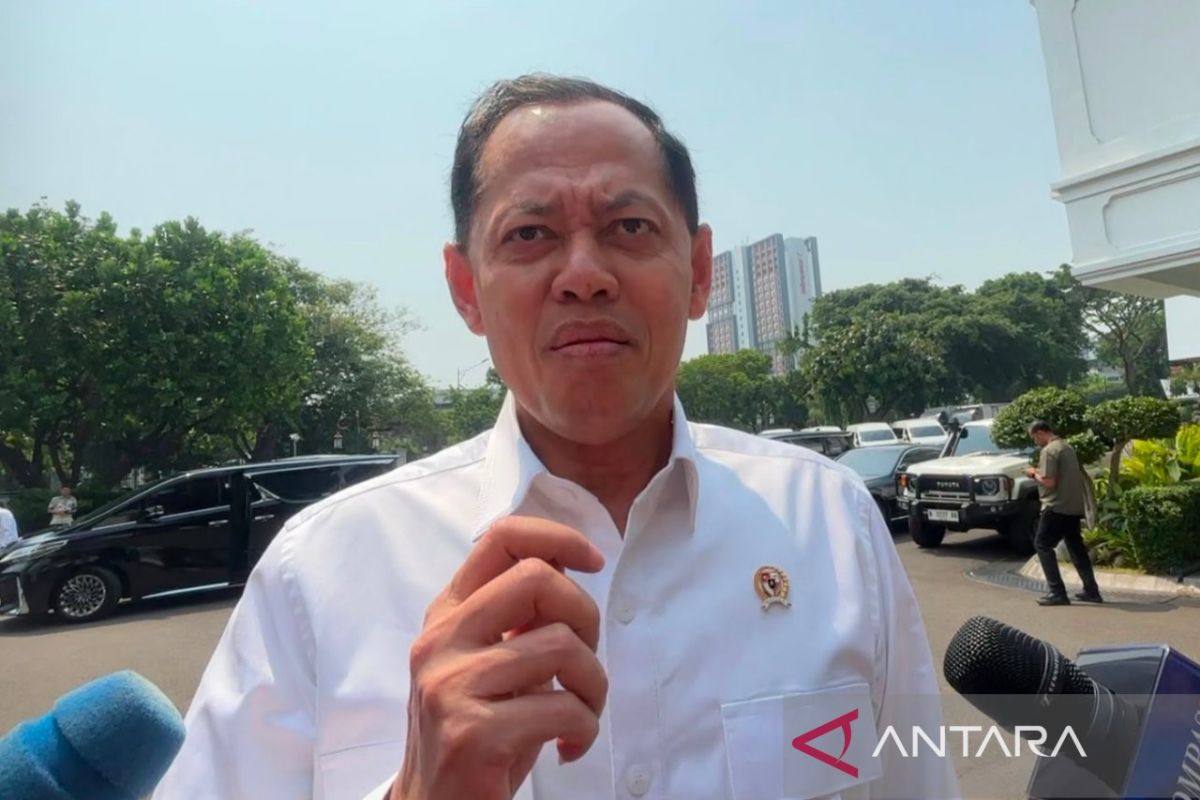
Jakarta (ANTARA) - Aris Marsudiyanto, head of the Special Development Control and Investigation Agency (Bappisus), said the Universitas Republik Indonesia (URI) will focus on strengthening Science, Technology, Engineering, and Mathematics (STEM)-based education to support human resource development towards Golden Indonesia 2045.
Aris said President Prabowo Subianto is paying close attention to forming an outstanding generation because Indonesia possesses abundant natural resources but still needs to improve its human resources, particularly in mastering technology.
“That is why the President is prioritising universities based on STEM — Science, Technology, Engineering, and Mathematics. In this way, this nation will master technology on its own,” Aris said at the Presidential Palace complex in Jakarta on Thursday.
According to him, strengthening STEM-based education is expected to encourage Indonesia to master technology independently so that it does not remain merely a market for other countries.
Aris also said he had recently held discussions with around 20 rectors of state universities. One of the topics of that meeting concerned efforts to advance technology in Indonesia so that the nation becomes increasingly self-reliant.
Beyond STEM, he said URI will also open various other study programmes, including in the fields of health and medicine.
“One of the focuses will be there (STEM), but there will certainly be many other study programmes as well. For example, health and medicine,” he said.
According to Aris, the development of medical education needs to be improved given that Indonesia’s doctor-to-population ratio remains below the ideal standard.
He said the ratio of doctors in Indonesia is around 0.47 per 1,000 residents in urban areas and around 0.27 per 1,000 residents in rural areas, whereas the World Health Organization’s (WHO) ideal standard is roughly one doctor per 1,000 residents.
“We also need to improve medicine because it is severely lacking. The ideal is 1 to 1,000 according to the UN, the WHO, but if I’m not mistaken we are only at 0.47 in urban areas, perhaps 0.27 in rural areas. This is very lacking indeed. Alright, we will resolve it,” he said.
Regarding the recruitment mechanism and technical aspects of running URI, Aris said further explanations would be provided by URI Governor Donny Ermawan Taufanto.