
Bappisus Strengthens Early Detection of Development Hurdles
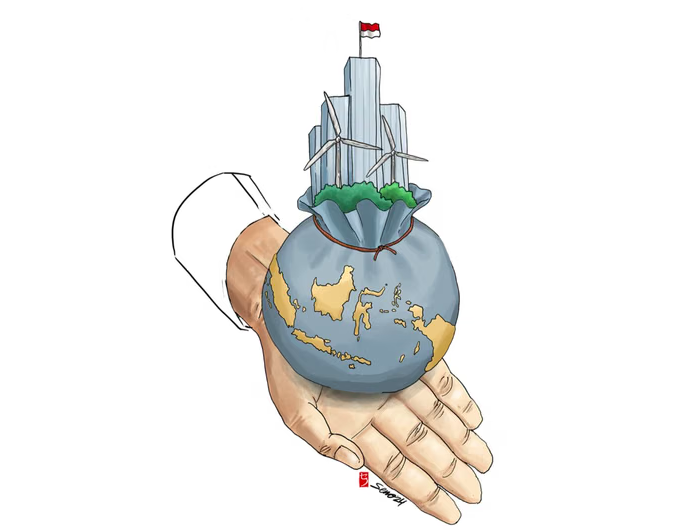
The Development Control and Special Investigation Agency (Bappisus) is strengthening coordination with law enforcement intelligence to enhance national development oversight. This synergy is considered vital to ensure various government programmes are implemented effectively, meet their targets, and support the achievement of President Prabowo Subianto’s Asta Cita vision.
Bappisus Head Aris Marsudiyanto conveyed this during a Consolidation/Focus Group Discussion (FGD) held by the Junior Attorney General for Intelligence in Jakarta on Monday (10/8). The forum carried the theme ‘Optimising the Role of Law Enforcement Intelligence as a Supporting System in the Implementation of the President’s Asta Cita’.
Aris explained that the success of development cannot be measured solely by the realisation of government projects or programmes. Another measure is the extent to which implemented policies generate impacts and benefits directly felt by the community. Therefore, law enforcement intelligence plays a crucial role as a supporting system, encompassing the provision of strategic information, mapping situational developments, identifying potential threats, and offering vigilance perspectives on factors that could hinder the achievement of development targets.
Meanwhile, Bappisus is tasked with supporting the President through supervision, control, monitoring, and investigation of various development programmes and activities. The agency also identifies technical issues and obstacles and pushes for necessary solutions.
‘Development control requires complete, fast, and accountable information. Therefore, synergy between Bappisus and law enforcement intelligence is important to build an early warning system for potential development obstacles while ensuring every issue can be handled precisely and measurably,’ Aris stated.
According to him, inter-agency cooperation should not only be utilised for exchanging information. Furthermore, this coordination must become a foundation for improving the government’s accuracy in determining policies and making decisions. Bappisus believes the success of development programmes depends heavily on the government’s speed in recognising problems. Various obstacles, from technical, administrative, and governance aspects to issues potentially entering the legal domain, need to be mapped from the outset.
With comprehensive mapping, the government can immediately take corrective steps before these problems have a greater impact on development targets. Aris also emphasised that the task of development control does not end once a problem is found. Oversight results must be followed by the formulation of recommendations and solutions that can be immediately implemented.
This aligns with Bappisus’s duty to assist the President in supervising, controlling, monitoring, and investigating the implementation of development. The agency also performs identification and investigation functions for specific matters, various issues, and technical obstacles in programme implementation. These functions also include supervision, monitoring, evaluation, and reporting. With this scope, coordination between Bappisus and the Attorney General’s Office Intelligence is expected to create a development information system that responds more quickly to various developments, without disregarding the authority boundaries of each institution.
‘We want to build a working pattern that does not wait for problems to become large. Information must be the basis for reading risks, risks must be the basis for mitigation, and mitigation must lead to the acceleration and success of development,’ Aris said.
Aris further stated that the meaning of independence does not stop at historical records. Independence also carries the responsibility for the state to ensure that development truly produces benefits for all levels of society. Strengthening the working relationship between law enforcement intelligence and the development control function is one step towards realising this. Sovereignty requires solid governance, justice requires well-targeted programmes, and prosperity requires effective management of state resources.
‘The spirit of independence must be translated into real state action. A sovereign, just, and prosperous Indonesia requires development that is guarded, controlled, and ensured to run according to national objectives. That is where the importance of inter-agency collaboration and synergy lies,’ Aris concluded.