
Bappisus and 20 State Universities Discuss Free Nutritious Meals and Higher Education Financing
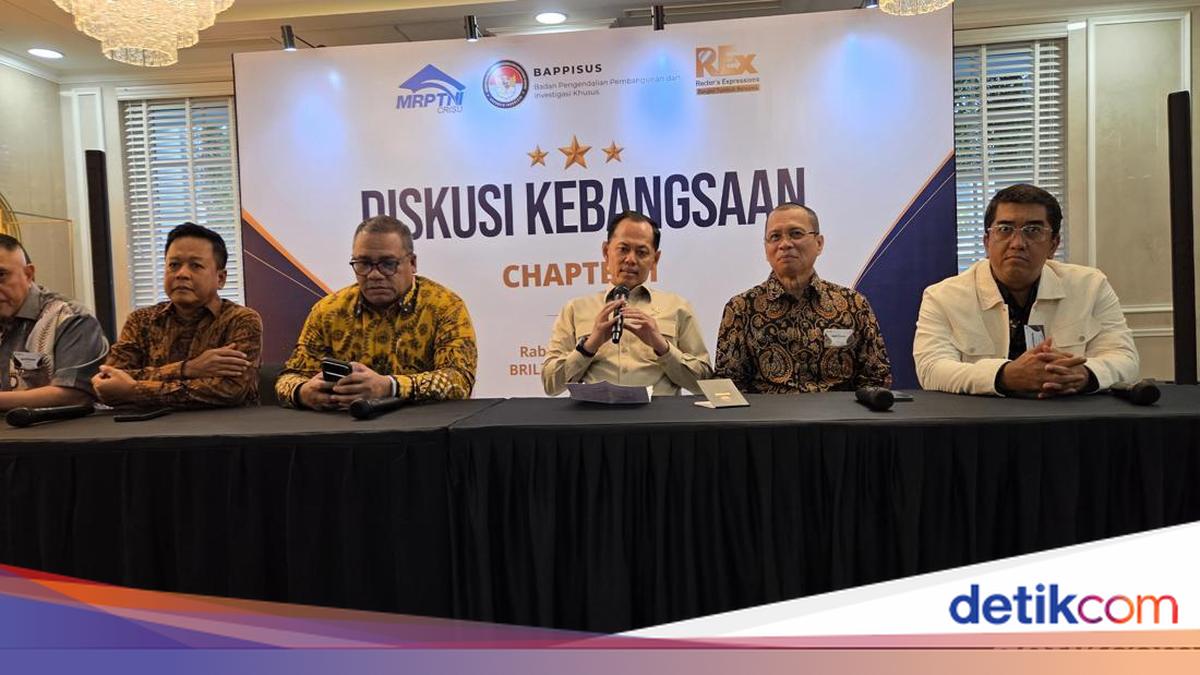
The National Development and Special Investigation Agency (Bappisus) and the Council of Indonesian State University Rectors (MRPTNI) held a discussion with representatives from 20 state universities. They addressed five strategic issues, including health education and the Free Nutritious Meals (MBG) programme. “Today we had an intensive discussion lasting almost five hours with the Head of Bappisus. There are five strategic issues we discussed in this Chapter 1 discussion. This national discussion is a follow-up to the National Symposium previously opened by the President and attended by approximately 2,600 academics,” said MRPTNI Chairman Eduart Wolok during a press conference in the Kebayoran Baru area on Wednesday (22/7/2026).
Eduart explained that these five strategic issues were specifically discussed to support government programmes. The first issue concerned health, including health education patterns, particularly medical doctor education programmes, specialist doctor education, and sub-specialist doctor education programmes. The discussion also covered food security and the contributory aspects of the MBG (Free Nutritious Meals) programme. Furthermore, he mentioned the governance of state universities (PTN) as beneficiaries of the optimisation of Indonesia’s natural resources, which could generate funds for higher education costs. The fourth point addressed equitable higher education financing policies, and the final issue related to research for the Nusantara civilisation route.
Eduart noted the discussion was fluid, open, and constructive, describing it as an effort to enhance the capabilities of state universities. “Our discussion covered various issues, themes, thoughts, and ideas on how we can develop and elevate them, not only to increase the capacity and capability of PTNs but also to respond to the nation’s current issues and how PTNs can play a role according to their function to contribute to the success of these programmes,” he said.
On the same occasion, Head of Bappisus Aris Marsudiyanto stated that 20 state university representatives participated in the discussion. He said the universities are ready to contribute to the government’s ongoing programmes. “State universities are a place for intelligent people to create a golden generation, a smart generation. The rectors finally reached an agreement, even though they had been requesting this meeting for about two months before we could meet today,” Aris said.
Aris added that he asked the rectors to instil five types of intelligence in their students: intelligence quotient, spiritual quotient, emotional quotient, creativity quotient, and adversity quotient. He emphasised that every graduate must have a good and clean heart, free from suspicion, backstabbing, and intimidation. He noted that emotional quotient means students educated academically must be able to manage their emotions and speak with good morals. Regarding creativity quotient, he stressed that students must develop creativity in their respective fields of study professionally. Finally, he highlighted the importance of adversity quotient, the resilience to face pressure, so that Indonesian graduates can compete with intelligent people from developed countries rather than only competing among themselves.