
Bappenas targets 200,000 globally competitive talents by 2035
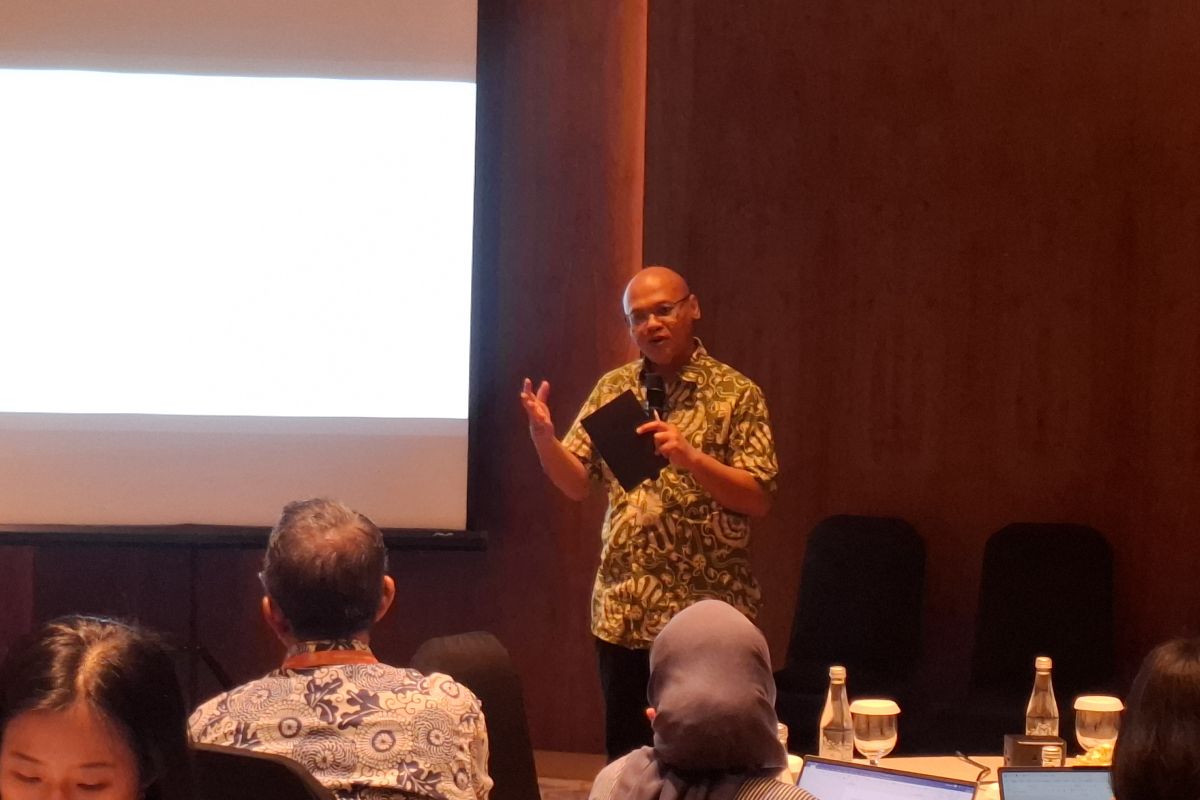
Jakarta (ANTARA) - The Ministry of National Development Planning/National Development Planning Agency (PPN/Bappenas) is targeting the creation of around 200,000 globally competitive talents by 2035 through the development of Sustainable Development Goals (SDGs) entrepreneurship centres.
Luhur Fajar Martha, an SDGs Funding Specialist at the SDGs National Secretariat of the Ministry of National Development Planning/Bappenas, said the target was part of efforts to strengthen human resources, innovation and the development of businesses capable of competing in the market.
“Our target for the next 10 years, through to 2035, is to build a pool of talent. We want to reach 200,000 globally minded talents who are highly competitive in innovation, technology and other areas,” Luhur said at a discussion on Bioeconomy and the SDGs during the Indonesia Impact Investment Summit 2026 in Jakarta on Wednesday.
He said the talent development was linked to the SDGs Entrepreneurial Centre initiative, which is being prepared as a collaborative platform to bring together government, private-sector and non-governmental resources to prepare business projects that meet market needs and support the achievement of the SDGs.
“Bappenas has initiated what is called the ‘SDGs Entrepreneurial Centre’,” he said.
Through the centre, Bappenas aims to connect skilled human resources with businesses and projects that need innovation support to grow in line with market demand.
“Those looking for excellent human resources will be able to find them here, and likewise projects that need to improve their competitiveness,” he said.
Luhur explained that the platform was not intended to replace existing institutions or programmes, but to bring available resources together to strengthen the preparation of business projects.
He acknowledged that preparing business projects suitable for investment remained challenging. Capacity-building activities and support tools did not always produce products or business models that matched industry needs, he said.
For that reason, entrepreneurship development must take market needs into account from the outset, including the ability to produce goods at competitive prices and achieve higher productivity.
According to Luhur, increasing production cannot be achieved simply by adding capital, workers or raw materials; it must also be accompanied by stronger knowledge, skills and technology among the workforce.
“Going forward, we need to build up knowledge, skills and technology so that we can raise not only productivity but also efficiency,” he said.
He added that the SDGs Entrepreneurial Centre would cover incubation, innovation development and the linking of businesses with industry partners and fund managers.
For its implementation, Bappenas plans to make use of facilities belonging to the National Research and Innovation Agency (BRIN) to develop a Technology Transfer Office, or technology-transfer service.
“We will make use of the facilities available at BRIN,” Luhur said.
The use of these facilities is expected to help apply research findings in business, ensuring that innovation does not stop at the technology-development stage but also improves productivity and resource efficiency.
The Ministry of National Development Planning/Bappenas and BRIN previously signed a cooperation agreement on establishing and developing the SDGs Entrepreneurial Centre on 10 August 2026.
Under the agreement, Minister of National Development Planning and Bappenas head Rachmat Pambudy stressed the importance of high-quality research, data and technology-licensing services so that innovation can deliver tangible benefits to the public and increase national economic value added.
Bappenas also expanded support for the centre through an agreement with Impact Investment Exchange (IIX) in April 2026 to develop businesses focused on women’s empowerment.
As part of strengthening the SDGs ecosystem, Bappenas reported that 75 SDGs Centres had been established in 26 provinces by June 2026.
The centres provide a platform for universities to contribute through the development of knowledge and innovation, as well as cooperation on development.
Bappenas also said that 62.7 per cent of national SDG indicators had met their targets or made significant progress.
Strengthening innovation and entrepreneurship is expected to help accelerate progress towards the sustainable development targets for 2030.
Source: jawawa.id (https://jawawa.id/newsitem/bappenas-targets-200-000-globally-competitive-talents-by-2035-1792583714)
Originally published by Antara (Indonesian) (https://www.antaranews.com/berita/5802449/bappenas-bidik-200-ribu-talenta-berdaya-saing-global-pada-2035), translated from Indonesian