
Bappenas stresses mineral downstreaming must be low-emission
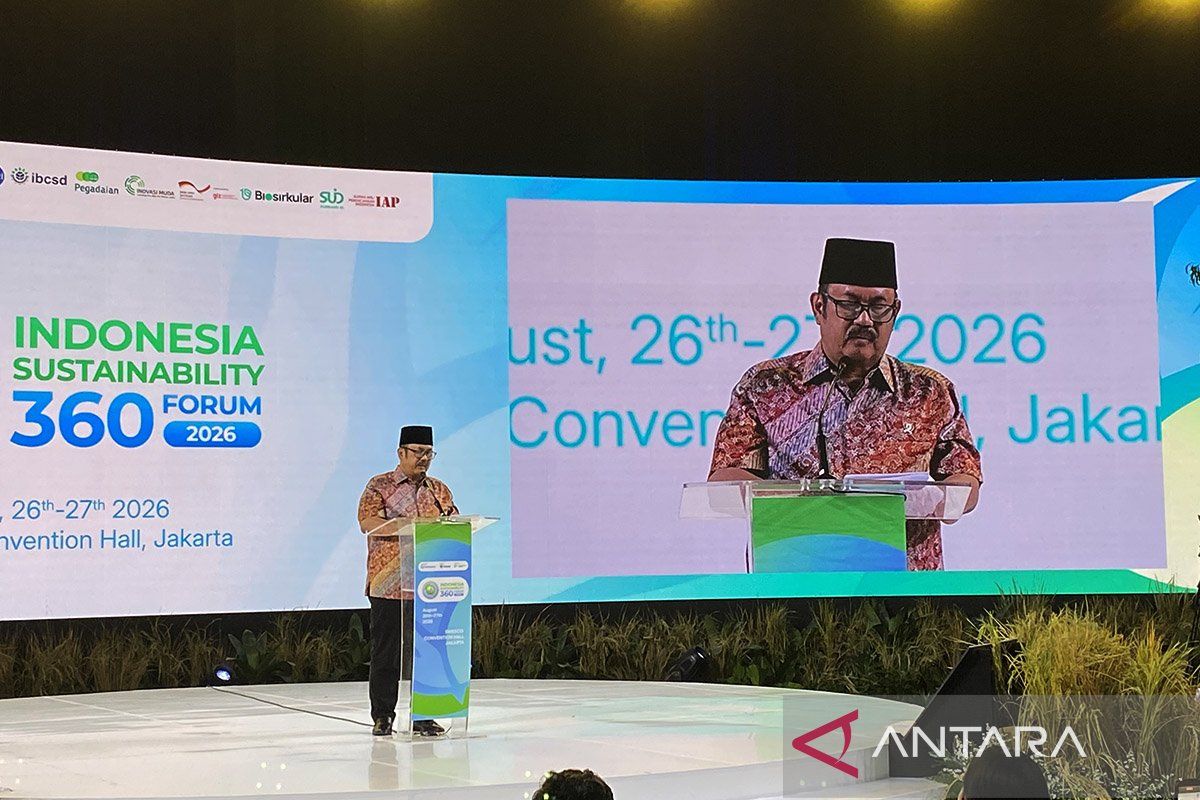
Jakarta (ANTARA) - National Development Planning Minister/Head of Bappenas Rachmat Pambudy has stressed the importance of applying low-emission principles in developing Indonesia’s mineral downstreaming industry so that national products can compete in the global market.
Speaking at the Indonesia Sustainability 360 Forum 2026 in Jakarta on Wednesday, Rachmat said downstreaming of critical minerals such as nickel, copper and bauxite is not enough merely to increase the added value of commodities domestically. The development of these industries also needs to implement efficient and low-emission supply chains.
“Downstreaming of critical minerals such as nickel, copper and bauxite must implement eco-efficient supply chains and integrated low emissions. This is important so that national industrial products can enter the premium global market and meet strict carbon criteria standards such as the Carbon Border Adjustment Mechanism or CBAM,” he said.
According to Rachmat, the transformation towards a green economy is now part of the strategy to strengthen national competitiveness. Sustainability, he said, can no longer be positioned merely as an obligation, but rather as part of a strategy to increase productivity, secure investment and strengthen Indonesia’s position at the global level.
In the National Long-Term Development Plan (RPJPN) and the National Medium-Term Development Plan (RPJMN), the government has also established the green economy as one of the main pillars of transformation towards Indonesia Emas 2045.
Indonesia, he continued, is targeting economic growth of 6-8 percent while simultaneously achieving a net zero emission target by 2060 or sooner. For this reason, future economic growth needs to move in the same direction as efforts to reduce emissions.
In addition to green downstreaming, the government is also encouraging the acceleration of the energy transition through the use of new and renewable energy, the development of a circular economy, as well as strengthening sustainable agriculture and the blue economy.
According to Rachmat, this transformation is needed to change Indonesia’s comparative advantage based on natural capital into a competitive advantage with high added value and sustainability.