
Bappenas strengthens local officials’ capacity to manage development risks
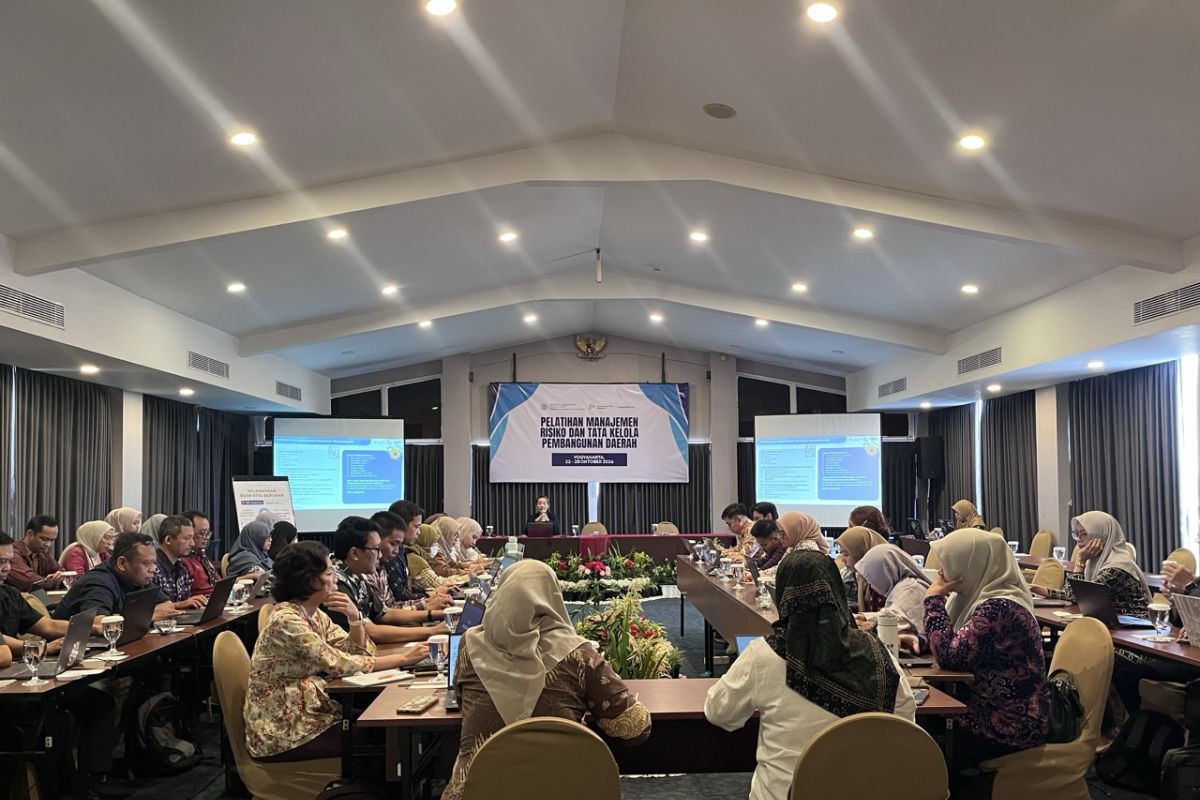
Jakarta (ANTARA) – The Ministry of National Development Planning/National Development Planning Agency (PPN/Bappenas) is strengthening local officials’ capacity to manage development risks and governance through a Regional Development Risk Management and Governance training course.
The programme is being run in partnership with the Master’s Programme in Urban and Regional Planning (MPWK) at the Faculty of Engineering, Gadjah Mada University (UGM), in Yogyakarta Special Region.
“The Regional Development Awards do not end with the presentation of trophies and certificates. Local governments that receive the awards are proposed for fiscal and non-fiscal incentives. One form of non-fiscal incentive is strengthening the capacity of officials through training at MPWK UGM,” said Tri Dewi Virgiyanti, Deputy for Development Control, Evaluation and Risk Management at the Ministry of National Development Planning/Bappenas, according to an official statement issued in Jakarta on Thursday.
The 45-hour course is a non-fiscal incentive for planning and oversight officials from four local governments recognised in the 2025 Regional Development Awards (PPD): Bantul Regency, Temanggung Regency, Muara Enim Regency and Magelang City.
The PPD’s top-three regional performers and recipients of special awards in 2025 included the provinces of West Java, Jakarta, Lampung and Highland Papua; the regencies of Bantul, Temanggung, Muara Enim and Bone Bolango; and the cities of Magelang, Depok, Palu and Kupang.
“We want to ensure that the four leading local governments attending in Yogyakarta have increasingly mature governance resilience and risk-management capabilities as they oversee future development targets,” Virgi said.
The PPD is a comprehensive assessment of the quality of planning, development outcomes and leading regional programmes. It is conducted in line with Law No. 25/2004 and the duties of the Ministry of National Development Planning/Bappenas.
The awards recognise local governments’ achievements in planning and development performance, and provide a platform for them to showcase consistent, comprehensive planning that is aligned between central and local government and highlights each region’s flagship programmes.
Alen Ermanita, Director of Strategic Policy Control and Evaluation I and chair of the PPD organising committee, emphasised the awards’ role in improving the quality of regional planning. The assessment is fully incorporated into the Regional National Development Planning Index (IPPN), which forms part of bureaucratic reform.
Jimly Al Faraby, head of the MPWK programme, said the university was committed and ready to support local governments. He said the partnership would provide a platform to apply spatial-planning and risk-governance expertise to support sustainable regional development resilience.
The course combines regulatory material, case studies of national priority programmes and practical exercises in preparing risk instruments. Topics include simulations of risks associated with national priority programmes, such as implementing the Free Nutritious Meals (MBG) programme in local areas, as well as other regional priorities.
Participants map local food supply chains and logistics, the consistency of regional regulations, stakeholder roles and techniques for cross-sector bureaucratic negotiation.
Wignyo Adiyoso, head of the Centre for Planning Development Human Resources Development, Education and Training (Pusbindiklatren) at the Ministry of National Development Planning/Bappenas, stressed the importance of strategic partnerships with universities in developing competent regional planners.
“This Type II self-managed partnership with MPWK at UGM’s Faculty of Engineering demonstrates Bappenas’ commitment to combining real-world policy curricula with the university’s academic strengths. We want award-winning planning officials to gain practical skills, from defining risk appetite to simulating bureaucratic negotiations, and to return to their regions with a risk-profile working document ready for implementation,” Wignyo said.
The capacity-building programme is considered increasingly strategic following the issuance of Presidential Regulation No. 39/2023 on National Development Risk Management (MRPN) and Regulation of the Minister of National Development Planning/Bappenas No. 11/2024 on the implementation of cross-sector MRPN policy.
From 2026, local governments will formally be included as Supporting Entities in the framework’s implementation. This will be reinforced by the direction of a draft regulation from the Ministry of Home Affairs on guidelines for implementing MRPN in local government organisations.
“The training has been designed as structured support to help high-performing local governments move beyond preparing administrative documents towards risk-informed decision-making. This will help ensure development programmes are implemented effectively and avoid potential obstacles on the ground,” said Prakosa Grahayudiandono, Director of Systems and Risk Management at the Ministry of National Development Planning/Bappenas.
The participating local governments are expected to produce final drafts of their organisational risk profiles and risk-mitigation matrices for priority programmes, ready to be incorporated into regional government work plans and budgets. Similar training for other PPD award recipients will subsequently be held in Jakarta and Makassar.
Source: jawawa.id (https://jawawa.id/newsitem/bappenas-strengthens-local-officials-capacity-to-manage-development-risks-1793890455)
Originally published by Antara (Indonesian) (https://www.antaranews.com/berita/5835139/bappenas-perkuat-kapasitas-aparatur-daerah-kelola-risiko-pembangunan), translated from Indonesian