
Bappenas Strengthens Development Strategy for Indonesia’s 3T Regions
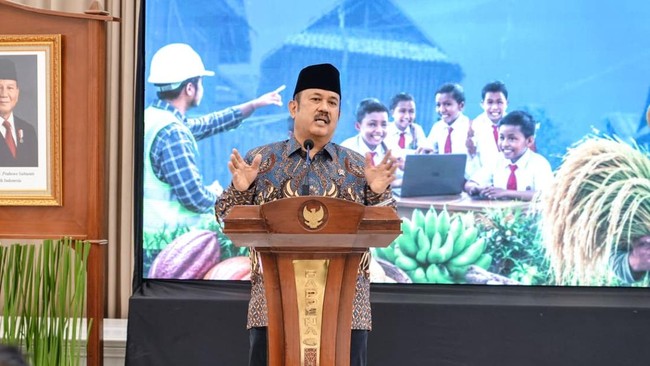
The Ministry of National Development Planning (PPN)/Bappenas has launched a policy book on accelerating development in disadvantaged, frontier and outermost regions (3T). It is intended as a shared reference for stakeholders to sharpen interventions and align support for implementing the National Priority Work Programme (PKPN) for 3T regions. The book sets out the conditions, potential and challenges in these areas; development policy directions under the 2025–2045 National Long-Term Development Plan (RPJPN), the 2025–2029 National Medium-Term Development Plan (RPJMN) and the 2027 Government Work Plan (RKP); priority intervention locations for 2027–2029; and the programme’s strategies and project designs.
The PKPN for accelerating development in 3T regions covers 431 underdeveloped and very underdeveloped villages, with 144 of these selected as priority locations in 2027. The focus of interventions is due to expand each year, with coverage targeted to reach 9,375 villages by 2029.
The launch provides a strategic opportunity to strengthen shared understanding and collaboration among central and local government, development partners and other stakeholders, and to accelerate development in 3T areas in pursuit of more even development across regions.
“Today’s event is a call to act together, formulate policies, design programmes and oversee implementation so that every intervention converges in the same locations and delivers tangible results for communities that have been left behind,” Minister of National Development Planning and Head of Bappenas Rachmat Pambudy said on Wednesday (25 November 2026).
Development in 3T regions continues to face challenges, including unequal access to basic services, limited connectivity, underused local economic potential, and constraints in fiscal and institutional capacity. Affirmative policies therefore need to reflect the characteristics and potential of each area, with targeted and integrated cross-sector interventions.
Funding is to be mobilised through coordination of ministry and agency spending, transfers to regional governments, regional budgets (APBD), support from development partners and other financing options. This approach is in line with Law No. 59 of 2024 on the 2025–2045 RPJPN, which calls for targeted policies to accelerate more even development in priority areas, including border regions, the outermost small islands and disadvantaged regions. Such policies cover basic infrastructure, improved accessibility and connectivity, and the narrowing of disparities.
National Priority 6 of the 2025–2029 RPJMN is “Building from Villages and the Grassroots for Economic Growth and Poverty Eradication”. This policy has been translated into the PKPN for accelerating development in 3T regions, as part of the People’s Economy and Villages cluster in the 2027 RKP.
Rachmat stressed that disadvantaged regions require affirmative support. “As has been said, every rupiah must truly reach those entitled to it.”
“To give a more concrete example, every rupiah, every kilometre of road and every health worker placed at the farthest reaches of the country is proof that the state is present for the citizens who need it most. Everyone involved must therefore ensure that every rupiah reaches the outermost, frontier and disadvantaged regions,” Rachmat concluded.
Through the book launch and dialogue, Bappenas is seeking a firm commitment from all parties in planning, budgeting, implementation, monitoring and evaluation, so that affirmative policies for 3T regions deliver broad benefits and improve people’s welfare.
The launch, held both in person and online, was attended by Deputy Minister of Villages and Disadvantaged Regions Ahmad Riza Patria; Home Affairs Ministry Director General of Regional Administration Safrizal Zakaria Ali; National Border Management Agency Deputy for Border Area Infrastructure Management Edi Nurhabad; North Nias Regent Amizaro Waruwu; several regents from 30 disadvantaged regencies; and representatives of ministries and agencies, regional governments and development partners.
Source: jawawa.id (https://jawawa.id/newsitem/bappenas-strengthens-development-strategy-for-indonesias-3t-regions-1795596690)
Originally published by CNBC Indonesia (https://www.cnbcindonesia.com/news/20261125151524-4-788396/percepat-pembangunan-daerah-bappenas-perkuat-strategi-pembangunan-3t), translated from Indonesian