
Bappenas Strengthens Biodiversity Data for Evidence-Based Policy
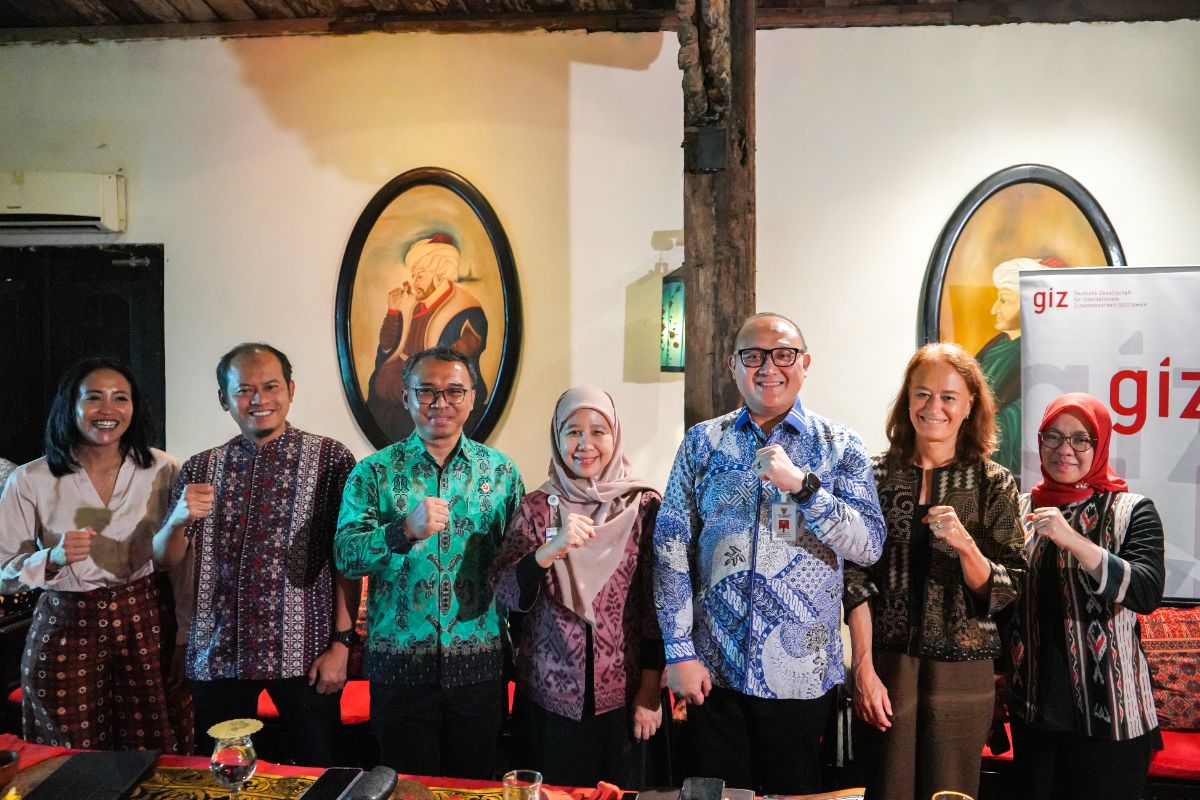
Jakarta (ANTARA) – The Ministry of National Development Planning/National Development Planning Agency (PPN/Bappenas) is strengthening the provision of scientific data and information on biodiversity as the foundation for formulating evidence-based policies and development planning.
The effort is being carried out in collaboration with the National Research and Innovation Agency (BRIN), the Ministry of Environment, GIZ Indonesia and ASEAN, and the Indonesian Conservation Foundation, through the preparation of four Biodiversity Status Documents covering Bali–Nusa Tenggara, Java, Maluku, and Papua.
“These four documents are Supporting Documents for the Indonesian Biodiversity Strategy and Action Plan (IBSAP) 2025–2045, presenting the latest scientific picture of the characteristics, potential, condition, pressures, and challenges of biodiversity management by documenting biodiversity wealth at the ecosystem, species, and genetic levels in each region,” said Nizhar Marizi, Director of Environment at the Ministry of PPN/Bappenas, in a written statement received in Jakarta on Monday.
The government is said to have prioritised biodiversity management at the ecosystem, species, and genetic levels in the National Medium-Term Development Plan (RPJMN) 2025–2029 through Asta Cita 2 on the Green Economy.
That commitment is reinforced by the preparation of the IBSAP 2025–2045, which serves as a compass for Indonesia’s biodiversity management.
Furthermore, the launch of these documents is considered increasingly important given that Indonesia is one of the countries with the greatest biodiversity wealth in the world, while also bearing the responsibility of ensuring this natural heritage is preserved for future generations.
The availability of up-to-date scientific data and information is regarded as an important foundation for ensuring Indonesia’s biodiversity heritage can be managed sustainably and continue to serve as capital for national development towards Golden Indonesia 2045.
According to Inge Retnowati, Director of Biodiversity Conservation at the Ministry of Environment, biodiversity is national capital with very high social, economic, and ecological value, and therefore must be safeguarded in a balanced manner.
“Biodiversity stewardship must have a scientific basis and be built with high integrity. This biodiversity status document serves as a scientific basis that portrays the condition of Indonesia’s biodiversity as well as a reference for its governance,” she said.
Indonesia is recorded as having biodiversity wealth comprising more than 1.5 million species, of which more than 30 per cent are endemic. However, many species remain unidentified and must be explored through research and expeditions.
For this reason, Andes Hamuraby Rozak, Head of the Biological and Environmental Research Organisation at BRIN, expressed hope that the document will become a scientific reference for all stakeholders in promoting development policies that align with conservation efforts. This is to be achieved by making science the foundation and collaboration the strength for safeguarding Indonesia’s biological wealth, whilst ensuring its benefits for present and future generations.
Indonesia’s biodiversity wealth is reflected in more than 12,800 flora species with 601 endemic species in Java, 3,459 flora species with 55 per cent endemism in Bali–Nusa Tenggara, 4,383 flora species in Maluku, and around 8,000 flora species with 58 per cent endemism in Papua.
Through a whole-of-government and whole-of-society approach, the availability of up-to-date biodiversity data and information is said to be an important foundation for evidence-based decision-making and strengthening synergy among stakeholders.
“By knowing and understanding the biodiversity wealth we possess, Indonesia can take more appropriate steps to protect and preserve it, utilise it sustainably, and at the same time build the basis for assessing the economic value of biodiversity and ecosystem services as national development capital,” said Andes Hamuraby.
The official launch of the Biodiversity Status Documents for Bali–Nusa Tenggara, Java, Maluku, and Papua will take place on 21 July 2026, and is expected to serve as momentum to strengthen collective commitment to safeguarding Indonesia’s biodiversity heritage, whilst promoting its sustainable use for public welfare and development towards Golden Indonesia 2045.