
Bappenas Says Free Nutritious Meals Programme Is Part of Social Infrastructure
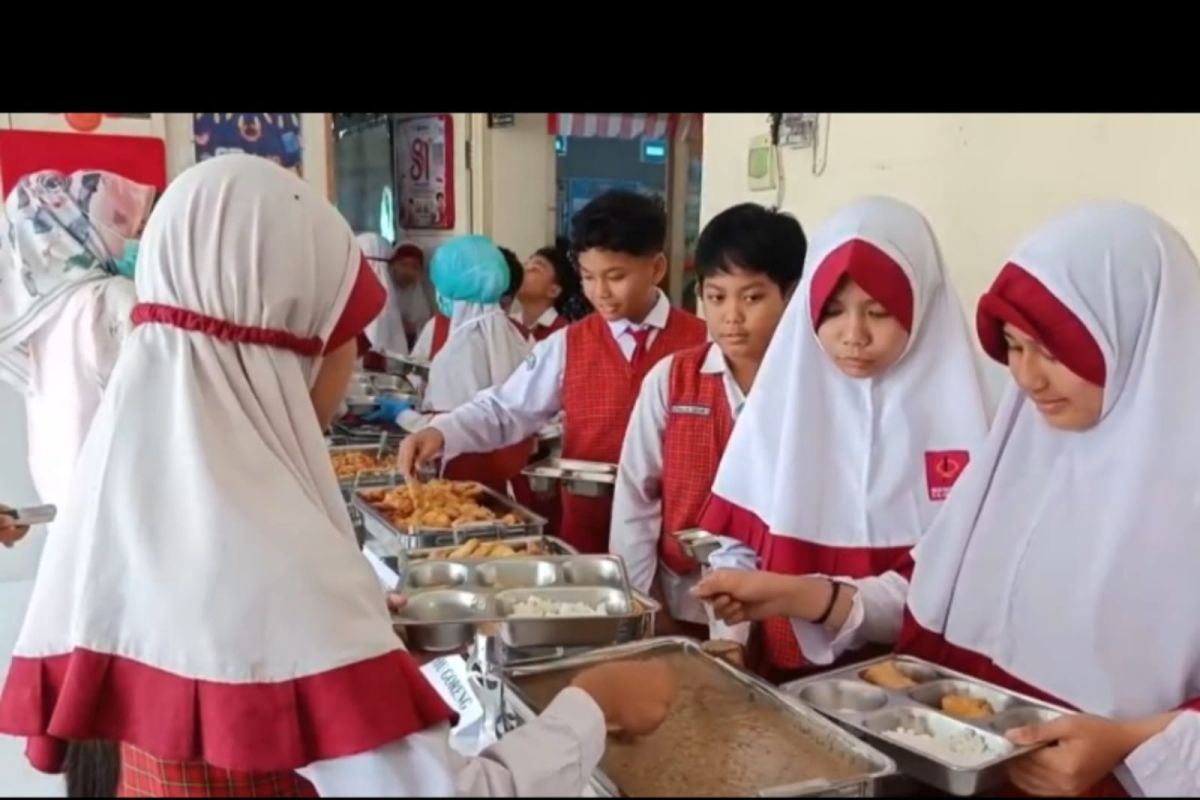
Jakarta (ANTARA) — The Ministry of National Development Planning/National Development Planning Agency (Bappenas) has affirmed that the Free Nutritious Meals (MBG) programme is part of social infrastructure development aimed at improving the quality of Indonesia’s human resources.
National Development Planning Minister and Bappenas head Rachmat Pambudy said the infrastructure development paradigm should not focus solely on physical assets such as roads, bridges and ports, but should also include social infrastructure.
“The largest expenditure by the Finance Ministry is on providing food. People cannot be healthy if they do not have enough to eat, so the state has to step in,” Rachmat said at the Danantara Technology & Innovation Investment Forum (DTIIF) 2026 in Jakarta on Monday.
He said adequate food and nutrition, as well as efforts to address stunting, were fundamental to human development. A workforce that is physically and mentally healthy, he said, was essential to economic productivity.
Rachmat said natural wealth would not deliver its full potential without investment in capable human resources.
“If our resources are not supported by human resource development, what we export will remain extractive, with no added value. That is why we need to build social infrastructure,” he said.
Once basic nutritional and public health needs are met, he added, human resource development should focus on strengthening education, particularly in science, technology, engineering and mathematics (STEM).
Mastery of science and technology is crucial if Indonesia is to process its own natural resources into higher-value industrial products rather than simply sell raw materials.
Alongside social infrastructure, Rachmat stressed the importance of coordinating investment across three other pillars: physical, economic and digital infrastructure.
“If all four are developed by the government, we hope to achieve high and sustainable economic growth. This is something we did in the 1970s and 1980s, when our resources were still primarily agricultural,” he said.
He added that Indonesia’s potential is now much greater, supported by supplies of critical minerals that are in strong demand from global industries and can help drive economic growth.