
Bappenas Releases Indonesia's Human Capital Index: Will Productivity Increase in the Future?
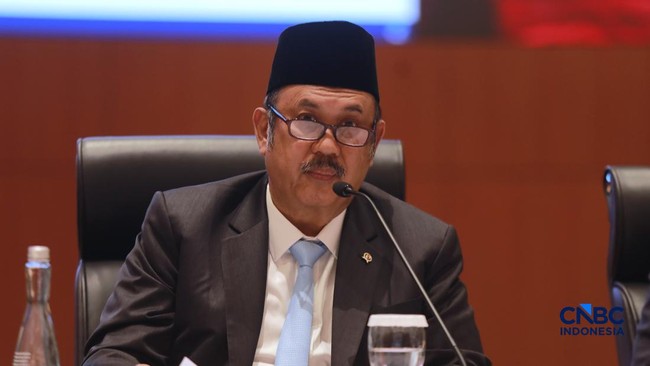
The Ministry of National Development Planning (PPN)/Bappenas has officially released the Human Capital Index (HCI), which updates the previous Human Development Index (HDI). The HCI is an adaptation of the World Bank’s Human Capital Index, tailored to the data characteristics, context, and developmental needs of Indonesia, accompanied by the publication of the HCI Calculation Guidelines.
“The Human Capital Index is an improvement over the Human Development Index,” stated the Minister of PPN/Head of Bappunas, Rachmat Pambudy, as quoted from a press release on Tuesday (1/9/2026).
Rachmat Pambudy explained that the fundamental difference between the HCI and the HDI lies in how it assesses future Indonesians as subjects rather than mere objects of development. Consequently, the weight of the assessment focuses on health starting from the womb, rather than only from birth.
“Human capital is reflected in health, and that health begins in the womb. Therefore, from the womb, Indonesians must be healthy,” said Rachmat.
He emphasised that human development is the primary foundation for achieving the Indonesia Emas 2045 vision. Thus, the quality of humans developed from the earliest stages of life will determine the productivity and competitiveness of Indonesia’s human resources in the future.
Using a life-cycle approach, the HCI views human development as a long-term investment based on survival, education, and health conditions acquired throughout the growth and development period to shape the potential productivity and competitiveness of Indonesians in the future.
In the National Long-Term Development Plan (RPJPN) 2025-2045, the HCI will be used as an indicator to measure the achievement of targets for increasing human resource competitiveness.
In 2025, Indonesia’s HCI achievement was recorded at 0.562. This means a child born today is expected to reach 56.2% of their optimal productivity potential by the time they enter the workforce.
This achievement shows an increase from the 2020 HCI figure of 0.540 previously published by the World Bank, though significant effort is still required to reach the target HCI of 0.590 by the end of the 2025-2029 National Medium-Term Development Plan (RPJMN).
At the regional level, HCI achievements vary significantly, with the highest value of 0.705 in the Special Region of Yogyakarta and the lowest of 0.366 in the Highland Papua Province.
Based on these index figures, the government considers that improving human capital quality requires the synergy of various interventions, ranging from maternal and child health, nutritional fulfillment, stunting prevention, and immunisation, to early childhood, primary, secondary, and higher education, as well as the strengthening of skills and productivity during working age.
“I hope the HCI can be utilised widely, ensuring that every development investment truly impacts the improvement of human resource quality,” he asserted.