
Bappenas pushes for more equitable development in Papua
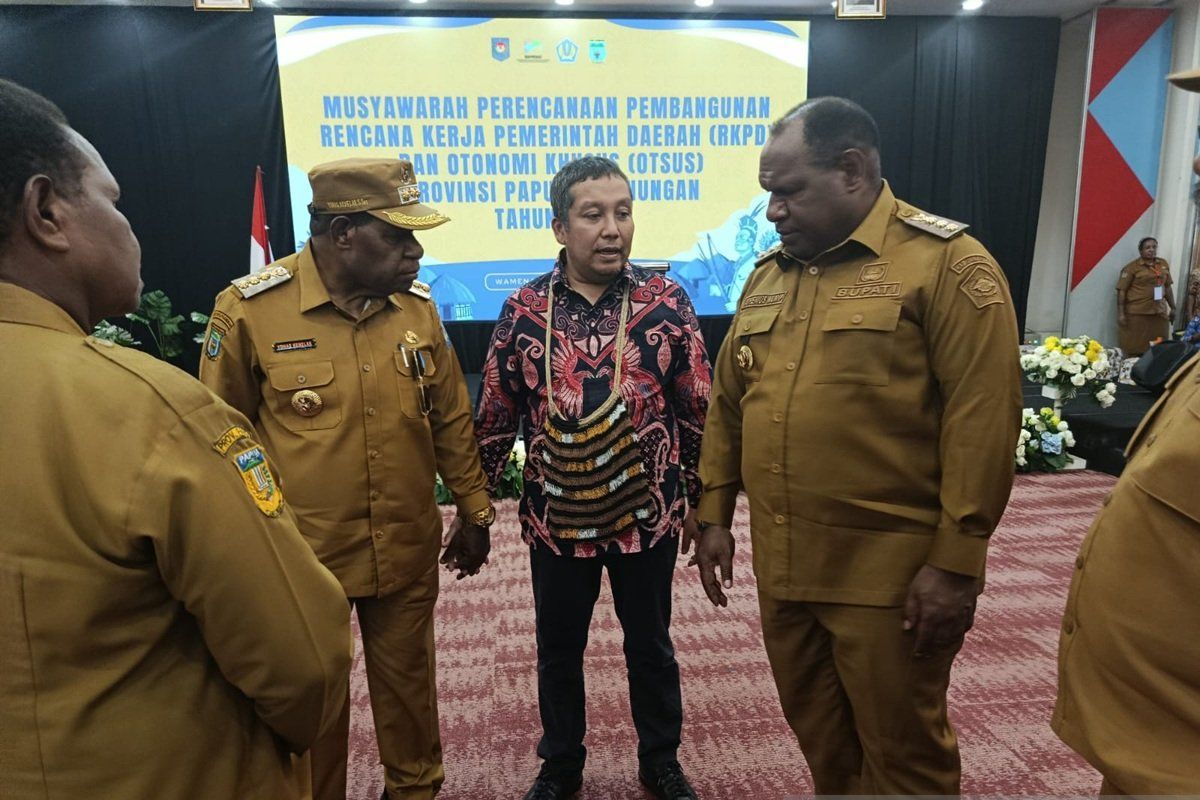
The Ministry of National Development Planning (Bappenas) is encouraging more equitable development in Papua to accelerate economic growth and improve the quality of human resources across various sectors.
“We hope that development in Papua becomes more even, thereby accelerating economic growth and human resource development, starting from mature and integrated planning from the central to the regional levels,” said Abdul Malik Sadat Idris, Deputy for Infrastructure at the Ministry of Bappenas, in a written statement in Wamena on Sunday.
Abdul stated that development needs to be carried out evenly across Indonesia, particularly in Papua, which possesses unique characteristics and specific developmental needs.
He noted that Highland Papua, as a relatively new province, requires the simplification of regulatory and licensing systems across various sectors to support increased regional income and public welfare.
“In other regions, we see an excess of regulation and complex licensing systems that make processes cumbersome. We hope that in Highland Papua, this is not the case, so that accelerated development can be realised through the presence of investors,” he said.
Abdul explained that the six provinces in Papua need to utilise their special status through the implementation of special autonomy to improve the welfare of indigenous Papuans (OAP).
“We hope that with such special regions, it will be easier for indigenous Papuans to engage in business, work, and schooling, and for external investments to enter,” he added.
“We certainly hope that through the Ministry of Bappenas, as the Indonesian economy continues to grow, we can reduce poverty rates throughout Indonesia, including in the Papua region.”
Abdul also highlighted the high cost of living in Highland Papua, which has remained relatively high. According to him, this condition is a challenge that must be addressed through more equitable development.
“People in Java tend to protest even when fuel prices and basic commodities rise slightly, but the people here in Highland Papua are accustomed to living with high costs,” he remarked.
Consequently, he expressed hope that more equitable development can be increasingly felt by the people in eastern Indonesia, including through an increased role of the central government in the development of Papua.