
Bappenas promotes biodiversity credit as innovative financing instrument
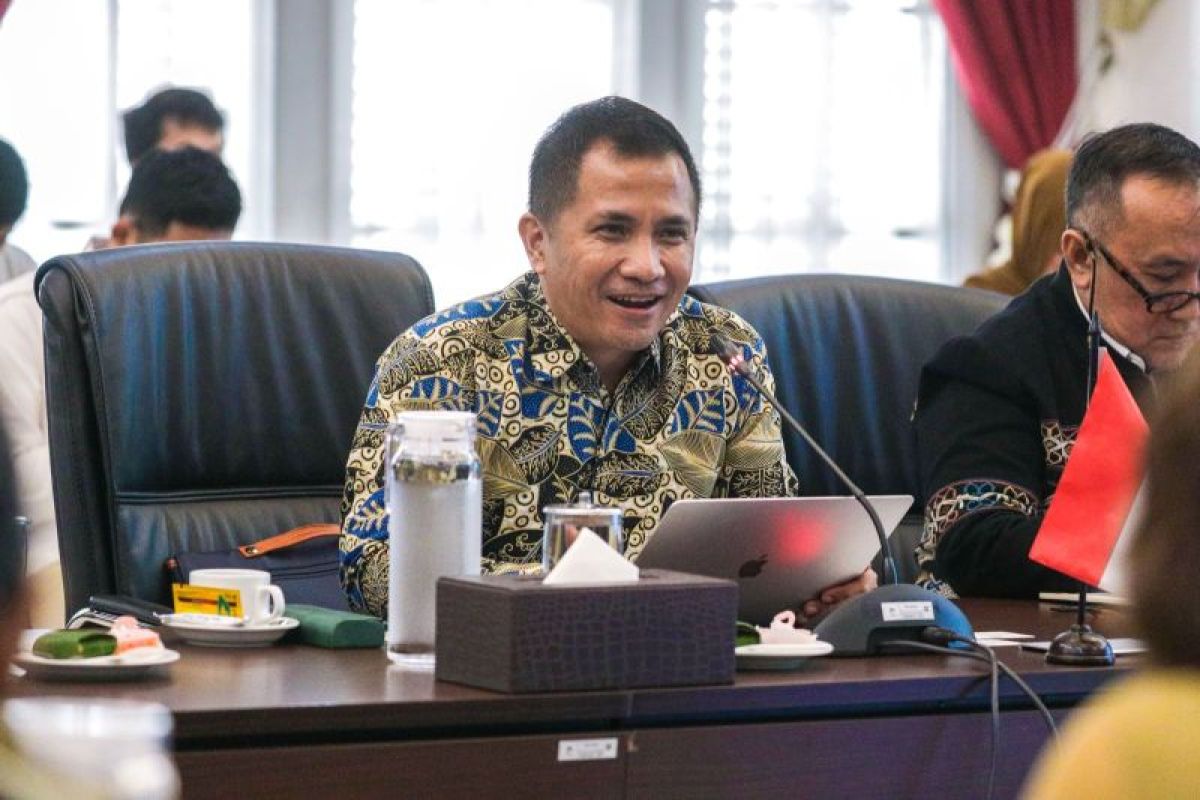
The Ministry of National Development Planning/National Development Planning Agency (Bappenas) is promoting the development of biodiversity credit as an innovative financing instrument to support biodiversity conservation and strengthen sustainable development financing in Indonesia.
According to the Biodiversity Expenditure Review, Indonesia’s biodiversity management funding requirement is estimated at Rp118.5–163.8 trillion annually, while current capacity stands at only Rp21.6 trillion, reflecting a gap of up to 87%.
Deputy for Food, Natural Resources, and Environment at Bappenas Leonardo A. A. Teguh Sambodo said during the Biodiversity Credit Policy Dialogue: Indonesia-Australia: “To address this challenge, Bappenas promotes biodiversity credit as an innovative financing instrument to strengthen biodiversity conservation and sustainable development financing.”
Teguh stated that Indonesia’s biodiversity is not only an ecological asset but also a crucial foundation for national development, supporting food security and unlocking significant potential for green and blue economies to improve public welfare.
As a concrete step, he added, the government is developing biodiversity credit in line with national development agendas, particularly the implementation of the National Medium-Term Development Plan (RPJMN) 2025–2029 and the Indonesia Biodiversity Strategy and Action Plan (IBSAP) 2025–2045. The IBSAP promotes various financing strategies, including market-based instruments, expanding the private sector’s role through blended finance schemes, and strengthening public-private partnerships.
Teguh emphasised that biodiversity credit is an innovative financing instrument representing measurable, verified, and evidence-based positive biodiversity outcomes. It is designed to generate additional benefits for biodiversity beyond business-as-usual scenarios.
There are three main types of biodiversity credit: uplift through active ecological restoration, conserve to maintain intact ecosystems, and avoided loss through efforts to prevent biodiversity decline.
“Bappenas and relevant ministries/agencies, with support from the UNDP Biodiversity Finance Initiative (BIOFIN), are initiating three pilot projects and drafting a biodiversity credit white paper to provide policy recommendations for developing a credible and sustainable market,” he said.
“The development of biodiversity credit in Indonesia must be grounded in high integrity, inclusive stakeholder engagement, and a robust governance framework to ensure the instrument delivers tangible biodiversity impacts,” Noer said.
Meanwhile, the Australian government shared its experience in developing a biodiversity credit market through the Nature Repair Market to ensure high-integrity biodiversity protection via transparent and science-based processes.
The scheme aligns with Australia’s carbon market framework under the Australian Carbon Credit Unit Scheme (ACCU), and specifically recognises the crucial role of First Nations communities in biodiversity protection.
Through this dialogue, Indonesia and Australia committed to strengthening collaboration, enhancing capacity, and sharing knowledge to support the development of a credible and integrity-driven biodiversity credit market. Bappenas hopes this cooperation will aid in implementing the IBSAP 2025–2045, Indonesia’s sustainable development agenda, and achieving the Kunming-Montreal Global Biodiversity Framework (KMGBF) and Paris Agreement targets.