
Bappenas: President Prabowo Says Climate Issues Must Not Disrupt National Stability
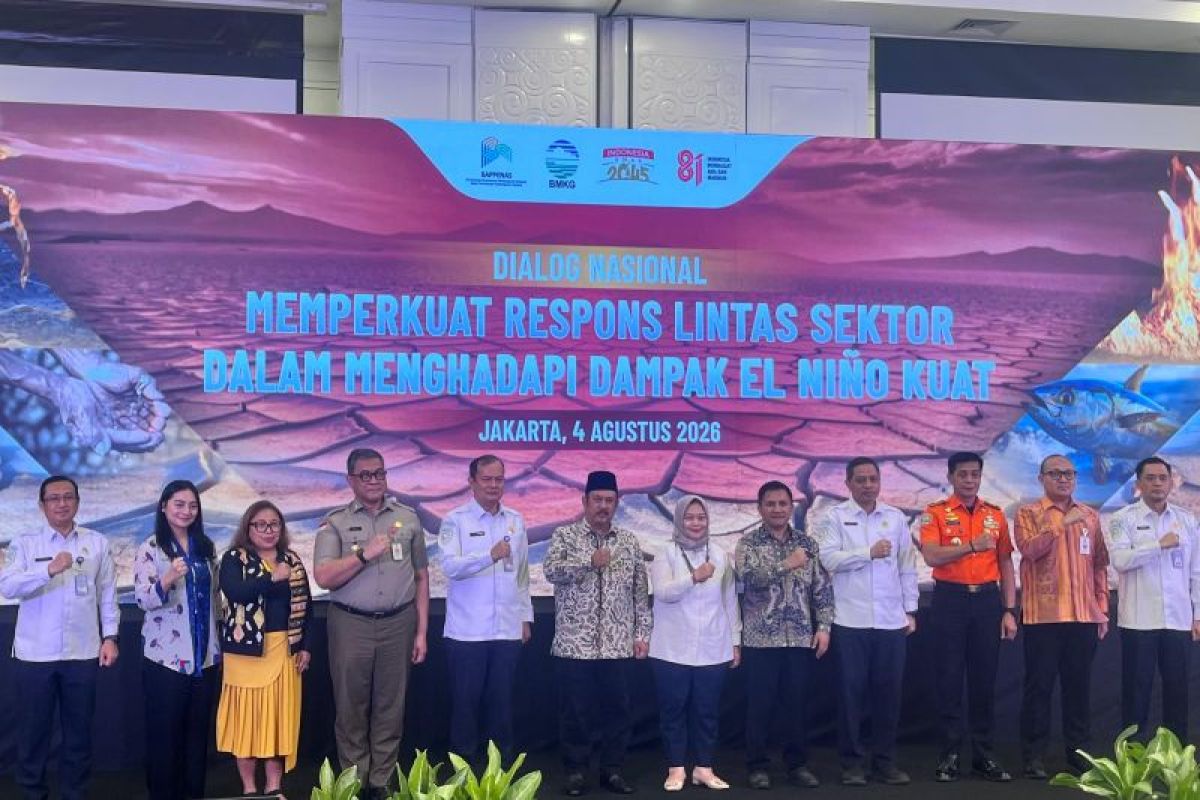
However, without coordinated intervention, climate anomalies could potentially hinder our strategic achievements.
Jakarta (ANTARA) — Minister of National Development Planning/Head of the National Development Planning Agency (Bappenas) Rachmat Pambudy stated that President Prabowo Subianto has conveyed that climate issues must not disrupt national stability.
“In the limited cabinet meeting, the President made it clear that climate issues must not disrupt national stability. However, without coordinated intervention, climate anomalies have the potential to hinder our strategic achievements,” said Rachmat Pambudy at the National Dialogue on “Strengthening Cross-Sectoral Responses in Facing the Impacts of a Strong El Nino”, held at the Bappenas building in Jakarta on Tuesday.
In this context, he emphasised that a strong-category El Nino forecast for the second half of 2026 could hamper the achievement of national development goals.
Strong El Nino events previously occurred in 1997, 2015 and 2023. In that most recent year, the Meteorology, Climatology and Geophysics Agency (BMKG) recorded that 23,451 hectares of rice fields were affected by drought, while Statistics Indonesia (BPS) reported 6,964 hectares suffered harvest failure, with dry unhusked rice production falling 1.41 per cent, from 54.75 million tonnes in 2022 to 53.98 million tonnes in 2023.
In addition, data from the National Disaster Management Agency (BNPB) revealed 2,051 forest fire incidents. This figure rose sharply compared with the 252 forest and land fire incidents (karhutla) recorded in 2022.
Therefore, Bappenas has set out strategies in the National Long-Term Development Plan (RPJPN) 2025-2045 and the National Medium-Term Development Plan (RPJMN) 2025-2029, translated into sectoral implementation as a short-term response to the strong El Nino expected in 2026.
These implementation measures include adjusting planting patterns, using seeds resilient to extreme weather, strengthening irrigation and controlling forest and land fires, as well as optimising water resource management and the use of solar energy.
Further measures involve strengthening the health system in anticipation of increased disease risks and health impacts caused by El Nino, and optimising opportunities while reducing risks to the productivity of the marine and fisheries sector based on climate information.
The strategic follow-up offered by Bappenas includes integrating climate information into decision-making and development policy formulation, as well as mainstreaming El Nino risks into cross-sectoral development planning and budgeting.
Another step is to broaden financing sources through the optimisation of domestic funding, climate finance, disaster pooling funds, adaptation funds, the Fund for Responding to Loss and Damage (FRLD), and other innovative financing instruments.
Finally, there is a need to strengthen synergy between central and regional governments, the business community, academics, society and development partners in implementing these actions.
“Climate issues are problems we can anticipate, climate issues are problems we can mitigate, and climate issues are problems we can manage. However, first we must understand the latest science to address these issues. Second, we must be united across ministries and agencies, working in an integrated manner, reminding one another and helping one another,” said the Head of Bappenas.