
Bappenas Prepares National Framework for Community Empowerment
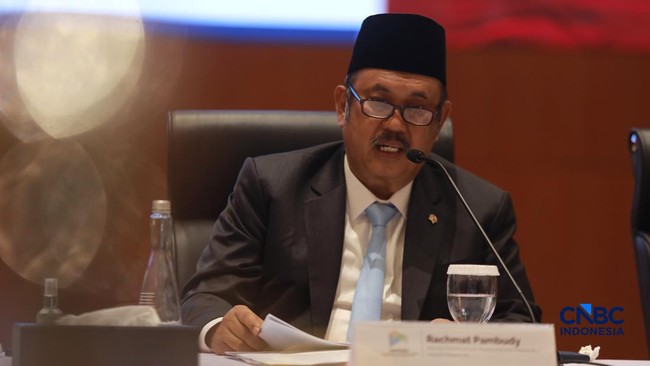
Jakarta, CNBC Indonesia – National Development Planning Minister and head of the National Development Planning Agency (Bappenas) Rachmat Pambudy said the government is preparing a national framework for community empowerment. It will be drawn up in collaboration with Coordinating Minister for Community Empowerment Muhaimin Iskandar.
The framework is intended to give community empowerment programmes clearer direction and make them part of national development strategies and policies. Technical ministries and agencies will contribute in line with their respective mandates and capabilities.
“This could include strengthening social capacity and entrepreneurship, and developing small businesses, including through the Ministry of Home Affairs and other ministries, to ensure that regional governments continue working with the central government on development,” Rachmat said at the National Empowerment Dialogue on Wednesday (14 October 2026).
“I therefore invite all regional governments, businesses, universities, civil society organisations, communities and development partners to play an active role in drawing up and implementing this policy document.”
Rachmat stressed that the government’s development vision extended beyond physical infrastructure to include empowering people. Buildings, roads and bridges would not last without people to maintain them, he said. Without empowered communities, investment in physical infrastructure could ultimately be wasted.
On the same occasion, Minister of Villages and Disadvantaged Regions Yandri Susanto said his ministry had already undertaken community empowerment initiatives in villages. These include revitalising village-owned enterprises and establishing Merah Putih Village/Urban Ward Cooperatives; developing export-oriented villages; strengthening local food security; and promoting village self-sufficiency in energy, water and food.
“These initiatives are already widespread, and they are all part of an economic movement. Without empowerment, poverty and other problems cannot be fully resolved,” Yandri said.
However, Yandri said Indonesia still had 4,672 underdeveloped villages and 4,694 severely underdeveloped villages. In addition, 5,758 villages have no access to electricity from state-owned utility PLN, while 12.58 million people in rural areas remain in poverty.
“There is no other answer than empowerment. We believe that if we resolve the problems facing Indonesia’s villages, we will, in effect, resolve the problems facing the Republic,” he said.