
Bappenas: Post-disaster Master Plan for Sumatra Must Be Implemented Immediately
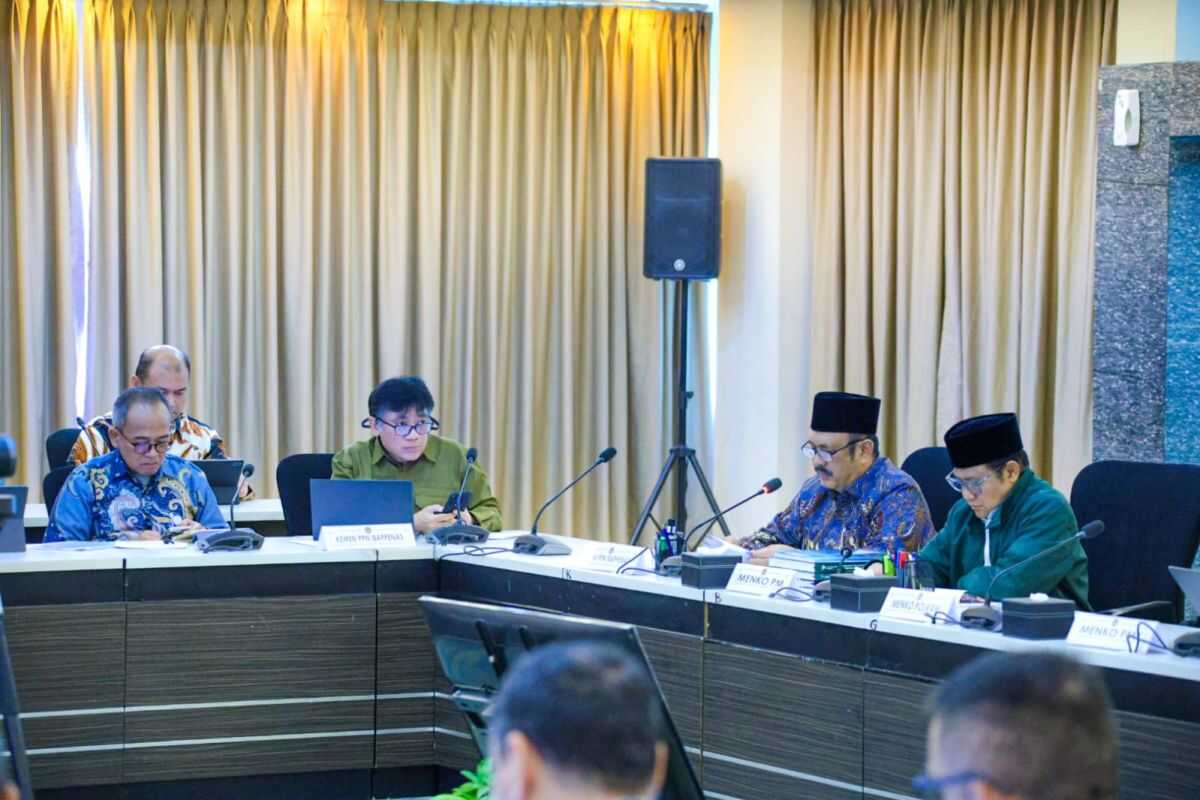
We cannot wait too long. This Renduk must proceed swiftly, while we continue to refine it.
Jakarta (ANTARA) - Minister for National Development Planning (PPN)/Head of the National Development Planning Agency (Bappenas) Rachmat Pambudy stated that the Sumatra Post-Disaster Rehabilitation and Reconstruction Master Plan (Renduk) must be implemented promptly.
“We need to accelerate because the emergency transition period is ending soon. We cannot wait too long. This Master Plan must move forward immediately, while we continue to refine it. We need to sit down together again to avoid overlaps and to prevent too wide inconsistencies,” he said in a formal statement in Jakarta, on Friday.
The head of Bappenas spoke about this at the Ministerial-level Coordination Meeting of the Task Force for Accelerating Post-Disaster Rehabilitation and Reconstruction (Satgas PRRP). In the meeting, the Task Force endorsed the Sumatra Post-Disaster Rehabilitation and Reconstruction Master Plan.
Bappenas had previously submitted this first version of the Sumatra PRRP Master Plan to the Coordinating Minister for Human Development and Cultural Affairs (PMK) Pratikno and President Prabowo Subianto on 15 February 2026.
Rachmat explained that this first version of the Sumatra PRRP Master Plan is still provisional with data cut-off as of 9 February 2026. The Task Force agreed to treat this document as the basis for implementation and will carry out further adjustments and verifications by the end of March 2026, with a three-year implementation period from 2026 to 2028, in line with the President’s directions.
One of the important innovations in the Renduk is the use of a Disaster Risk Zone Map (ZRB) at a 1:50,000 scale for 53 affected districts/cities, which has been approved as a joint reference by ministries/agencies (K/L) and local governments. This step is described as implementing the Build Back Better, Safer, and Sustainable principle.
“The map will later classify areas into safe zones, low-risk zones, moderate zones, and hazards from hydrometeorological and multi-hazard risks that have long threatened localities,” said Rachmat Pambudy.
“For example, in Agam Regency, this map will underpin the placement of centralised permanent housing. The principle is clear: we must not rebuild in the same place without corrections,” said the Minister for PPN.
Considering the scale of the disaster, the magnitude of funding, and the complexity of coordination, he added, a strong legal basis will greatly assist in ensuring the implementation runs consistently and under control.
Bappenas is also opening space for inputs until the end of March 2026 and is ready to facilitate mentoring for local governments and K/L (ministry/institution).
“Our hope is that the affected areas will not only recover but rise stronger and be better prepared to face future risks,” said the Head of Bappenas.